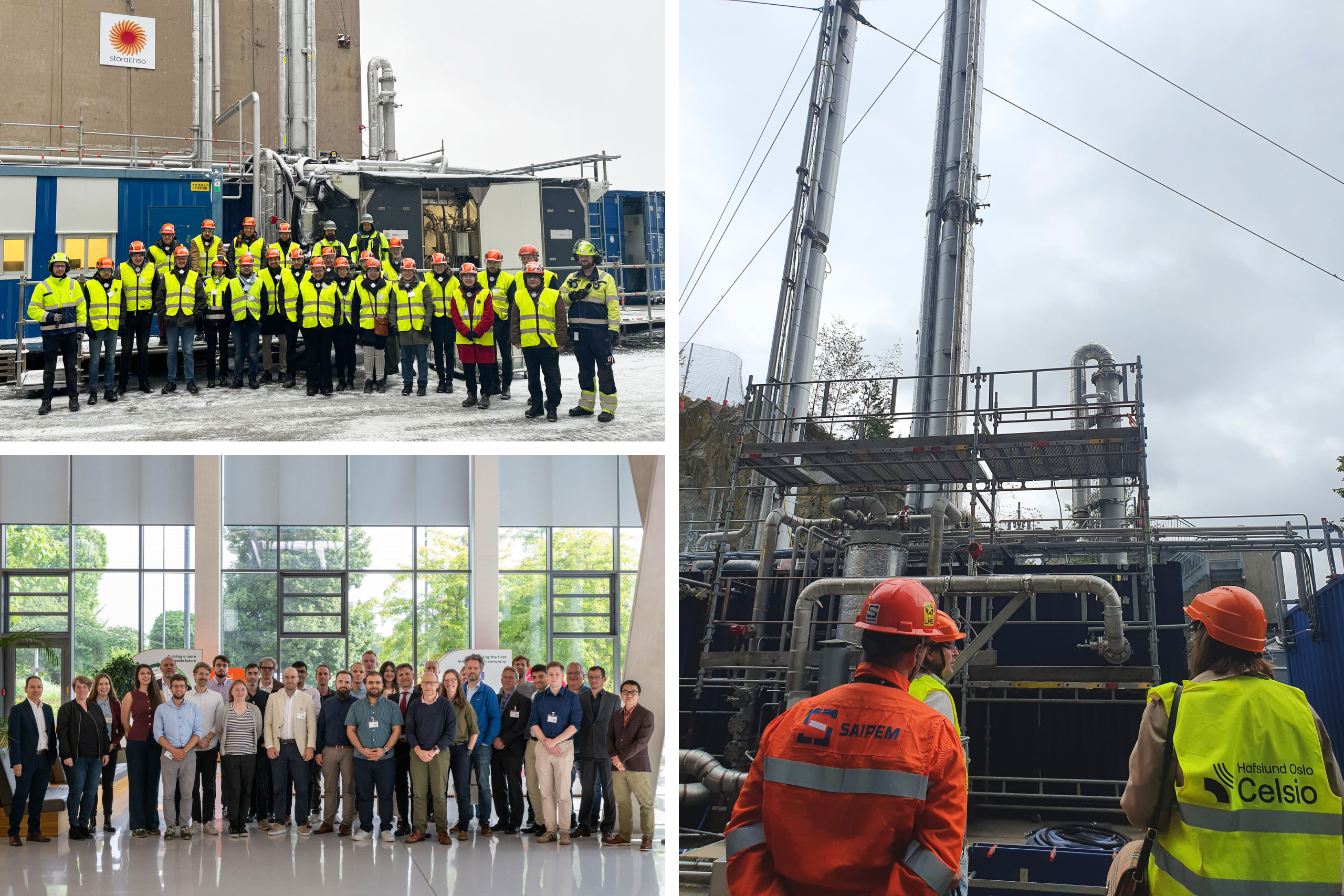


In the H2020-funded ACCSESS project, we have as a consortium examined CCS costs across four industrial plant types (cement, pulp and paper, waste to energy and biorefineries) and, together with industrial and technology partners, explored why costs for early industrial projects often diverge from research estimates. Below we share key reflections and call for more transparency in cost data to help accelerate learning and deployment.
Estimating the cost of CCS – significant variation in numbers
The ACCSESS project has undertaken cost estimations for CCS in four industrial types of plants: pulp and paper, cement, waste to energy, and biorefineries.
Input data were compiled from open literature, and costs have been calculated using most up-to-date established methodologies for technoeconomic analysis, aiming to minimise the gap between research estimates and early industrial projects. The project has analysed both first-of-a-kind (FOAK) costs and Nth-of-a-kind (NOAK) costs. (FOAK refers to early projects with more bespoke engineering and higher perceived risk; NOAK reflects more standardised “repeat” projects after learning and supply chains mature.) Results have been presented and discussed in the consortium at different system boundaries, from capture-only to complete CCS chains, e.g. CO2 capture and compression, CO2 chains encompassing capture, conditioning and transport to port, and for full CCS chains.
We put significant effort into improving estimates for early mover projects (large-scale demonstrating in different industries) whereas most literature studies focus on more mature implementation markets. However, there is still a significant gap between some ACCSESS research numbers and cost figures presented for industrial projects under development, where the latter typically are higher.
We have noticed that research in other projects, on learning rates and expected decreasing costs, point to that estimating the learning rate for a CCS technology is challenging, given that few projects have been completed globally and the technology complexity and need for customisation is high.
What research estimates can (and can’t) be used for
As a consortium with members from energy-intensive, CO2 emitting industries, technology providers and research institutions, we have jointly discussed the challenge of uncertainty caused by inconsistent data and would like to share some of our reflections.
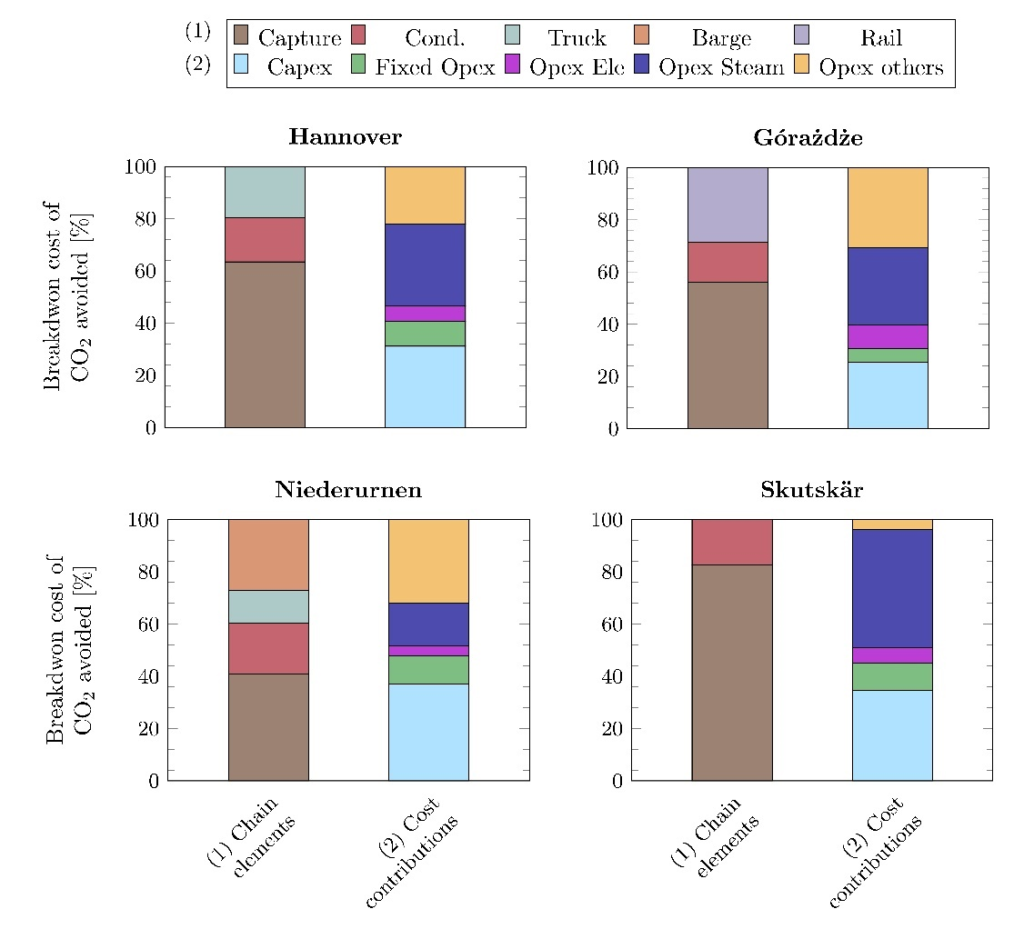
CCS in energy-intensive industries is still in its infancy, so cost numbers should be used with caution. Most research cost studies rely on publicly available input data which are often generic or incomplete and may not reflect site-specific conditions or proprietary vendor quotes. These estimates are therefore better at explaining relative differences between options than at predicting the exact cost of a specific project. Under these conditions, scientific studies inevitably involve uncertainty (often around ±40–50%) which should always be stated when presenting results. Even so, they provide valuable tools for techno-economic assessment and for comparing relative cost differences between options, for example clustering, capture technology integrations strategies and capture technology choices (while recognising the uncertainties embedded when comparing technologies at different TRLs).
When CCS costs are used in planning or decision support, it is therefore important to be clear about what research cost estimates can (and cannot) be used for, and to communicate uncertainty and assumptions explicitly.
It is essential to be explicit about scope, assumptions, and uncertainty, and recognise that academic studies cannot be expected to be at the accuracy required for a Final Investment Decision (FID). Moving from an early estimate (often with ±50% uncertainty) to project‑grade costs requires substantial engineering and updated, site‑specific economic analysis. As projects mature, additional requirements often emerge such as stricter regulations or the need to address other pollutants, which can materially increase costs versus initial assumptions.
How perceived risk shapes early CCS projects
The discussions among ACCSESS consortium members highlight how risk is priced into CCS projects. Even well-known equipment with known costs (for example absorption or distillation columns) may carry a higher price when deployed in a CCS context, because suppliers and contractors factor in additional uncertainty. There are also cross-chain risks, often reflected in contractual conditions which can be particularly cost-increasing for small-scale CCS projects.
We observe that first industrial projects tend to experience cost increases compared to initial cost estimates. The report Potential for Cost Reductions in the CCS Value Chain, issued by Gassnova in 2025 identified several reasons for this, as well as areas for potential cost reductions along the CCS chain for future projects. General drivers of cost increase in initiated projects include:
- increasing costs due to inflation and fluctuating currency exchange rates
- increasing power prices and increased costs for access to finance due to increased interest rates
- underestimation of project complexity and lack of familiarity at the industrial facility as reasons for cost increases compared to initial estimates for the CO2 capture project
- first of a kind projects are typically significantly more expensive as different actors add various risk premiums, and there can also be various delays and unexpected costs
What drives costs upward as projects mature
Site constraints and integration work often push costs up during project maturation. ACCSESS consortium member Celsio (part of Longship project) has been open about cost increases due to relocation of the CO2 hub at Oslo harbour and the need to reduce the space requirement for the capture plant on site.
Experience from Longship also shows that it is challenging with brownfield CO2 capture installations in an operating industrial facility such as the Heidelberg Materials cement kiln in Brevik. Gassnova mention that the integration itself in the cement kiln in Brevik amounts to 2.2 billion NOK, while the cost for capture, compression, and intermediate storage amounts to 2.7 billion NOK. A significant part of the cost relates to investments to recover heat from the cement plant to produce steam for CO2 regeneration in the capture process.
These experiences align with Gassnova’s broader assessment of CCS cost drivers; technology maturity, technology supplier market maturity, CCS-specific procurement expertise, suitable contract models, maturity of regulations, CCS standards/industrial practices, and economy of scale.
Another important driver identified by ACCSESS partners is land-use and civil works. Areas for building CO2 capture can be costly, for instance in cities when waste-to-energy plants consider CO2 capture. Such costs are “site” cost rather than pure technology cost and are easy to underestimate in early studies. Also, civil engineering to prepare an area for capture equipment installation can be costly.
Sharing cost data to accelerate industrial CCS
During our discussions, a topic that emerged was the observed magnitude of the cost of a capture facility compared to the industrial plant into which it is to be integrated. One of the industrial partners in the consortium shared the insights that initial cost quotes for CO2 capture at one of their facilities would be roughly equal to completely refurbishing the industrial facility as such.
Will CCS cost decline based on learnings from early projects? Likely, but the pace depends on how much knowledge, experience, and learnings are shared in the public domain. Technology is maturing along the CCS chain, engineering and cost knowledge must keep up, so that more accurate, CCS-specific factors are included in cost analyses.
Our call to action:
Increase transparency and sharing of cost data by industry in the public domain, within the boundaries provided by legal and regulatory requirements. This can strengthen competitive industrial decarbonisation, and enable high-quality, applicable research.
When presenting costs, always specify the estimated uncertainty and the reference year for cost calculations. The latter is particularly important in view of the inflation over the past few years.
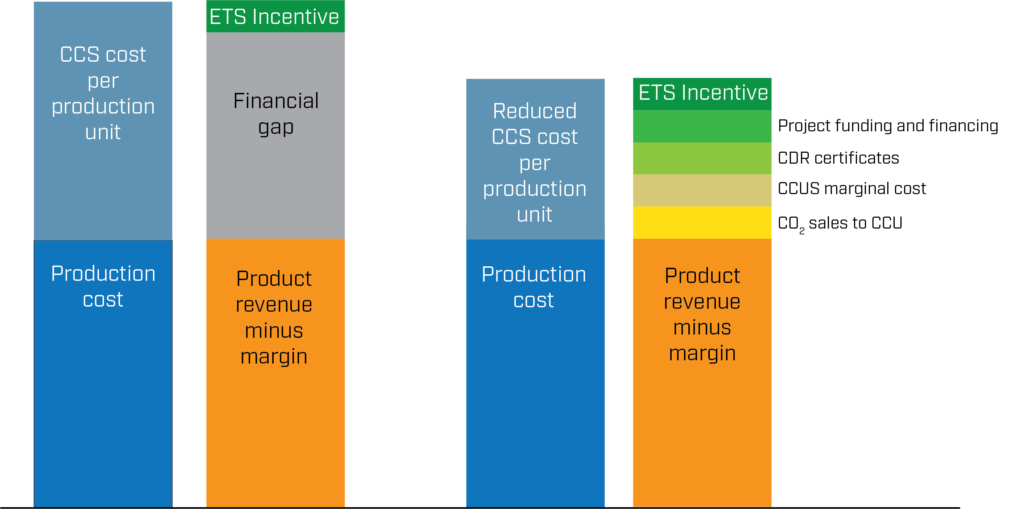
The ACCSESS high-level approach to describing CCS and CCUS business models. Left: Early projects not able to close financial gap. Right: Schematic illustration of a business case. Note that profit margins are not illustrated in the figure. The sizes of the illustrated financial gap, ETS incentive, reduced costs and measures to increase revenues are illustrative and not to scale.
CCS is an emerging, interdisciplinary domain where different industrial standards and practices meet. Alongside political will and public trust, open knowledge sharing, supported by relevant research, policy and financing frameworks, is key to industrialisation, identifying and realising cost-reduction opportunities and, in the end, to delivering significant emission cuts from energy-intensive industries.
The ZEN-garden optimisation tool:
- Paper: https://doi.org/10.1016/j.softx.2025.102059
- Documentation: https://zen-garden.readthedocs.io/en/latest/index.html
- Public repository: https://github.com/ZEN-universe/ZEN-garden
References:
- Towards improved guidelines for cost evaluation of carbon capture and storage
- Towards improved cost evaluation of Carbon Capture and Storage from industry
- Progressing from first-of-a-kind to Nth-of-a-kind: Applying learning rates to carbon capture deployment in Sweden
- Accelerating Low-Carbon Innovation
- Based on Longship: Potential for Cost Reductions in the CCS Value Chain
- 5 insights from the ZEP Projects Network 2025
This text was first published on the ACCSESS project website on 28 May 2026. It is the outcome of extensive discussions that started in June 2025 during an ACCSESS consortium meeting. Several discussions followed in dedicated meetings during 2025, and the draft blog text underwent partner reviews with extensive feedback. The discussions encompassed project partners from energy-intensive industries, technology suppliers and research partners.
Since the website where this first was published will have a limited lifetime, we have archived it in Zenodo, as an important output of the ACCSESS project.
Due to the extent of collaboration, it was difficult to track the numerous individuals that contributed to the process. As such, this blog was originally published on the ACCSESS website without naming any authors, acknowledging the open and constructive atmosphere that was characteristic throughout all project discussions in ACCSESS. While Kristin Jordal and Rubén M. Montañés are listed as the authors on the SINTEF blog, they should instead be regarded as the contacts for the project, as the Project Coordinator and Project Manager, respectively.
The project duration was from May 2021- August 2026.










Comments
No comments yet. Be the first to comment!