


First, a step back: why do we build models at all?
Models are a cornerstone of scientific research. Represent a physical process as equations, molecules as graphs, or measurements as arrays, and the real-world problem enters the language of mathematics. From there, we have at our disposal powerful methods to develop technology. For instance, we can replace costly experiments with simulations that help us anticipate scenarios (“what if I change this condition?”). We can place real-world observations in the context of mathematical predictions (“is this result expected?”). We can tailor materials, devices and processes to real-world applications (“what is the optimal design?”).
At their core, many models are simply functions. They receive inputs, apply parameters, and generate outputs. We can build these models empirically, i.e. by first selecting a function shaped like the patterns in our observations (e.g. linear, polynomial, exponential) and then fitting its parameters to data. Instead, physics-based models derive the function from physical laws expressed as differential equations, describing how quantities change over time or space. For example, an empirical model fits a curve to thermometer readings from a cooling cup of coffee, while a physics-based model starts from the law that heat flows from hot to cold.
AI models can learn patterns that are diffucult to guess empirically or derive from first principles
AI has introduced a new way to build scientific models. Instead of choosing an equation from observations or deriving one from physical laws, we begin with a large and flexible mathematical function, often a neural network. At first, the network knows nothing, and the model resembles an empty shell. During training, algorithms repeatedly adjust the parameters, gradually molding the function around the patterns in the data. Once trained, such a model can predict the next word in a sentence (as in chatbots), produce colors in pixels (as in image models), or synthesize audio signals of human voices (text-to-speech models).
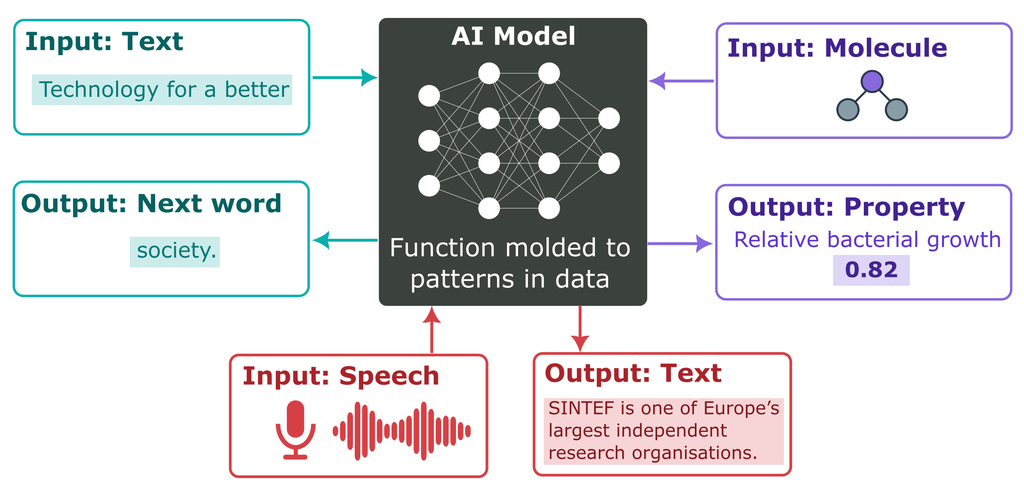
For researchers, the appeal is clear: rather than prescribing beforehand how inputs and outputs relate, we let AI learn it from data. Indeed, AI is already reshaping scientific discovery. The neural-net based program AlphaFold2 used protein amino-acid sequences to predict their full three-dimensional structures, earning its creators a share of the 2024 Nobel Prize in Chemistry for cracking a problem that had challenged scientists for half a century.[1] Chemprop sifted through thousands of molecules to uncover halicin, a potential weapon against drug-resistant bacteria.[2] The examples are numerous, and they work because of a key capability: even when we can’t write down the rules, AI can learn these relationships from vast amounts of data.
SINTEF applies AI to help our customers innovate and stay competitive
AI breakthroughs warrant excitement, but also scrutiny. As researchers in SINTEF, we look past the headlines and focus on measurable scientific value for our customers. Ultimately, AI matters only if it turns data into an advantage: a key insight, a faster test, a better product, or a cheaper process.
AI has helped us compress hours of computation into seconds. We do this by training fast surrogate models that mimic predictions from slow simulations. The surrogates then deliver similar predictions at a fraction of the computational cost. Surrogates have replaced 3-hour simulations with almost instantaneous predictions of weather-driven loads on subsea pipes, enabling customers to quickly respond to weather changes when installing pipe infrastructure on the seabed. Inside a furnace that makes materials for batteries, no sensor can see every corner. A surrogate fills in the picture by predicting a full 3D heat map of the furnace in an instant instead of hours, fast enough so that operators can use it to continuously adjust synthesis conditions. Calculations that once took hours and ran off-line can now guide decisions and control systems almost in real time.
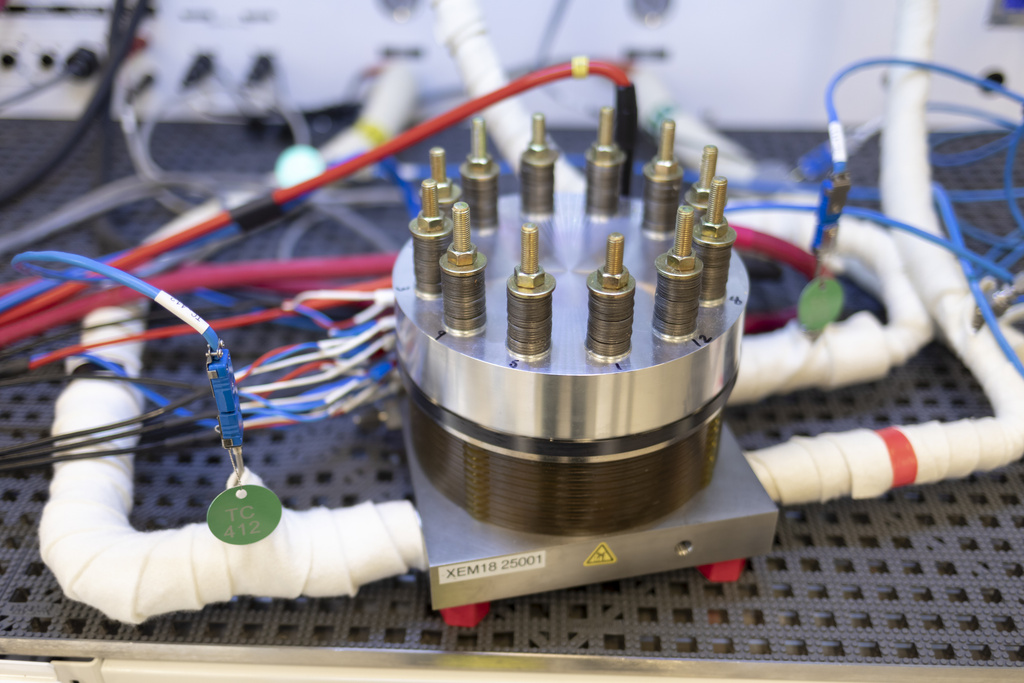
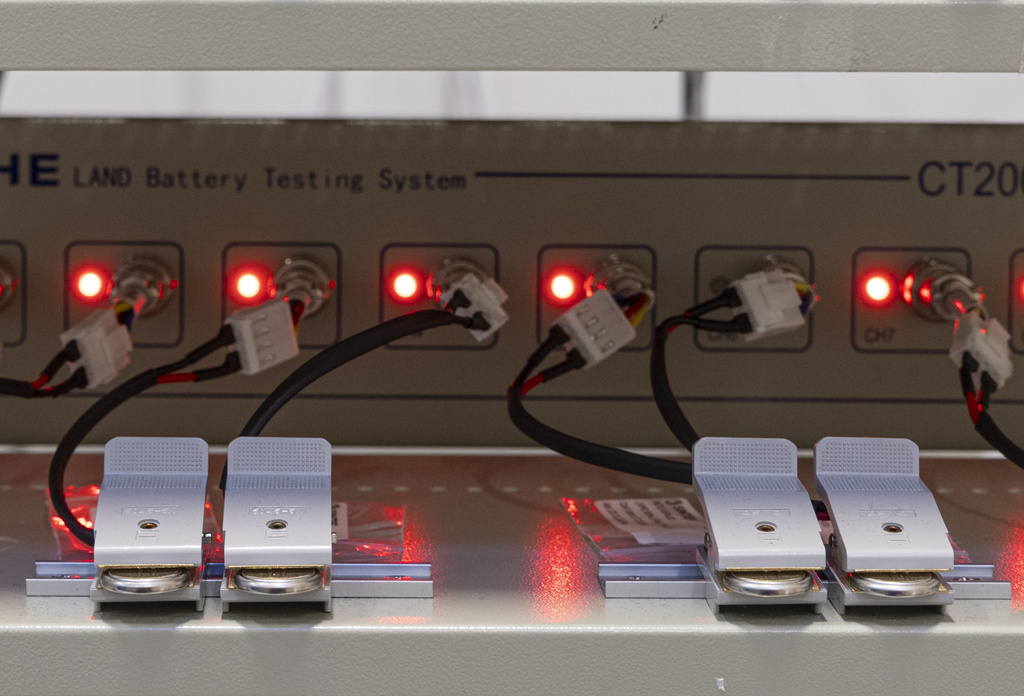
We also use AI to replace costly trial and error with guided exploration. Models map how design choices and operating conditions influence performance, then search for combinations that meet a desired objective. For instance, battery or fuel-cell models help steer away from damaging operating conditions that would shorten the cell’s lifetime. An AI model can similarly explore how marine risers respond to different sea currents, helping engineers predict fatigue and avoid overly conservative designs. In both cases, models guide customers towards better solutions with fewer experiments, shorter development cycles, and less manual tuning.
At the limits of AI: research data is scare, noisy and expensive
The success of the large language models behind ChatGPT and Claude is built on enormous amounts of data. In industry, this is rarely the case. Datasets are small and expensive to acquire, and the measurements are often noisy and incomplete. At the same time, a neural network with millions of parameters is flexible enough to memorise the noise along with real patterns, and too large to look inside. When it predicts something unexpected, we cannot easily tell whether it has found a real effect or is just echoing the noise in its training data. And outside the conditions it was trained on, a purely data-driven model can be wrong without any warning that it is.
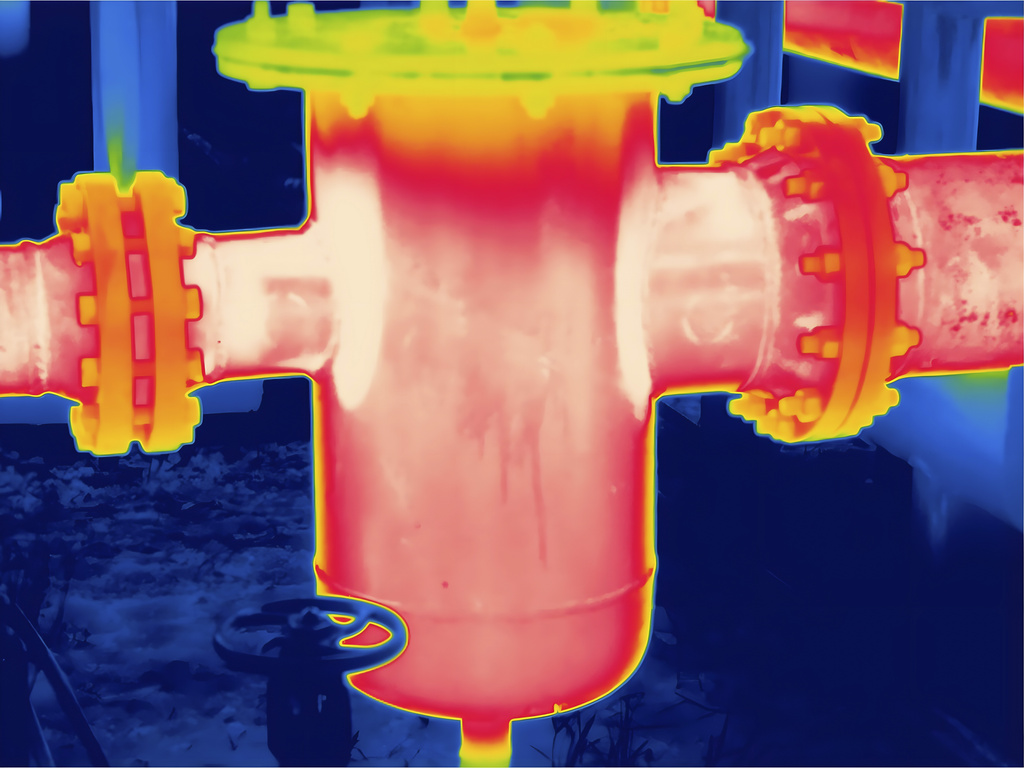
However, research data enjoys a key property. Unlike selfies, tweets or videos, most research data exhibit patterns governed by physical principles. A sequence of thermal images is not a random movie: heat flows from warm to cold, following the heat equation. A swinging pendulum, a vibrating rod or a jittering molecule do not gain energy from nowhere; energy moves back and forth between motion and position, and leaves the system only through work or friction. Such principles hold whether or not our sensors happened to capture them, and they hold outside the conditions we have measured.
Give the model a head start: teach it the physics
Physics-informed machine learning (PIML) is the idea of giving the model this knowledge, instead of letting it spend scarce data on rediscovering it. A model that already knows energy is conserved needs fewer examples, is less easily misled by noise, and stays physically sensible where data is missing. The knowledge does not have to be complete: we typically know some of the physics, and can leave the rest to be learned from data.
Prior knowledge of the physics generating the data introduces a valuable bias that steers a model towards physically plausible solutions. PIML exploits three types of bias, which can and often should be used in combination:[3]
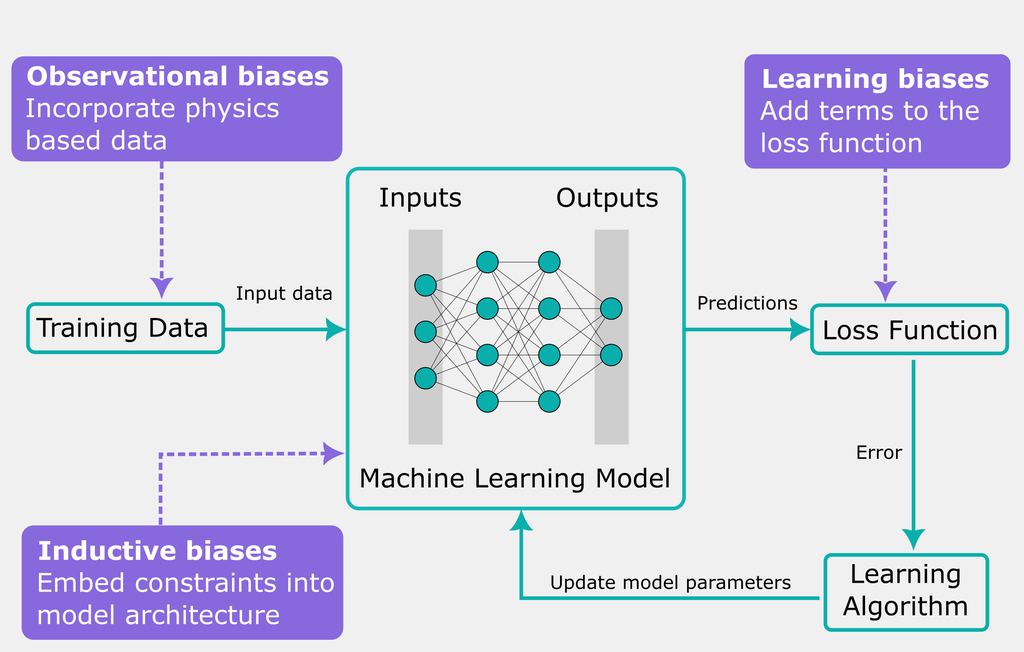
Observational biases use the assumed physics to explicitly enrich the data the model is trained on. There are two ways to do this. The first is to reshape what we measure into inputs that make sense physically, a step called feature engineering. For instance, instead of giving the model the x and y position of a swinging pendulum, we give it the swing angle: one number that captures the whole motion. The second is to add simulated data. A physics-based simulator can generate thousands of extra examples, filling the gaps between scarce measurements. If all the training data is from a simulator, we call the resulting model a surrogate of that simulator.
Learning biases put the physics in the loss function, i.e. the score the model tries to lower during training. A typical loss function measures the agreement of the model output with the training data. A physics-informed loss may instead measure how well the model output fits with the assumed physics, typically described by a differential equation. This is the idea behind physics-informed neural networks (PINNs). The constraint is soft, a speeding ticket rather than a brick wall: the model is encouraged but not guaranteed to respect the equations. Training therefore weighs two goals against each other: obeying the physics and matching the measurements.
Inductive biases put the physics in the architecture of the model itself, so that predictions respect it no matter how the training goes. The type of physics embedded in the architecture is then not a full assumed model, as described by a differential equation, but rather conservation laws or other structures. For instance, a Hamiltonian neural network guarantees that energy is never created nor destroyed in a system that evolves in time. The structure is built in; training only has to learn what the energy looks like, and the model cannot produce predictions that break energy conservation.
Physics helps us make the most of imperfect data
Physics-informed machine learning requires more than coding. Teaching a model what we know about the world takes people who understand both AI and the physics of the world we are modelling. Deciding which physical bias to build into a model is a judgement call, and a wrong call costs time and trust. At SINTEF, mathematicians, computer scientists, chemists, physicists and engineers all contribute to deciding which physical relationships matter, which assumptions are reasonable, and whether a model’s predictions make physical sense. This matters most when data is the bottleneck: when there is e.g. too little of it, when the quality is mixed, or suffers from large measurement uncertainties.
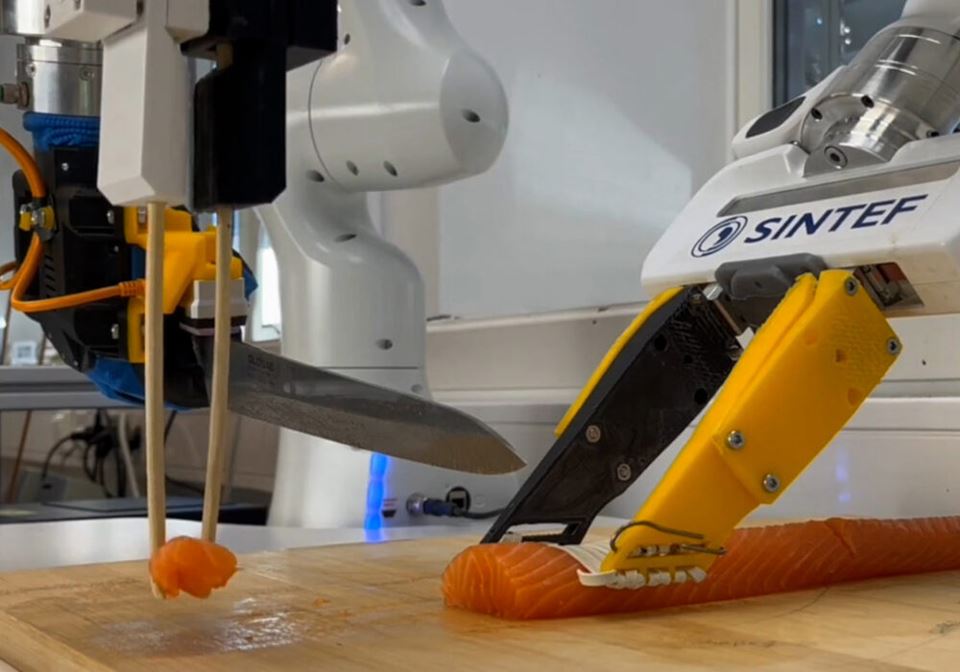
When data is scarce, physics-based simulators help AI explore, try, fail and try again thousands of times, without breaking anything or experimenting in the lab. This exposes AI to a much wider range of operating conditions than would be practical to reproduce experimentally. At SINTEF, we have used this approach to train robot arms to perform delicate operations such as slicing sashimi (Sashimi-Bot) [5] and underwater vehicles to execute advanced manoeuvres in open water (sim2swim).[6] Simulations teach AI what to do in a safe virtual environment, so far fewer real-world trials are needed before deployment. AI systems trained in simulators are both more efficient to develop and more robust when faced with unexpected conditions.
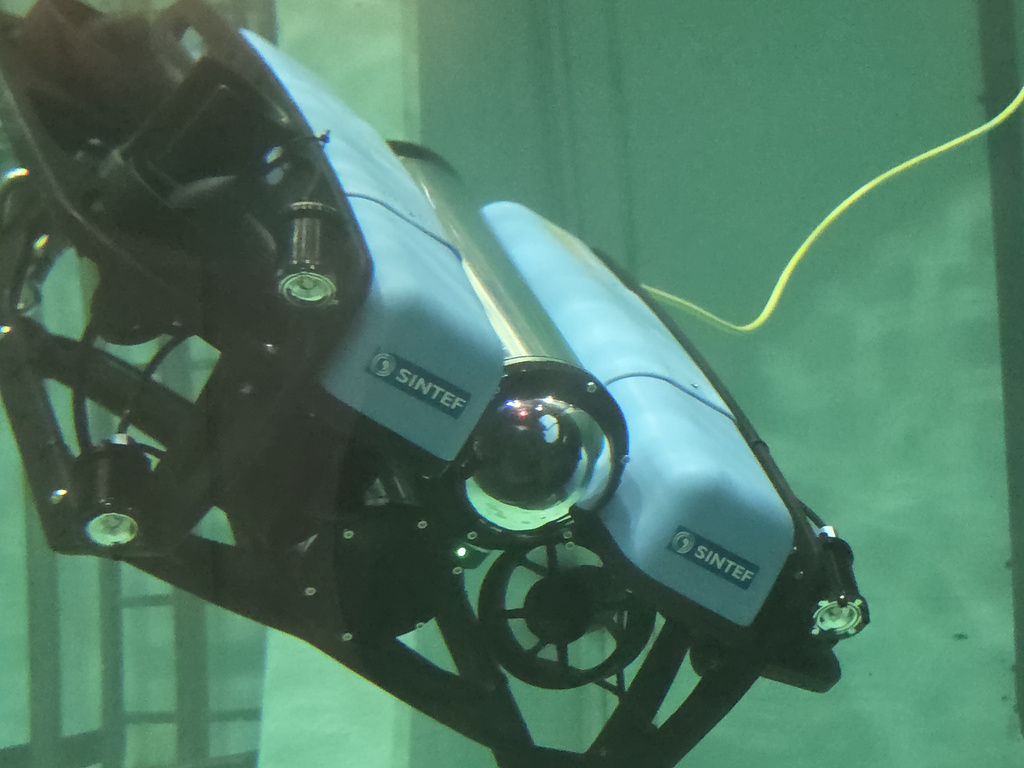
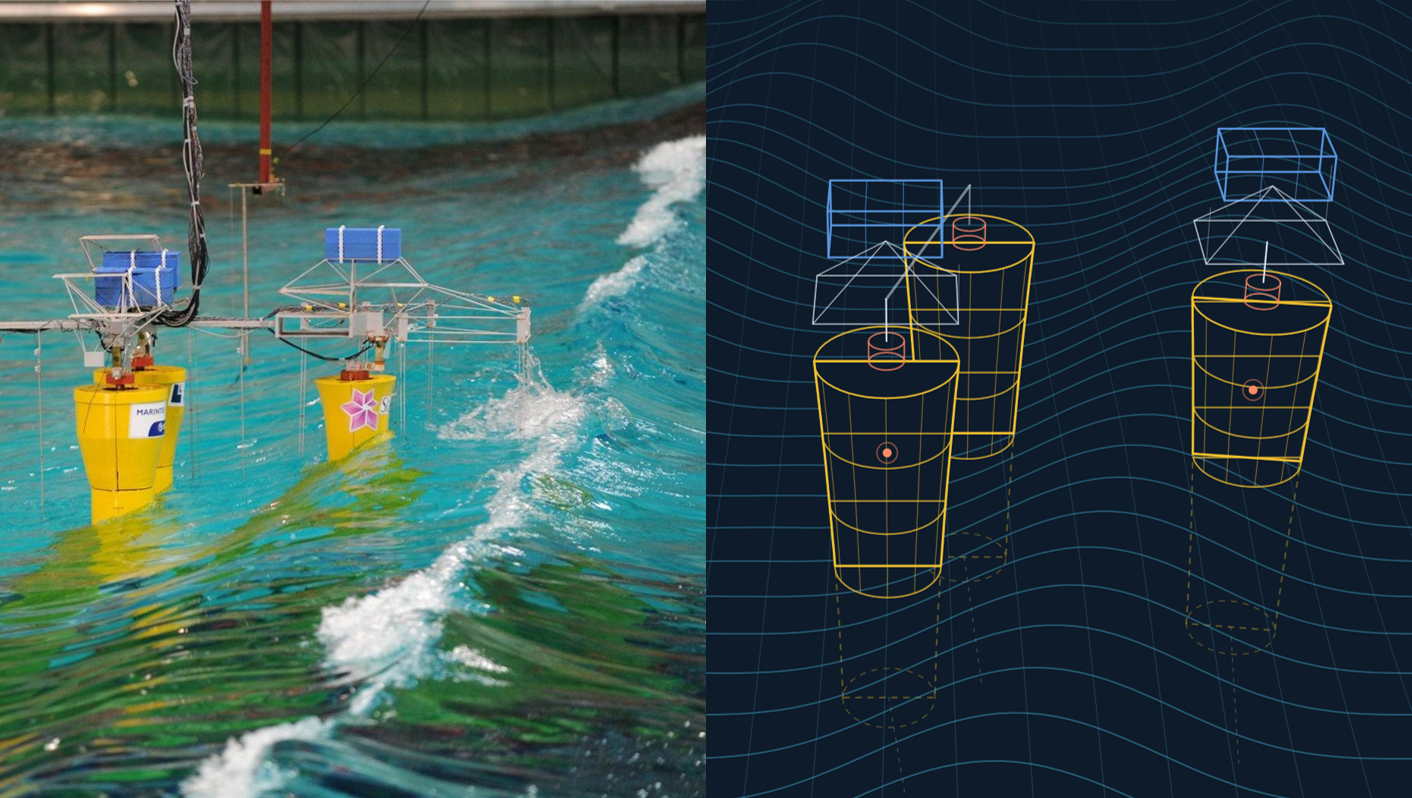
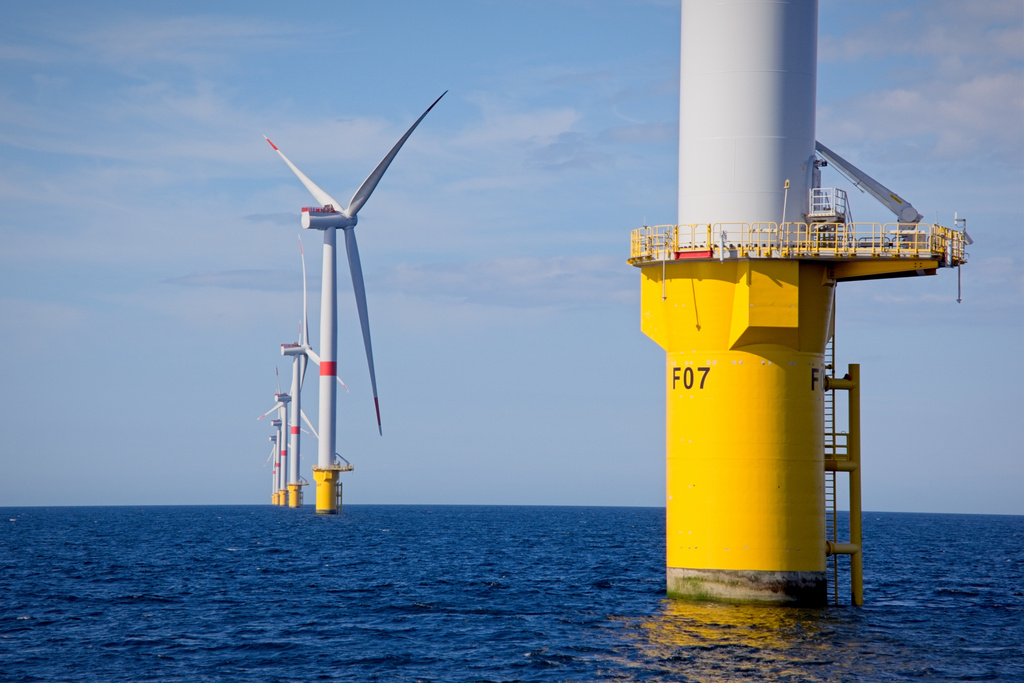
Measurements can also be sparse and vary in fidelity. Take the long pipes and power cables hanging from offshore platforms, swayed by waves and currents for decades. Predicting their fatigue over time is difficult because no single data source gives the full picture: empirical models are fast but simplified, detailed simulations capture more physics but are computationally expensive, and measurements may only be available at a few locations. The MAPLES project aims to combine lower-fidelity models with higher-fidelity simulations and measurements. Notably, from a handful of sensors, early results show that the physics lets us ‘see’ the whole riser and the forces acting on it, even if these forces are not measured directly. In this way, PIML enables us to build an accurate digital picture even where measurements are sparse, providing operators with critical insights to avoid over-conservative designs, postpone costly replacements, or target inspections.
When speed is of essence
As we saw with the pipes and the furnace cases, AI can use simulators to learn about the world. But the same idea also works in reverse: the AI can stand in for the simulator. This matters because designing a system using models rarely takes one simulation, but thousands. A physics-informed neural network pays that computational cost once, during training, and then produces new predictions almost instantly. Designing CO2 capture systems provides an illustrative example. At SINTEF Energy’s gigaCCS, a PINN modelling framework learned how CO2 moves through a column packed with solid adsorbent grains.[7] The model is encouraged to conserve the mass and energy of the flowing gas as it is captured and released upon changes in pressure or temperature. Its predictions of how much CO₂ is captured, and how pure it is, land within about 2.5% of the detailed simulations, up to 100 times faster: 50 simulations that took over three hours finished in about two minutes.
Uncertain data means decision risks
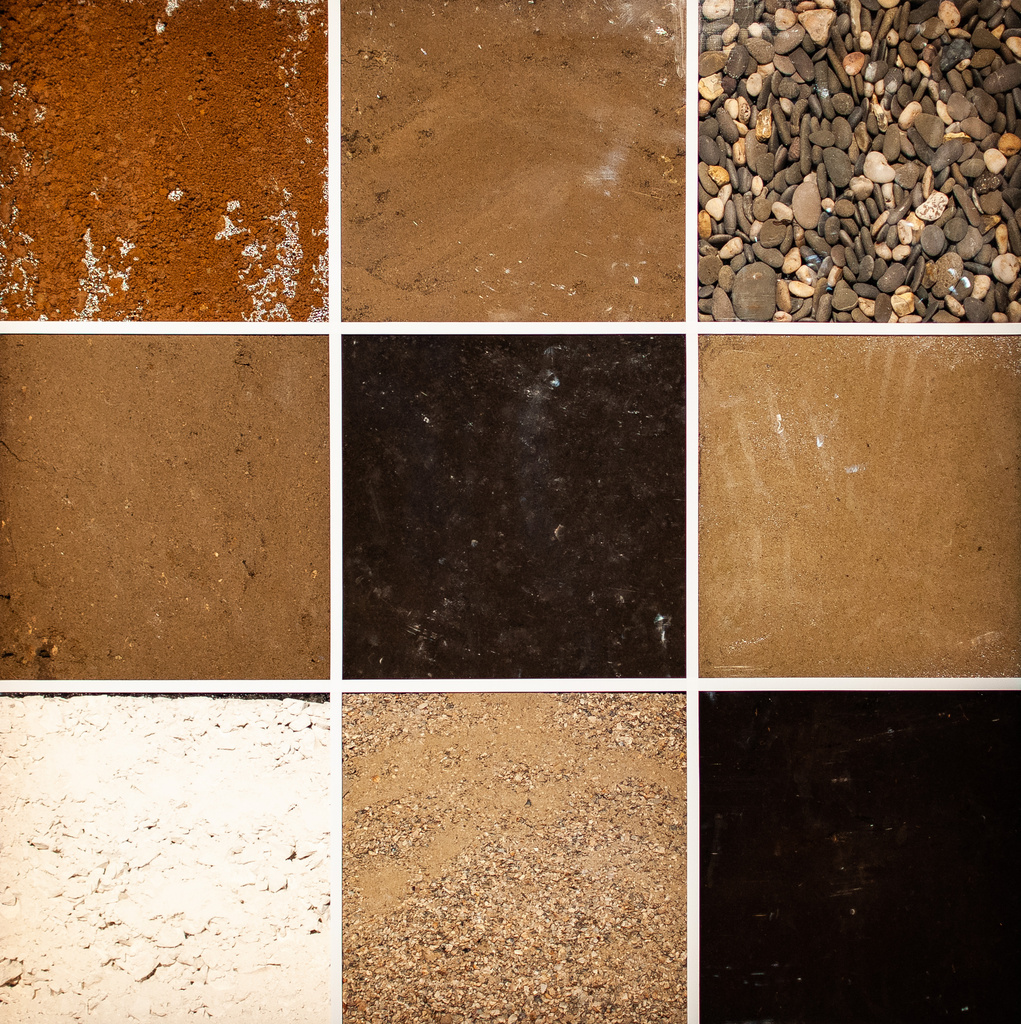
Every measurement comes with uncertainty. The same sample tested in two labs, or under slightly different conditions, can give noticeably different results. Ignoring that spread is risky. Take underground hydrogen storage, where porous rock formations act as giant seasonal batteries for renewable energy. Before choosing a site, operators need to know how much hydrogen the surrounding clays, shales and coals will soak up. Underestimate it, and stored hydrogen stays locked in the ground. Overestimate it, and a good site may be rejected, or a leakage risk missed. In a SINTEF study, we built a model that predicts hydrogen uptake across many rocks underground.[8] Physics biases keep its predictions within what rocks can actually absorb, and each prediction comes with uncertainties to rank candidate materials and formations. Decision-makers then know which predictions are solid enough to act on, and where another lab test is worth the cost.
Where data runs out, physics can guide
State-of-the-art AI is hungry for high-quality data, and industry rarely has enough to feed it. What industry does have is centuries of knowledge about how the physical world behaves. Simulations, lab experiments and field measurements each hold an incomplete piece of the puzzle. Today, AI can take these scattered pieces and glue them together with physics, turning imperfect measurements into a coherent picture that obeys what we know about the world. The result is models that need less data, stay reliable when the data is noisy, and still make sense outside the conditions we have measured.
Robots that slice sashimi, offshore cables that survive for decades, batteries and fuel cells that last longer, faster assessment of CO2 capture and hydrogen stored safely underground; these are just a few places where PIML is starting to pay off. Whether you run experiments in a lab or operate equipment in the field, if your data is limited but your process follows known physical principles, we’d like to hear from you. Get in touch to explore a collaboration, dive into the references below, or tell us in the comments where you think physics and AI should meet next.
References
[1] “Nobel Prize in Chemistry 2024,” NobelPrize.org. Accessed: Oct. 26, 2026. [Online]. Available: https://www.nobelprize.org/prizes/chemistry/2024/press-release/
[2] J. M. Stokes et al., “A Deep Learning Approach to Antibiotic Discovery,” Cell, vol. 180, no. 4, pp. 688-702.e13, Feb. 2020, doi: 10.1016/j.cell.2020.01.021.
[3] G. E. Karniadakis, I. G. Kevrekidis, L. Lu, P. Perdikaris, S. Wang, and L. Yang, “Physics-informed machine learning,” Nat. Rev. Phys., vol. 3, no. 6, pp. 422–440, May 2021, doi: 10.1038/s42254-021-00314-5.
[4] I. Rivas-Blanco, C. J. Pérez-Del-Pulgar, I. García-Morales, and V. F. Muñoz, “A Review on Deep Learning in Minimally Invasive Surgery,” IEEE Access, vol. 9, pp. 48658–48678, 2021, doi: 10.1109/ACCESS.2021.3068852.
[5] H. L. K. Norwegianscitechnews.com, “Meet Sashimi-Bot – a robot that slices and dices like a sushi chef,” SINTEF. Accessed: Oct. 26, 2026. [Online]. Available: https://www.sintef.no/en/latest-news/2026/meet-sashimi-bot-a-robot-that-slices-and-dices-like-a-sushi-chef/
[6] SINTEF Ocean, Sim2Swim – underwater robotics manoeuvering, (Dec. 17, 2025). Accessed: Oct. 26, 2026. [Online Video]. Available: https://www.youtube.com/watch?v=OfoVQNh2fC8
[7] S. G. Subraveti, Z. Li, V. Prasad, and A. Rajendran, “Physics-Based Neural Networks for Simulation and Synthesis of Cyclic Adsorption Processes,” Ind. Eng. Chem. Res., vol. 61, no. 11, pp. 4095–4113, Mar. 2022, doi: 10.1021/acs.iecr.1c04731.
[8] M. Nooraiepour, M. Masoudi, Z. Song, and H. Hellevang, “Physics-Informed Neural Networks for Predicting Hydrogen Sorption in Geological Formations: Thermodynamically Constrained Deep Learning Integrating Classical Adsorption Theory,” 2026, arXiv. doi: 10.48550/ARXIV.2603.28328.





Comments
No comments yet. Be the first to comment!