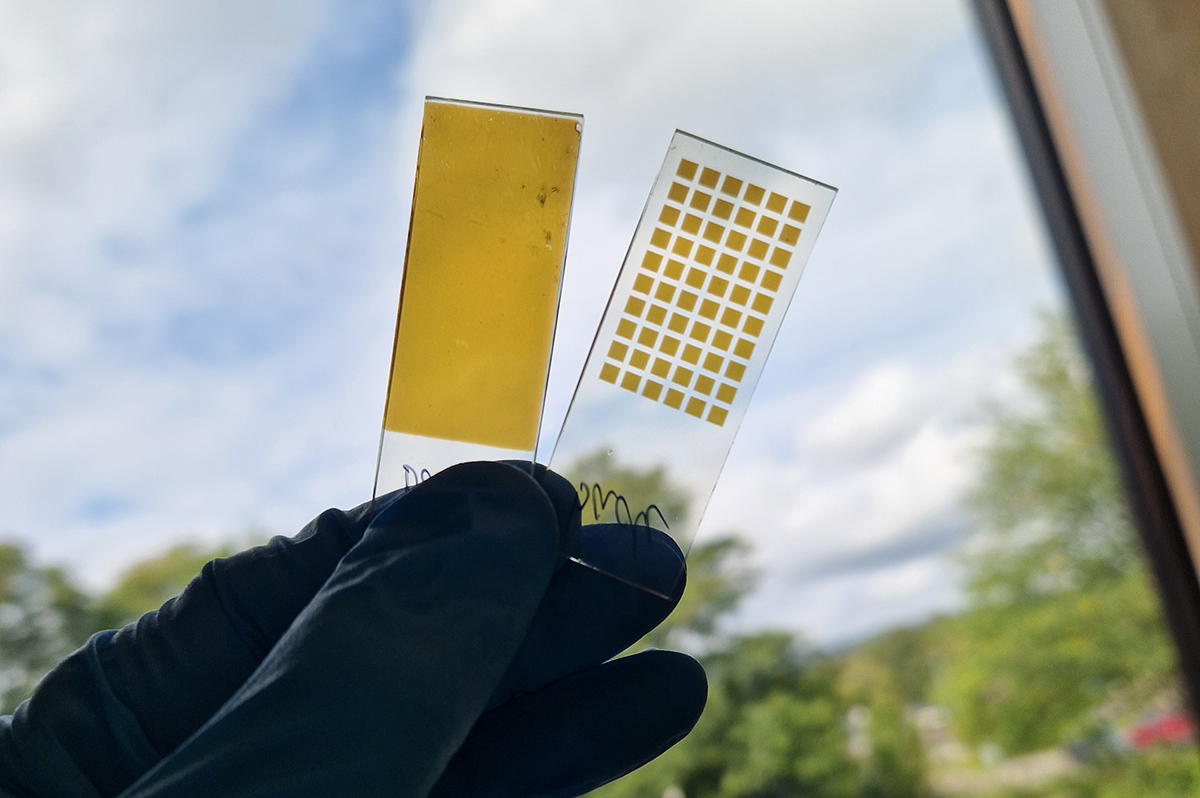

In our laboratory at SINTEF, a coated sample is placed inside a machine no larger than a household oven. Seconds later, it has been heated to temperatures of several hundred degrees Celsius and is ready for further analysis. In a conventional furnace, the same process might take hours.
In materials research, this apparently simple heating step is often a critical bottleneck. For our team, this is about much more than heating materials faster. It is about finding new ways to accelerate the development of technologies needed for a sustainable future.
Through the newly funded RAPIDO project, researchers at SINTEF and the University of Oslo will investigate how ultra-fast heat treatments can be used to develop advanced materials for hydrogen production, solar-fuel technologies and other clean-energy applications. The project is supported by the Research Council of Norway through its FRIPRO programme.

RAPIDO aims to develop new processing strategies for materials used in solar hydrogen production. By introducing rapid thermal processing (RTP), the project seeks to improve the efficiency and durability of photoelectrochemical (PEC) devices that convert sunlight and water into clean hydrogen fuel.
The hidden bottleneck in materials research
Many of the technologies needed for a low-carbon society, including for example electrolysers, solar-fuel devices, batteries and water/gas-treatment systems, depend on advanced materials whose properties are strongly influenced by heat treatment.
Behind all these technologies lies an important manufacturing step: thermal processing.
Heat treatment determines how atoms arrange themselves inside a material. It influences crystal structure, composition, defects and ultimately performance. In many cases, even small changes in processing conditions can significantly affect the final properties of a material.
Developing new materials is often a repetitive process. We make a sample, heat-treat it, characterize it, learn from the results and then repeat. Because the thermal treatment itself can take several hours, progress is slower than we would like.
What if a heat treatment took seconds instead of hours?
This is where Rapid Thermal Processing, or RTP, enters the picture.
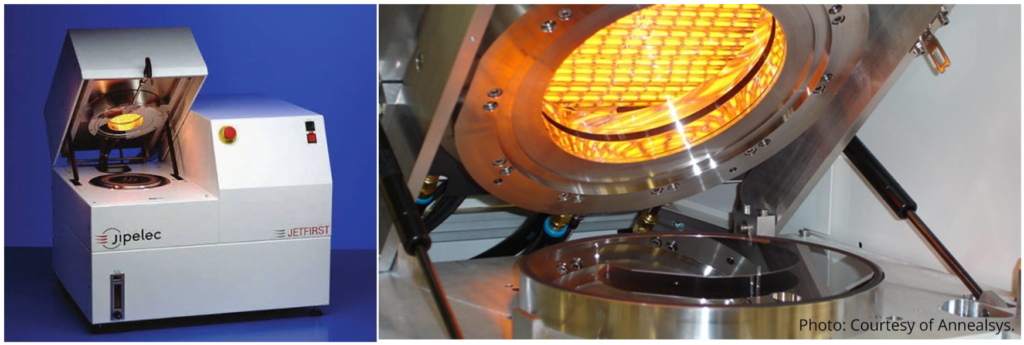
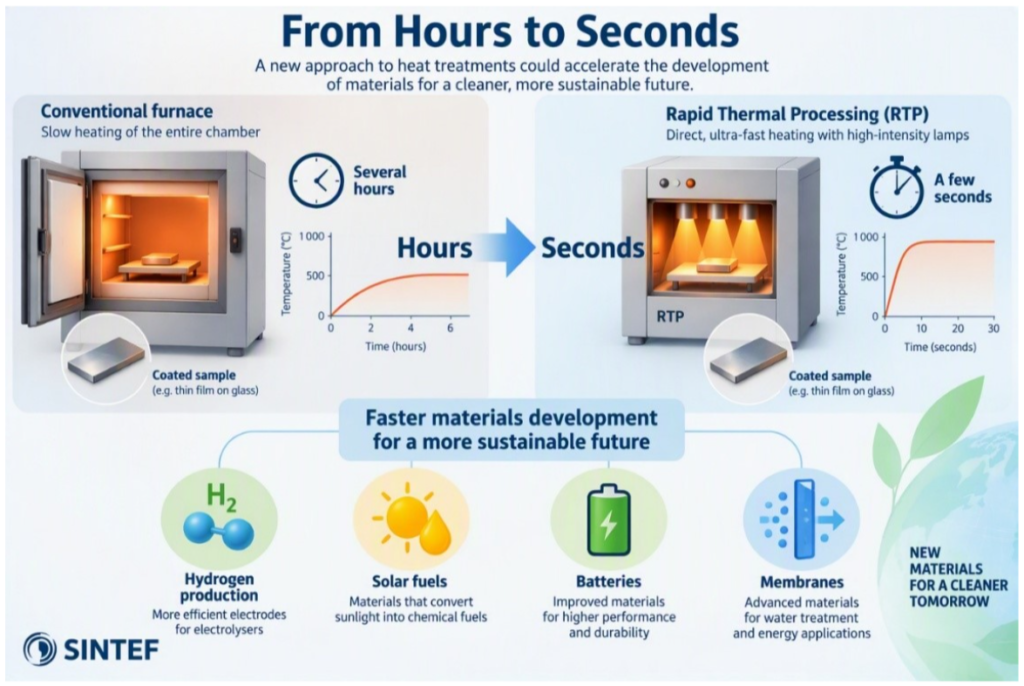
Unlike conventional furnaces, which slowly heat a large chamber, RTP uses high-intensity lamps to deliver heat directly to the material. Temperatures ranging from several hundred to more than a thousand degrees Celsius can be reached within seconds. A heat treatment that may require several hours in a conventional furnace can often be completed in less than a minute using RTP.
The technology is not new. RTP has been used extensively in the semiconductor industry, where precise temperature control is essential for manufacturing microelectronics. However, its potential for energy materials remains largely unexplored, despite growing interest in the field. A recent review by SINTEF/UiO researchers highlights emerging opportunities and remaining challenges.
The team research focus will investigate whether this approach can help accelerate the discovery and manufacturing of materials relevant for hydrogen production, solar fuels and other sustainable technologies.
More than just speed
The most obvious advantage of RTP is speed, but we believe the real opportunity may be much deeper.
When materials are heated for hours, atoms have time to move, diffuse and reorganize. By contrast, exposure materials to hight temperature for only a few seconds can create very different conditions. Remarkably, rapid heating can sometimes produce structures that are difficult or even impossible to obtain using conventional furnace treatments.
RTP is therefore not simply a faster furnace; it changes how materials experience heat. By controlling temperature and treatment time with great precision, we may be able to access entirely different structures and properties. In other words, rapid heating could become a tool not only for accelerating research, but also for expanding the range of materials available to researchers.
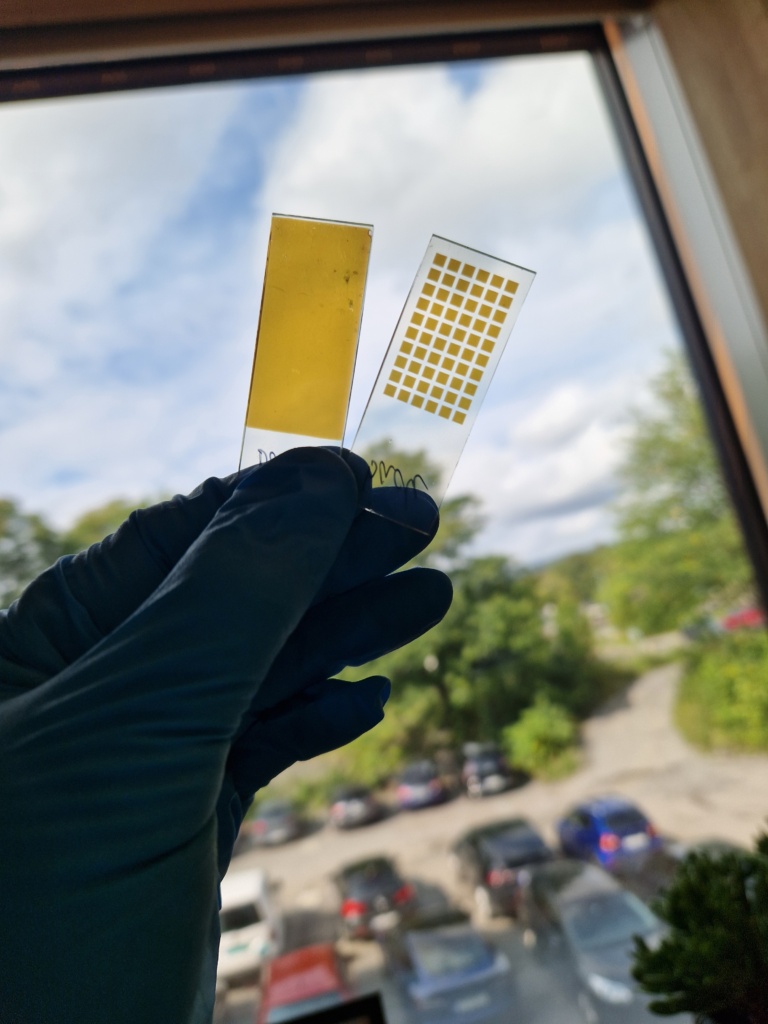
Figure 2: Example of a photoelectrode developed at SINTEF. The yellow coating is deposited on an electrically conductive glass substrate known as a transparent conductive oxide (TCO). Many TCOs begin to degrade when exposed to temperatures above approximately 500°C for extended periods, which limits the use of conventional heat treatments. RTP may help overcome this challenge by drastically reducing exposure times.
Protecting delicate substrates
Rapid heating may also open opportunities for materials that are difficult to process today.
Many advanced functional materials are deposited onto temperature-substrates such as technical glass, thin substrates or membranes. These supporting materials can degrade during prolonged exposure to high temperatures. Because RTP drastically reduces the time spent at high temperature, it may allow researchers to process active materials while reducing damage to the underlying substrate.
This could enable new device designs and material combinations that are challenging to achieve with conventional furnace treatments.
Towards better solar fuels and broader energy technologies
In RAPIDO, our initial focus is on photoelectrode materials for solar hydrogen production. These materials typically rely on carefully controlled thermal treatments to achieve the crystal structure and morphology required for efficient light harvesting and charge transport. The RAPIDO project will explore whether ultra-fast heating can deliver similar or improved performance while significantly shortening processing times.
Yet the impact of the project could extend well beyond solar fuels. Many of the scientific principles involved are also relevant to electrolysers, batteries, membranes and a variety of other energy and environmental technologies.
Accelerating innovation itself
The green transition requires new technologies. New technologies require new materials. And new materials require experimentation. The challenge is that discovering and optimizing materials can take time. By transforming how materials are thermally processed, RAPIDO aims to accelerate the discovery and optimisation of new materials. At the same time, the project will explore whether rapid thermal processing can unlock material structures that conventional approaches cannot easily achieve.
We often focus on the materials themselves, but sometimes progress comes from changing how we make them. By shortening one of the most time-consuming steps in materials development, rapid thermal processing could help researchers test more ideas, accelerate innovation cycles and speed the discovery of materials needed for a more sustainable future. After all, the path to sustainability may depend not only on discovering better or entirely new materials, but also on finding smarter and faster ways to develop them.










Comments
No comments yet. Be the first to comment!