Skip to content

SINTEF Blog Gå til forsiden

  • Energy
  • Ocean
  • Digital
  • Health
  • Industry
  • Climate and environment
  • Building
  • Society
  • EN
  • NO
Energy

ELEGANCY – progress meeting in Petten

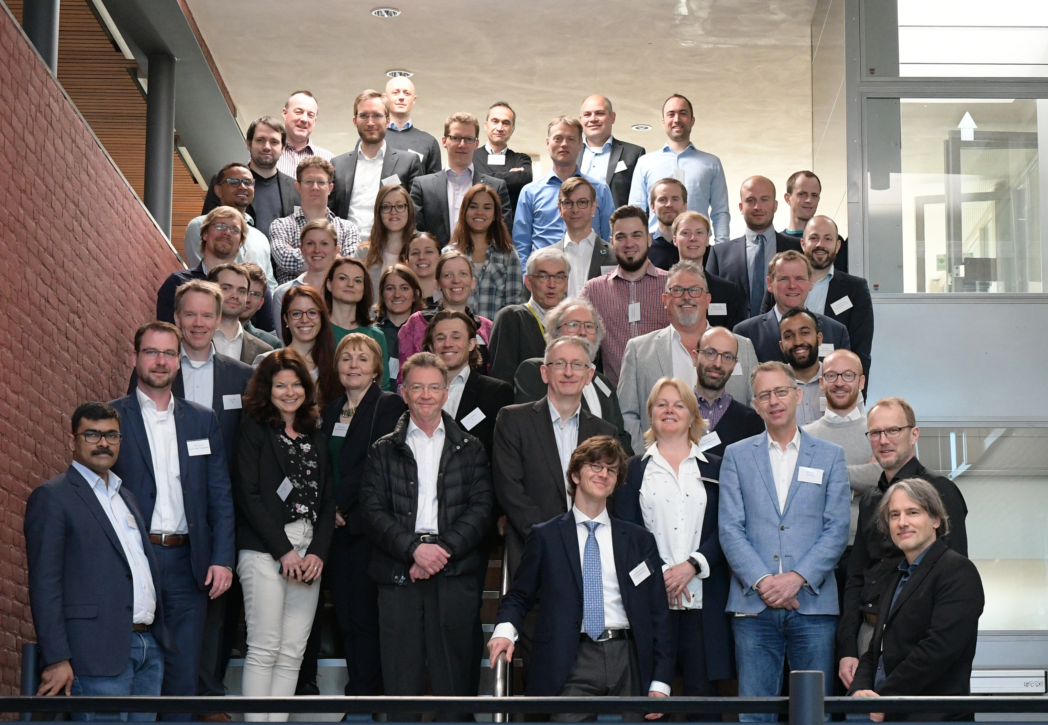
On 2 and 3 May, 55 participants from seven Europen countries met to discuss the progress in the ELEGANCY project at Petten in the Netherlands.

ELEGANCY project members gathered in Petten, the Netherlands. Photo: An Hilmo.
author
Svend Tollak Munkejord
Chief Scientist
Published: 28. May 2018 | Last edited: 14. Apr 2025
2 min. reading
Comments (0)

ELEGANCY, an ACT (Accelerating CCS Technologies) project, was kicked off in Brussels in October 2017. The main goal is to help fast-tracking the decarbonization of Europe’s energy system by combining two key low-carbon technologies: CCS and hydrogen.

This was the first project-wide meeting after the kick-off. The project members met at the Energy Research Centre of the Netherlands (ECN), now part of TNO.

During the first day, discussions were held in and between the different work packages, and a visit was paid to one of the ECN laboratories. There, the visitors could see, among other things, a facility for hydrogen production with CO2 capture using a sorption-enhanced water-gas shift (SEWGS) process. The raw material is blast furnace gases coming from the iron and steel industry.

The second day was dedicated to a plenary session with progress updates from the work packages. Project deliverables are already being published at the project homepage.

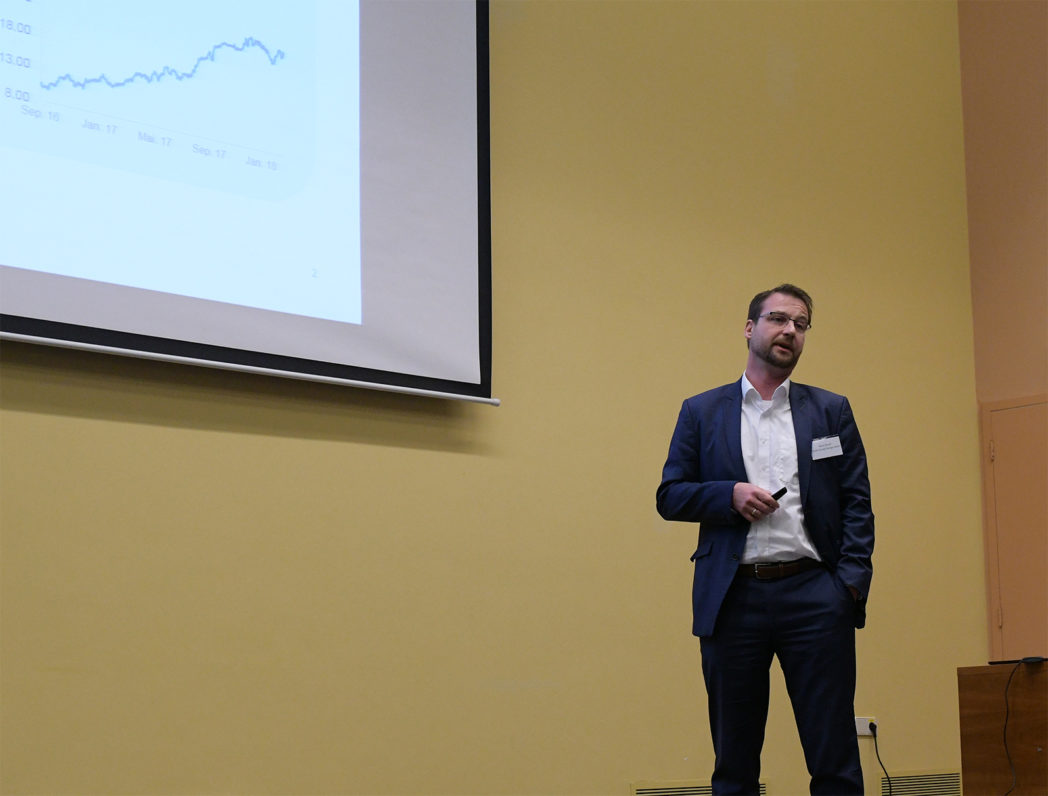
Harry Schreurs (RVO, the Dutch funding agency) addressed the delegates emphasizing the importance of communication. Photo: Svend T. Munkejord
René Schoof (Uniper) talked about low-carbon hydrogen in natural gas infrastructures. Photo: Svend T. Munkejord.
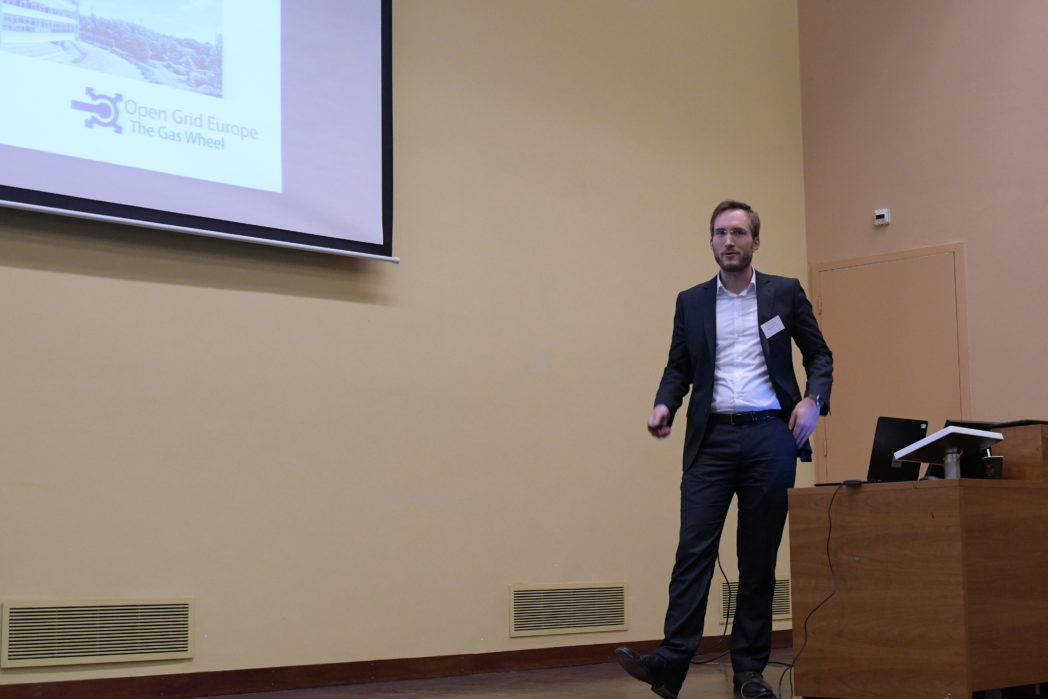
André Brauner (Open Grid Europe) expressed interest in several parts of the work carried out in ELEGANCY, including case studies, law and technology. Photo: Svend T. Munkejord.
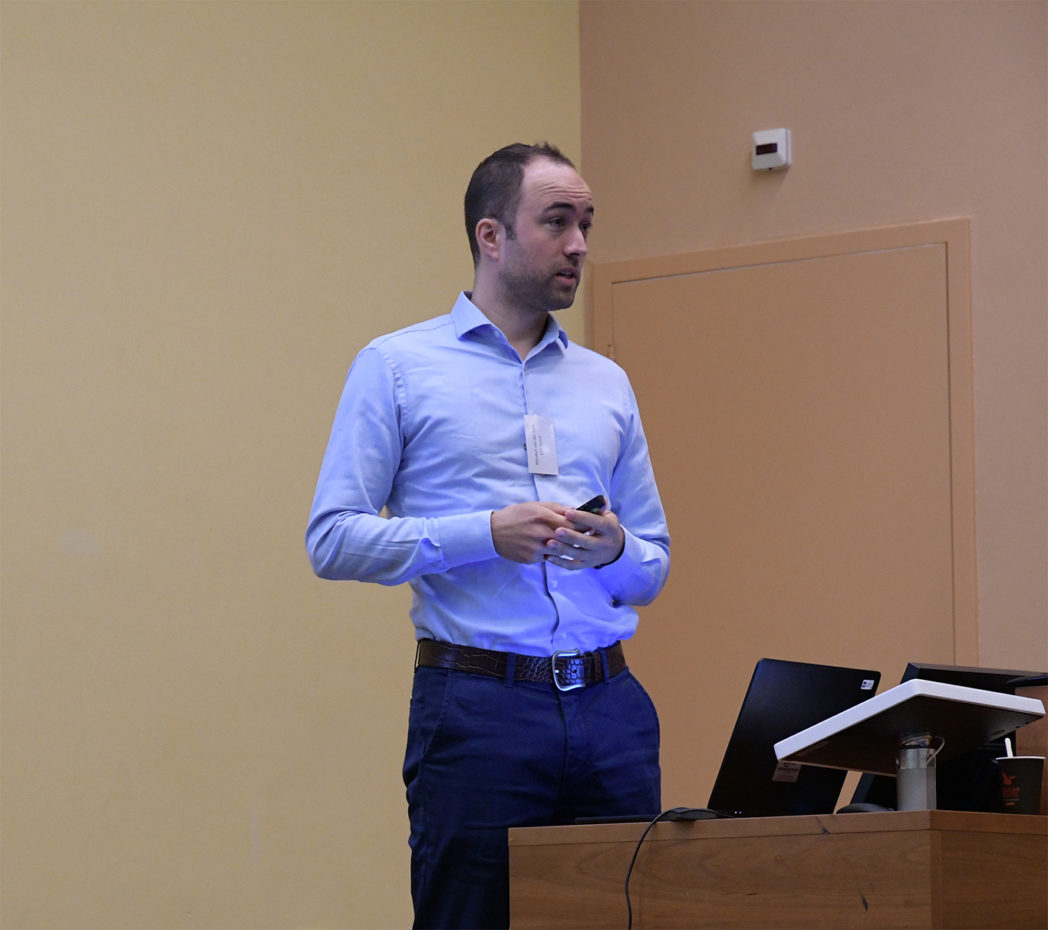
Mijndert van der Spek (ETH) gave an update on the work on the H2 supply chain and H2-CO2 separation. Photo: Svend T. Munkejord.
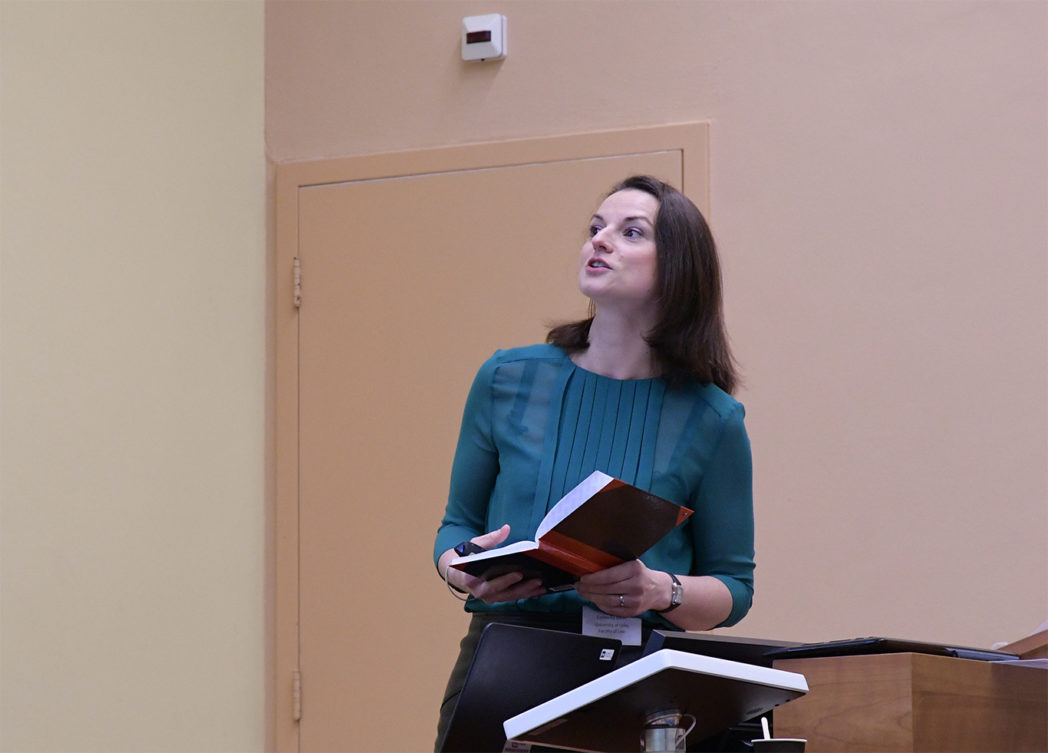
Cathérine Banet (University of Oslo) gave a progress report on the work on the business case development for H2-CCS integrated chains. Photo: Svend T. Munkejord.
Diana Iruretagoyena (Imperial College London) presented work on a H2-CCS chain tool and evaluation methodologies for integrated chains. Photo: Svend T. Munkejord.
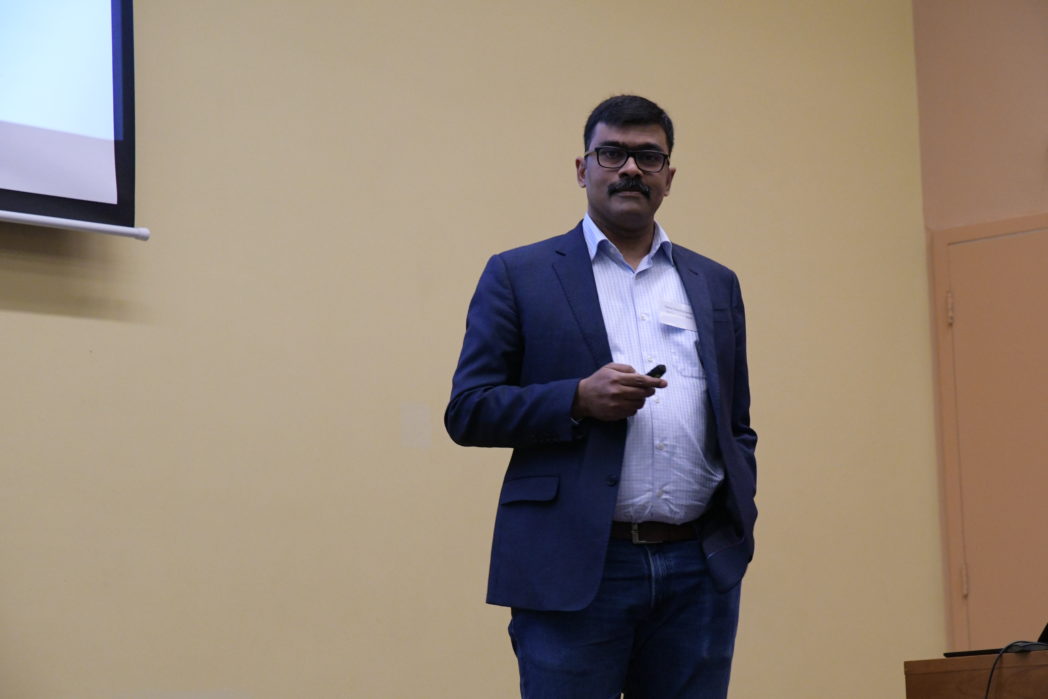
Rahul Anantharaman (SINTEF) presented a regional overview of requirements and potentials of hydrogen markets. Photo: Svend T. Munkejord.
Geraldine Torín-Ollarves, J P Martin Trusler and Cristina Bertulli (Imperial College London), Hans L. Skarsvåg and Åsmund Ervik (SINTEF) and Benedikt Semrau (Ruhr-University Bochum) discussing thermo- and fluid dynamical aspects of CO2 injection and storage. Photo: Svend T. Munkejord.

Comments

No comments yet. Be the first to comment!

Leave a comment Cancel reply

Your email address will not be published. Required fields are marked *

More about Energy

How much can energy-efficient voyage planning save? Evidence from 11 months of North Atlantic data

Author Image
Author Image
2 forfattere
Infographic showing the flow of thermal energy storage (TES) from surplus heat or cold to end users. On the left, red and blue thermometer icons represent surplus heat and cooling, accompanied by the text “Surplus heat or cold – Captured and stored for when it’s needed.” In the centre, a large panel titled “Thermal Energy Storage (TES)” presents three storage technologies. The top section, “Sensible TES,” shows a container with a thermometer and the text “Stores heat in one single phase.” The middle section, “Latent TES,” shows a water droplet and snowflake connected by circular arrows, with the text “Stores heat through phase change.” The bottom section, “Thermochemical TES,” shows two connected coloured circles that separate and reconnect, illustrating a reversible reaction, with the text “Stores heat through reversible reactions.” A large pale arrow-shaped wedge points from the TES panel toward the right side of the figure. On the right, three application areas are shown in separate boxes with icons: industrial processes, buildings, and data centres. The layout conveys that surplus heat or cold can be stored using sensible, latent, or thermochemical TES technologies and later supplied to industrial facilities, buildings, and data centres.

Thermal energy storage is already commercial  

Jorge Salgado Beceiro
Research Manager

Burning ammonia cleanly: How timing changes everything 

Author Image
Author Image
2 forfattere

Technology for a better society

  • About this blog
  • How to write a science blog
  • Sign up for our newsletter
  • News from NTNU and SINTEF
  • Facebook
Gå til SINTEF.no
SINTEF logo
© 2026 SINTEF Foundation
Privacy Editorial Press contacts Website by Headspin