Skip to content

SINTEF Blog Gå til forsiden

  • Energy
  • Ocean
  • Digital
  • Health
  • Industry
  • Climate and environment
  • Building
  • Society
  • EN
  • NO
Energy

ELEGANCY – accelerating CCS deployment by combining CCS and hydrogen

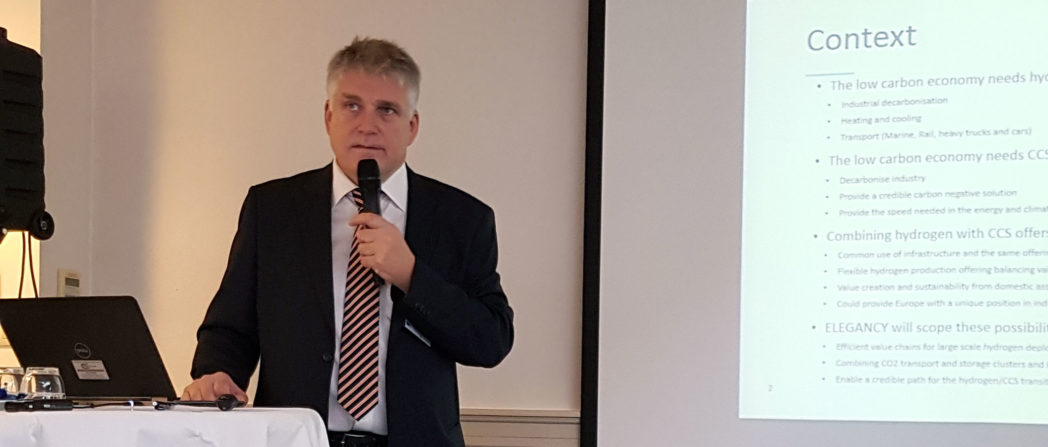
SINTEF's Executive Vice President for Sustainability, Nils A. Røkke, explained the mutual benefits of hydrogen as a CO2-free energy carrier combined with CCS.
author
Svend Tollak Munkejord
Chief Scientist
Published: 7. Nov 2017 | Last edited: 14. Apr 2025
2 min. reading
Comments (4)

The new project ELEGANCY – Enabling a Low-Carbon Economy via Hydrogen and CCS was kicked off 19—20 October in Brussels. As the name indicates, the project will investigate how hydrogen production can be accomodated in a CO2-capture, transport and storage (CCS) system, thus reducing CO2 emissions. SINTEF and the 20 other project partners from seven European countries think this is an elegant solution.

Accelerating CCS Technologies

ELEGANCY is one of eight new ACT (Accelerating CCS Technologies) projects funded by national funding agencies and the European Commission. ACT is a Horizon 2020 initiative coordinated by the Research Council of Norway.

ELEGANCY will perform scientific research on selected topics within hydrogen-CO2 separation  and CO2 transport, injection and storage.

To enable application of this research, ELEGANCY will develop an open-source design tool for fully integrated hydrogen-CCS chains.

The project will also study

  • legal issues
  • business development opportunities
  • public perceptions of CCS

Case studies

The findings, technologies and tools developed in the project will be applied to case studies in the Netherlands, Germany, Norway, Switzerland and UK. The main goal of the cases studies is to identify cost-effective opportunities for CCS coupled with hydrogen in each of these countries, taking the national situation into account.

I am eager, and humble, to take on the task as coordinator of such an interesting and challenging project, with so many strong partners from academia and industry. The project is scheduled to run for three years, and the total budget is about 15 million euros. Further details can be found on the project homepage.
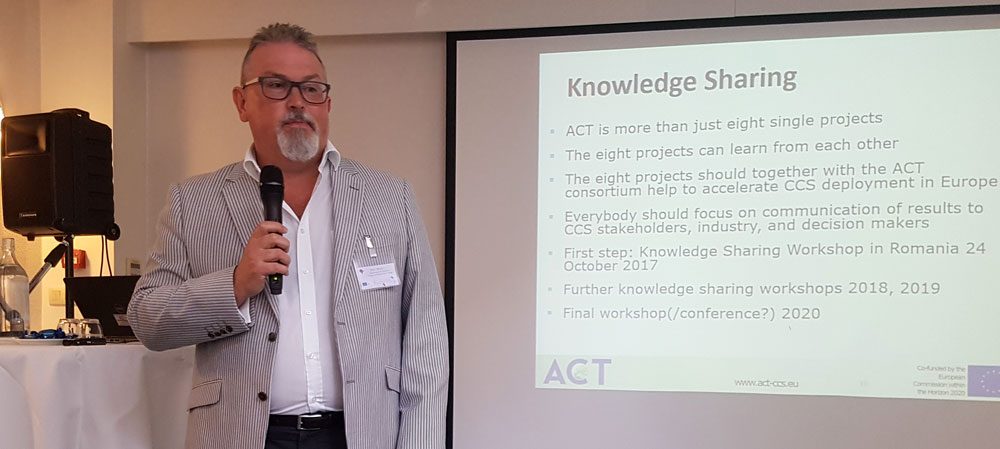
Brian Allison of the UK Department for Business, Energy and Industrial Energy represented the ACT consortium and highlighted knowledge sharing as a key expectation for the new ACT projects.
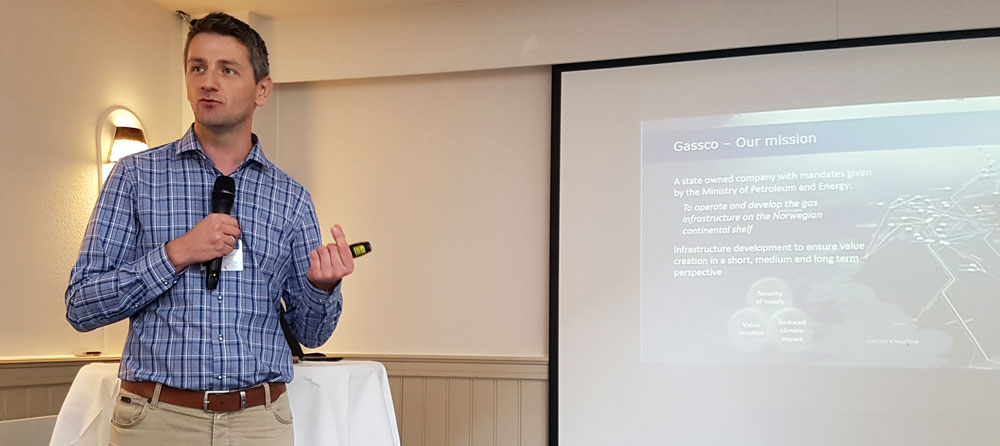
Mr Gudmundur Kristjansson talked about the Norwegian natural gas network operator Gassco's motivation for participating in ELEGANCY.
Mr Gudmundur Kristjansson talked about the Norwegian natural gas network operator Gassco’s motivation for participating in ELEGANCY.
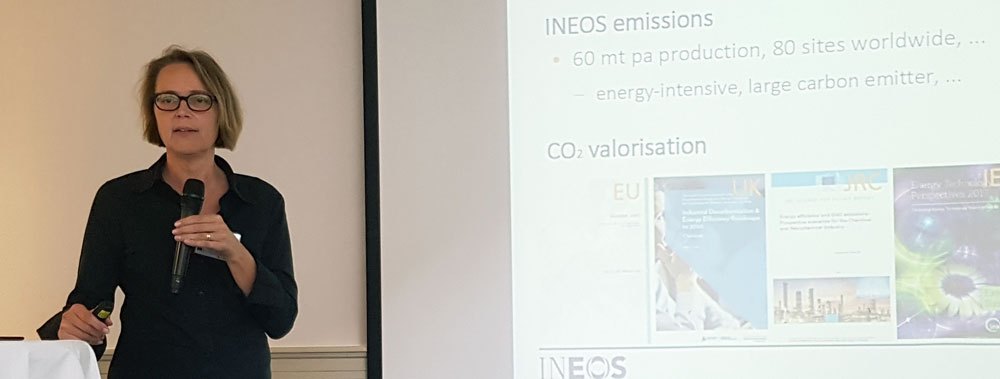
Dr Greet Van Eetvelde represents the petrochemical company INEOS in the consortium.
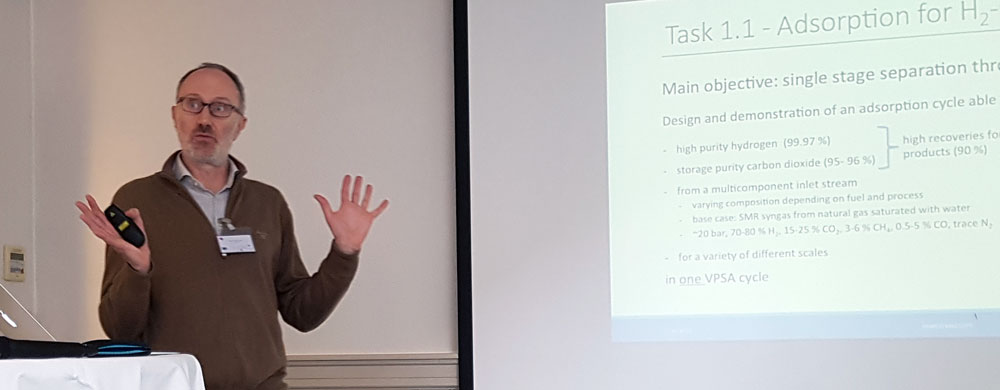
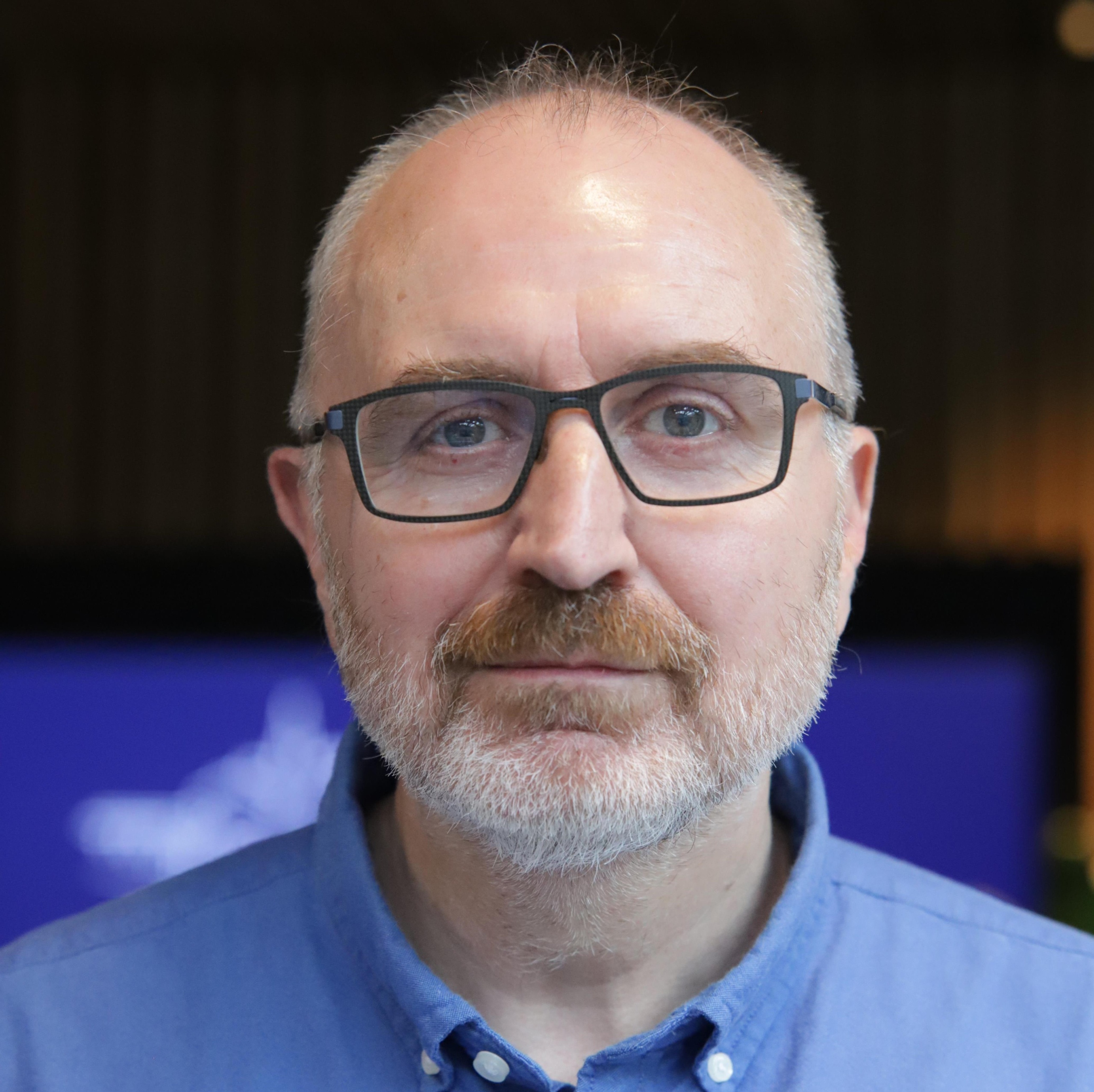
Professor Marco Mazzotti of ETH Zürich will lead ELEGANCY's work on hydrogen-CO2 separation.
Professor Marco Mazzotti of ETH Zürich will lead ELEGANCY’s work on hydrogen-CO2 separation.
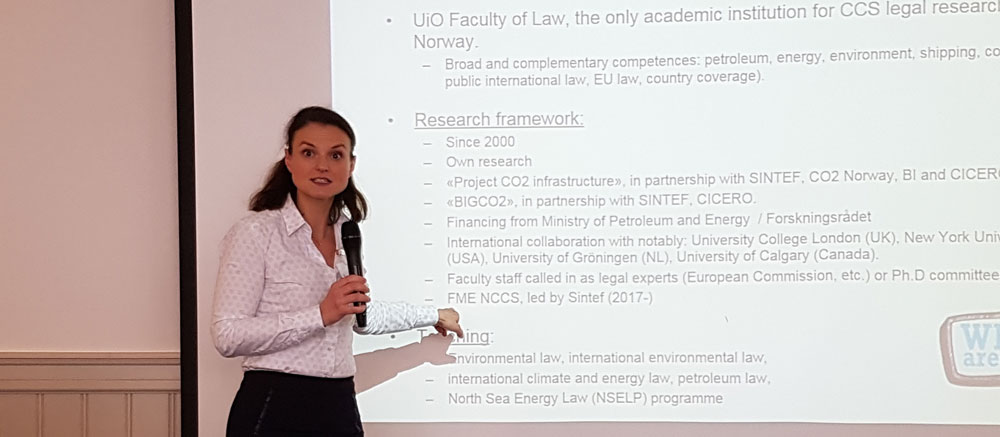
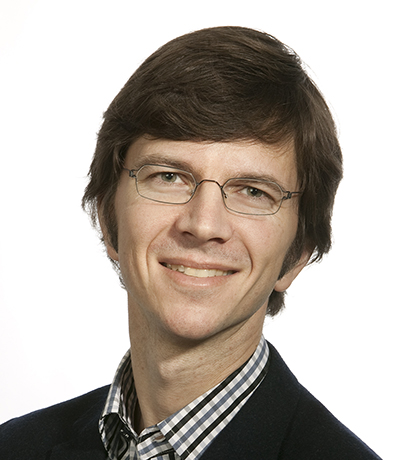
Associate Professor Catherine Banet of the University of Oslo is scheduled to lead the work package on business-case development.
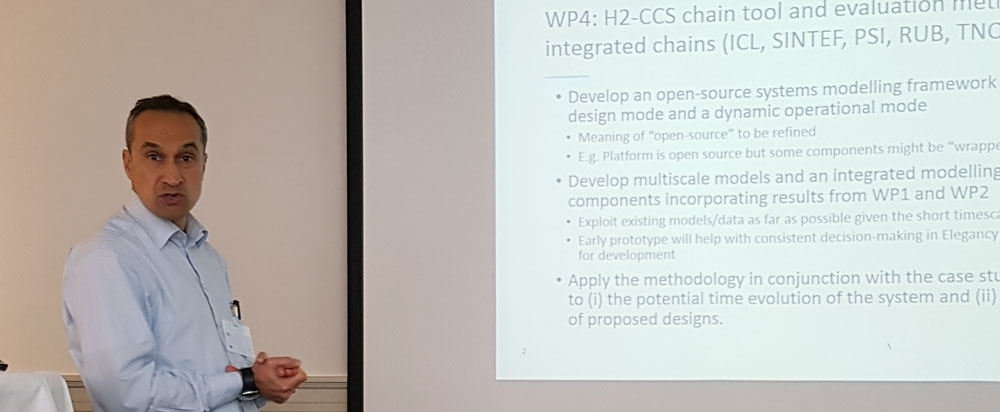
Professor Nilay Shah of Imperial College London will lead the development of a hydrogen-CCS chain tool.
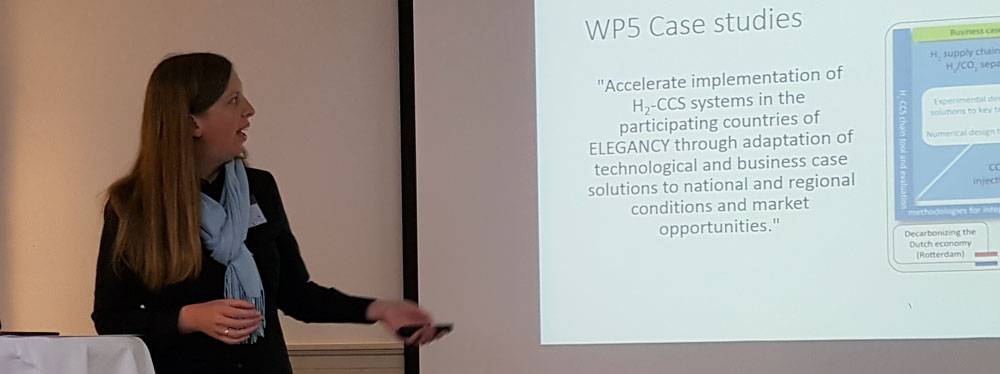
Dr Gunhild A. Reigstad of SINTEF is project manager and will lead the ELEGANCY case studies.
Brussel's famous citizen Manneken Pis in his autumn outfit.
Brussel’s famous citizen Manneken Pis in his autumn outfit.

All photos: SINTEF/Svend Tollak Munkejord
Comments

Bogdan Wojak says:
1. October 2018 at 18:06

As a comments please look for the “Alternative CCUS Infrastructure Pathways” at http://www.sulverenergy.com/ page Opportunities.
Thank you.
Best regards

Reply

Leave a comment Cancel reply

Your email address will not be published. Required fields are marked *

More about Energy

How much can energy-efficient voyage planning save? Evidence from 11 months of North Atlantic data

Author Image
Author Image
2 forfattere
Infographic showing the flow of thermal energy storage (TES) from surplus heat or cold to end users. On the left, red and blue thermometer icons represent surplus heat and cooling, accompanied by the text “Surplus heat or cold – Captured and stored for when it’s needed.” In the centre, a large panel titled “Thermal Energy Storage (TES)” presents three storage technologies. The top section, “Sensible TES,” shows a container with a thermometer and the text “Stores heat in one single phase.” The middle section, “Latent TES,” shows a water droplet and snowflake connected by circular arrows, with the text “Stores heat through phase change.” The bottom section, “Thermochemical TES,” shows two connected coloured circles that separate and reconnect, illustrating a reversible reaction, with the text “Stores heat through reversible reactions.” A large pale arrow-shaped wedge points from the TES panel toward the right side of the figure. On the right, three application areas are shown in separate boxes with icons: industrial processes, buildings, and data centres. The layout conveys that surplus heat or cold can be stored using sensible, latent, or thermochemical TES technologies and later supplied to industrial facilities, buildings, and data centres.

Thermal energy storage is already commercial  

Jorge Salgado Beceiro
Research Manager

Burning ammonia cleanly: How timing changes everything 

Author Image
Author Image
2 forfattere

Technology for a better society

  • About this blog
  • How to write a science blog
  • Sign up for our newsletter
  • News from NTNU and SINTEF
  • Facebook
Gå til SINTEF.no
SINTEF logo
© 2026 SINTEF Foundation
Privacy Editorial Press contacts Website by Headspin