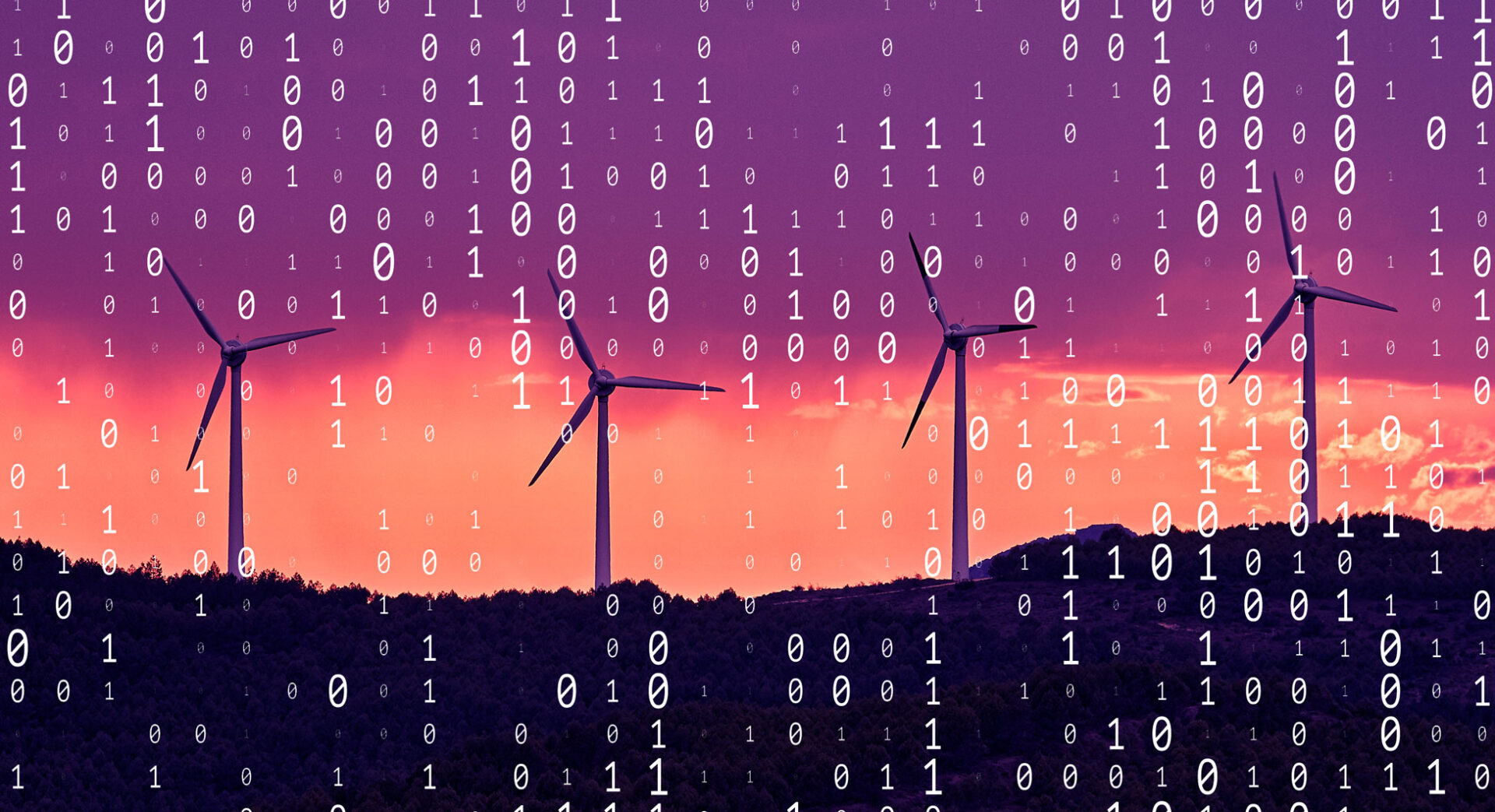

This is exactly what the FarmConners project aims to achieve: more green power from existing and upcoming wind farms, all for the price of a software update.
Most large wind farms today operate with the aim of maximising the power output at any given time. As the market share of renewables increases, wind farms will have to act more like conventional power plants: responding to the fluctuations of the energy market and providing services to the power system. Wind farm control (WFC) promises to achieve these goals, by coordinating the operation of the wind turbines within the same wind farm. However, the benefits of WFC, though broadly expected based on numerous research studies, have yet to be generally demonstrated. This is where the FarmConners project comes in.
What is Wind farm control?
Each wind turbine is by itself a complex system with aerodynamic, structural, and electromechanical dynamics. Combining a number of wind turbines in a wind farm adds even more complexity by means of the interaction between them, in particular the aerodynamic flow between wind turbines. Wakes from turbines placed further upstream reduce the available power at downstream turbines and increase their structural fatigue. The anticipated participation of wind farms in future wholesale electricity markets provides further incentives to extend the control objectives and to mitigate structural loads.
The benefit of wind farm control (WFC) is hard to prove or quantify in real, full-scale wind farms. Researchers use therefore computer simulations and wind-tunnel experiments under controlled conditions. However, various research groups use different mathematical models and scenarios to test and validate their WFC approaches. A general consent on the benefit of WFC is needed to convince the industry to broadly operate their wind farms using WFC.
The FarmConners project
SINTEF Energi participates in the H2020 project FarmConners which brings state-of-the-art achievements, ongoing research projects and industrial interests together to remove barriers for commercial implementation of WFC. A first step towards this goal was an expert elicitation which emphasized the importance of validation campaigns and a stronger collaboration across different disciplines working on WFC.
To support the latter, FarmConners organizes public workshops and has a mobility scheme giving consortium members the chance to visit each other. However, the ongoing pandemic also forced us to pause such activities and to extend the successful virtual collaboration that had already been implemented before.
Two examples of successful outcomes of our collaboration during the pandemic are:
1- FarmConners Wind Farm Control Benchmark
Careful validation of the modelling and control actions is of vital importance to build confidence in the value of coordinated WFC. The efficiency of flow models applied to WFC should be evaluated to provide reliable assessment of the performance of WFC.
Therefore, FarmConners launched its Wind Farm Control benchmark for code comparison.
The benchmark provides common test cases to demonstrate the potential benefits of wind farm flow control, such as increased power production and mitigation of loads. It builds on available data sets from previous and ongoing campaigns: synthetic data from high-fidelity simulations, measurements from wind tunnel experiments, and field data from a real wind farm.
A description of the benchmark, including a demonstration on how to participate and access the data can be found here: https://farmconners.readthedocs.io/en/latest/index.html
2- FarmConners Market Showcases
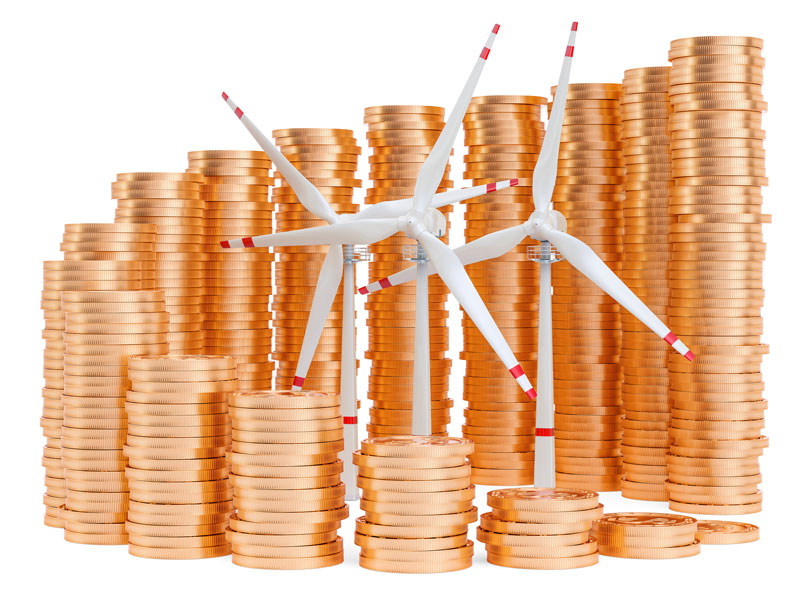
The current operation of wind farms with the primary objective of power maximisation may no longer be feasible with a higher share of wind power in the energy mix. In case of falling electricity prices, operators could curtail power generation in favour of mitigating structural loads. This flexibility provided by WFC could maximise profits.
The FarmConners project launched a set of showcases that researchers within the WFC community can use to assess the impact of their control strategies. These showcases are based on the TotalControl Reference Wind Power Plant with simulated weather data and energy system scenarios to estimate electricity prices for both 2020 and 2030, provided courtesy of the DTU Balancing Tool Chain.
A description of the market showcases, including information on how to participate and access the data can be found here: https://farmconners-market-showcase.readthedocs.io/en/latest/index.html
First results of both the FarmConners Wind Farm Control Benchmark and the FarmConners Market Showcases will be presented at the Wind Energy Science Conference 2021. Everyone is invited to participate and to become a co-author of the final publications.
More information and news about FarmConners can be found at the FarmConners project website.

The FarmConners project has received funding from the European Union’s Horizon 2020 research and innovation programme under grant agreement No 857844.





Comments
No comments yet. Be the first to comment!