
Industry creates vast amount of heat that is not utilised. We call this surplus heat or waste heat. In lack of competitive options, vast amounts of industrial surplus heat are dumped in the surrounding areas. This happens all over the globe.
Surplus heat recovery and re-utilization is therefore of great significance and has the potential of being a major factor in reaching national and international energy and climate goals.
Hard to re-use heat in rural areas
Direct re-use of surplus heat would ideally be the most efficient and cost-effective alternative, either internally at the same industry site, or used to cover domestic or industrial heating demands in the surrounding area. But this can at best only be part of the solution, as there is generally not enough such demand where the industry is actually located in Norway.
Norwegian energy intensive industries are typically located in rural areas, where there is nowhere to use the surplus heat in the vast quantities that are available. In these cases heat-to-power conversion is a very interesting alternative.
Electric power has very high flexibility for distribution and re-use, but so far the cost of producing electric power from surplus heat has been too high to encourage widespread implementation.
In our project, COPRO, we aim to develop new, industry relevant technology to convert surplus heat to power to overcome the existing barriers.
First year behind us
The first year of the project is now behind us, where the research performed has been a bit on the fundamental side;
- developing numerical methods for calculating properties for pure fluids and mixtures,
- and preparing simulation and design models for components and power cycles to explore.
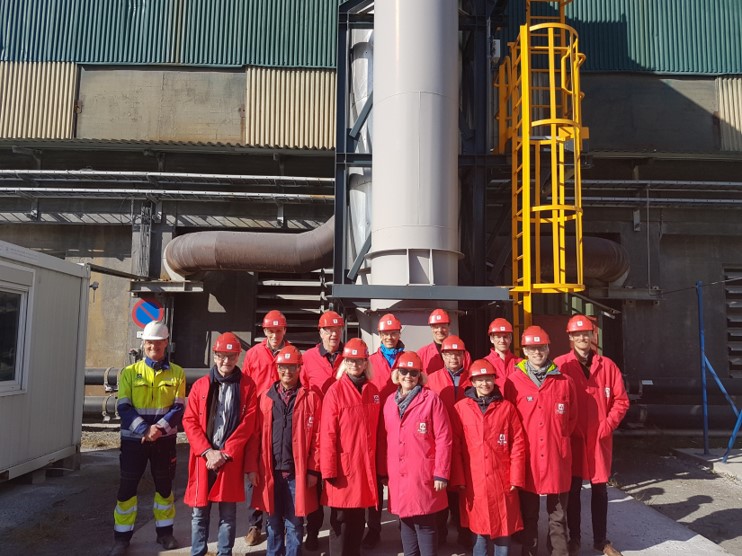
The relation between fundamental work and COPRO’s intended, final applications is not always immediately obvious. It was therefore perfect timing when industry partner Alcoa’s invited to host a consortium meeting at their plant in Mosjøen in northern Norway.
The Alcoa case
Alcoa is one of the world’s largest producers of Aluminium, and the plant in Mosjøen outputs about 200 000 tons of primary aluminium per year, mainly exported via ships as various cast qualities and alloys. Aluminium production is an electro-chemical process that consumes carbon anodes, and the plant’s on-site anode factory has one of many promising surplus heat sources that can be utilized for power production.
Big numbers
Any electric power produced from surplus heat will be put directly back into the process; Alcoa Mosjøen consumes 2.7 TWh of electric energy annually. As a reference, the total electricity consumption in Norway is about 115 TWh.
Alcoa and GE Power Norway, has already begun pilot implementation of heat recovery heat exchangers and heat-to-power conversion from several heat sources at the plant.
Significant energy savings, reduce emissions and cost-efficient
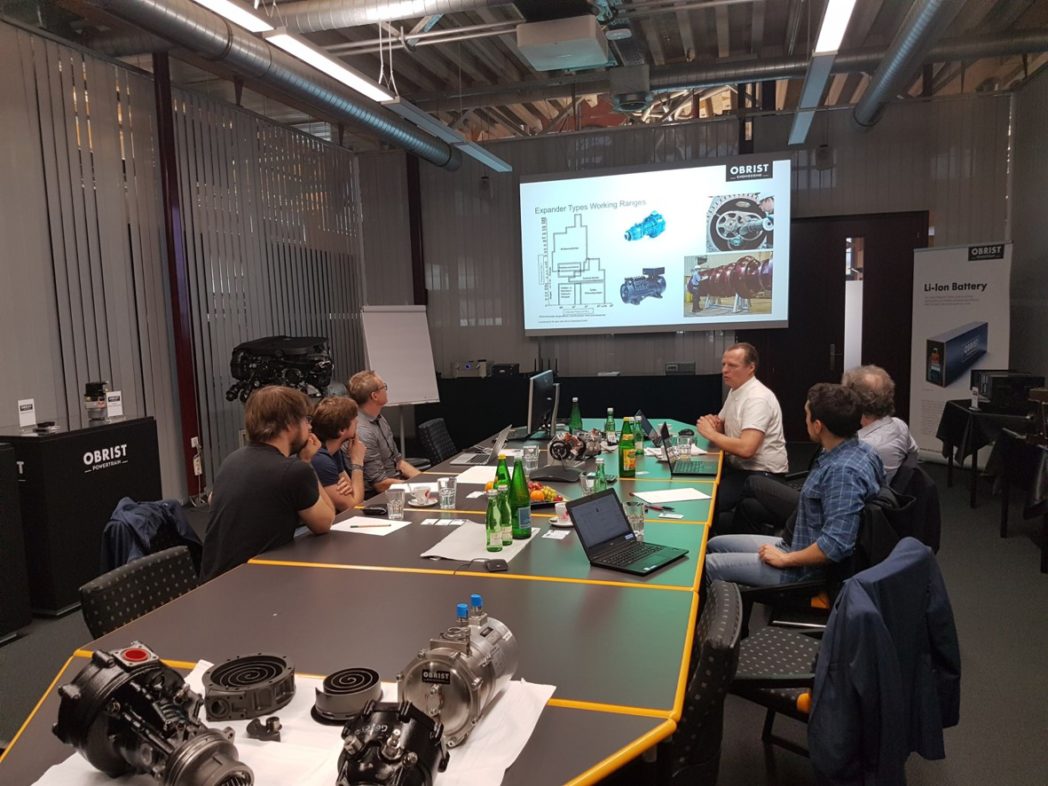
The consortium meeting included technical presentations from both Alcoa and GE, focusing on the thermal energy flow and concrete efforts to improve energy efficiency at the plant.
It was made clear that large scale heat recovery and utilization is a scenario that could yield significant energy savings, reduce direct emissions, and be a cost effective investment.
And importantly, the experience after almost 10 years of pilot testing at the plant was positive from both Alcoa personnel and technology provider GE.
Boosts the project work
The extensive plant tour took us through all the main production stages and current locations of heat recovery pilots. Seeing the industry plant and process stages up close and in real life gives a real boost to the project work. It adds context to the work, provides a relatable framework for the intended application of the new technology, and gives valuable input for real-life constraints and optimization opportunities.
We are looking forward to plant visits to other industry partners in the project, Hydro and Statoil, in the future!








Comments
No comments yet. Be the first to comment!