
Skip to content

SINTEF Blog Gå til forsiden

  • Energy
  • Ocean
  • Digital
  • Health
  • Industry
  • Climate and environment
  • Building
  • Society
  • EN
  • NO
Energy

FLEX4FACT: Integrating more renewables in the industry energy mix

FLEX4FACT aims to increase renewable penetration in the industry energy mix, overcoming the challenges of fluctuations in prices and availability.

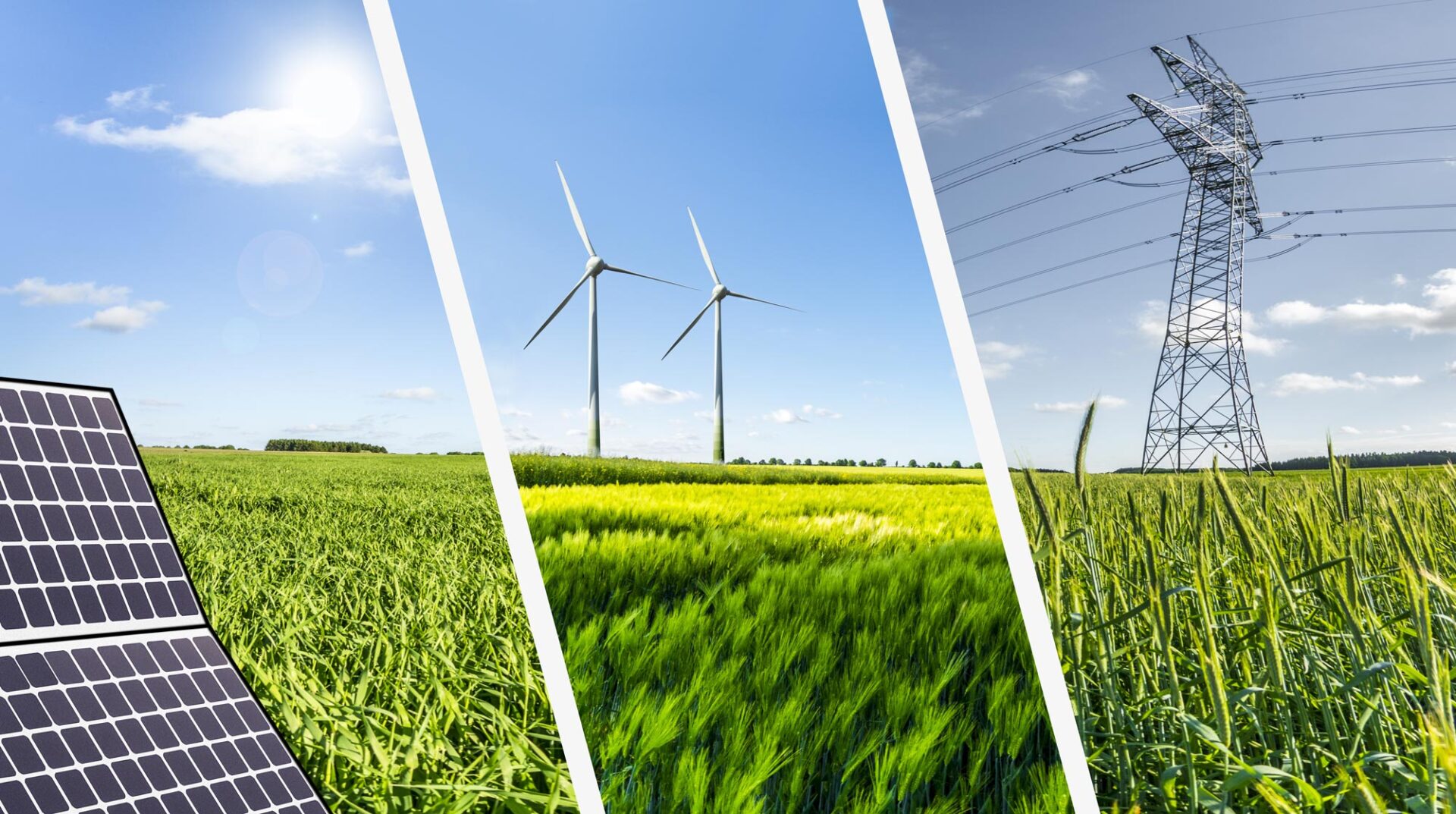
Image split in three parts, showing solar panels, wind turbines and transmission masts.
author
Chiara Caccamo
Research Manager
Published: 31. May 2022 | Last edited: 4. Apr 2025
2 min. reading
Comments (0)

Now more than ever, Industry, Research and Society are called on to give the energy transition a boost. The EU’s recent launch of its REPowerEU strategy reinforces pledges to strengthen clean energy and improve efficiency, following the Energy crisis ignited by the invasion of Ukraine.

We were already proud of FLEX4FACT, but we now feel even more responsibility given what its research and innovation activities will mean for the industry and society.

FLEX4FACT aims to increase renewable penetration in the industry energy mix, overcoming the challenges of fluctuations in prices and availability. It will do so by exploiting plant production flexibility, energy stream optimisation and local generation (and storage) potential.

The ambition (and promise!) is to develop and demonstrate an innovative methodology for industries to assess the current and prospective potential for increased integration of renewables and better utilisation of excess energy through the improved process and plant-level flexibility.

Process Digital Twins will be leveraged to study energy optimisation within the plant and potential interaction with surrounding communities, while a cloud platform will interact with the grid operators to manage and valorise the energy stream.
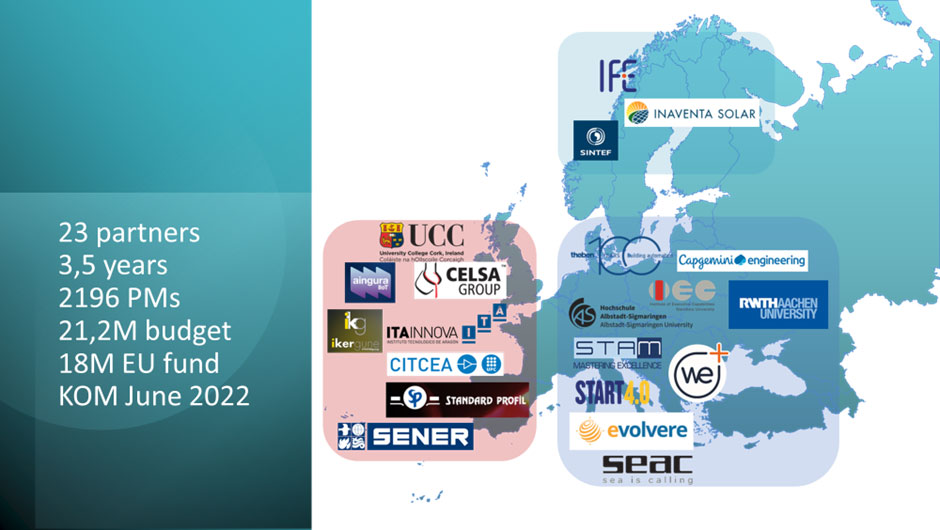
Illustration showing the logos of the FLEX4FACT project partners, as well as the following information: 23 partners, 3.5 years, 2196 PMs, 21.2M budget, 18M EU funds, KOM June 2022.
FLEX4FACT partners and numbers

The FLEX4FACT consortium will hold its kick-off meeting mid-June in Barcelona.
Comments

No comments yet. Be the first to comment!

Leave a comment Cancel reply

Your email address will not be published. Required fields are marked *

More about Energy

Infographic showing the flow of thermal energy storage (TES) from surplus heat or cold to end users. On the left, red and blue thermometer icons represent surplus heat and cooling, accompanied by the text “Surplus heat or cold – Captured and stored for when it’s needed.” In the centre, a large panel titled “Thermal Energy Storage (TES)” presents three storage technologies. The top section, “Sensible TES,” shows a container with a thermometer and the text “Stores heat in one single phase.” The middle section, “Latent TES,” shows a water droplet and snowflake connected by circular arrows, with the text “Stores heat through phase change.” The bottom section, “Thermochemical TES,” shows two connected coloured circles that separate and reconnect, illustrating a reversible reaction, with the text “Stores heat through reversible reactions.” A large pale arrow-shaped wedge points from the TES panel toward the right side of the figure. On the right, three application areas are shown in separate boxes with icons: industrial processes, buildings, and data centres. The layout conveys that surplus heat or cold can be stored using sensible, latent, or thermochemical TES technologies and later supplied to industrial facilities, buildings, and data centres.

Thermal energy storage is already commercial  

Jorge Salgado Beceiro
Research Manager

Burning ammonia cleanly: How timing changes everything 

Author Image
Author Image
2 forfattere

Capturing CO₂ from waste: 14 lessons on turning a hard idea into a real project

Author Image
Author Image
Author Image
3 forfattere

Technology for a better society

  • About this blog
  • How to write a science blog
  • Sign up for our newsletter
  • News from NTNU and SINTEF
  • Facebook
Gå til SINTEF.no
SINTEF logo
© 2026 SINTEF Foundation
Privacy Editorial Press contacts Website by Headspin