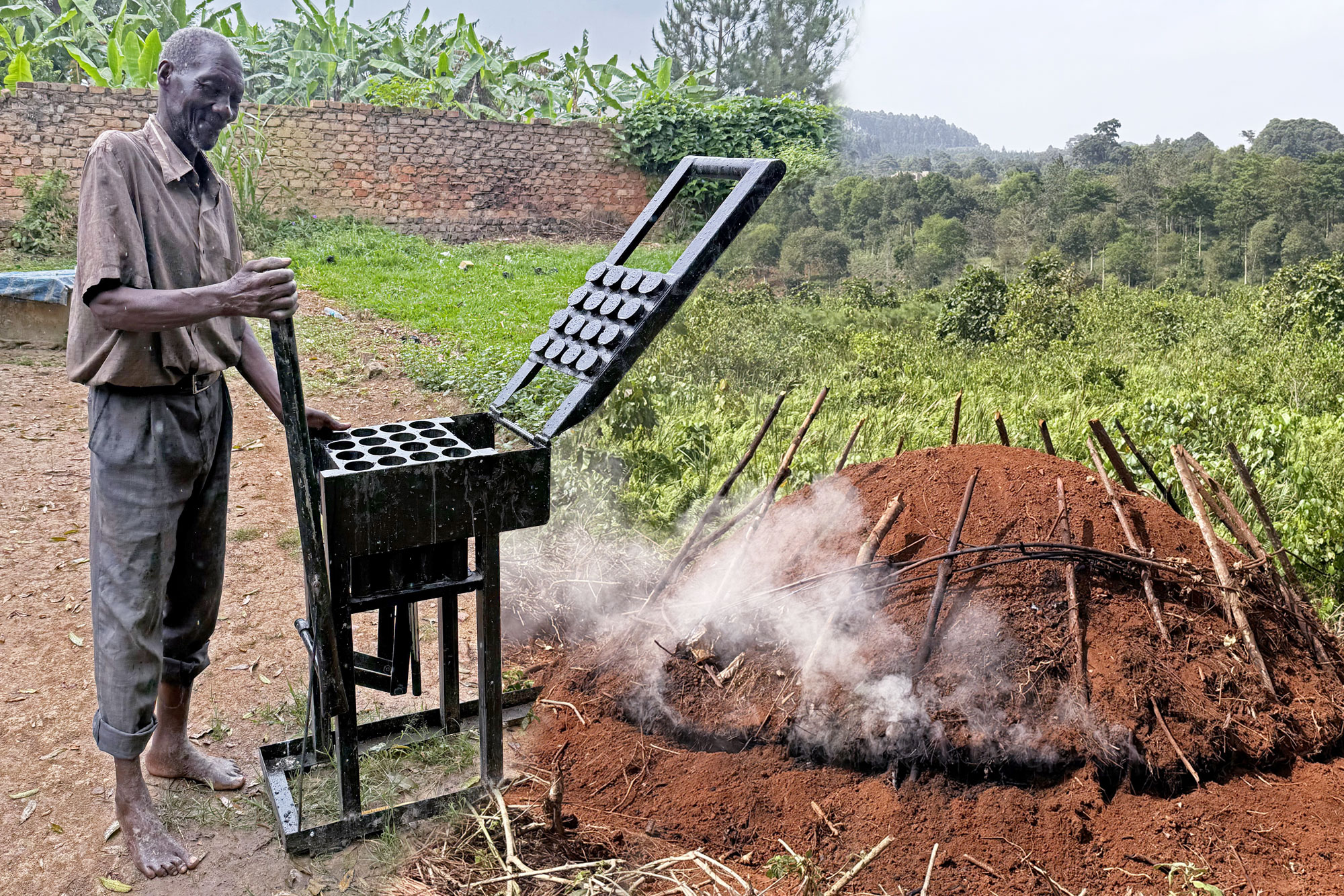
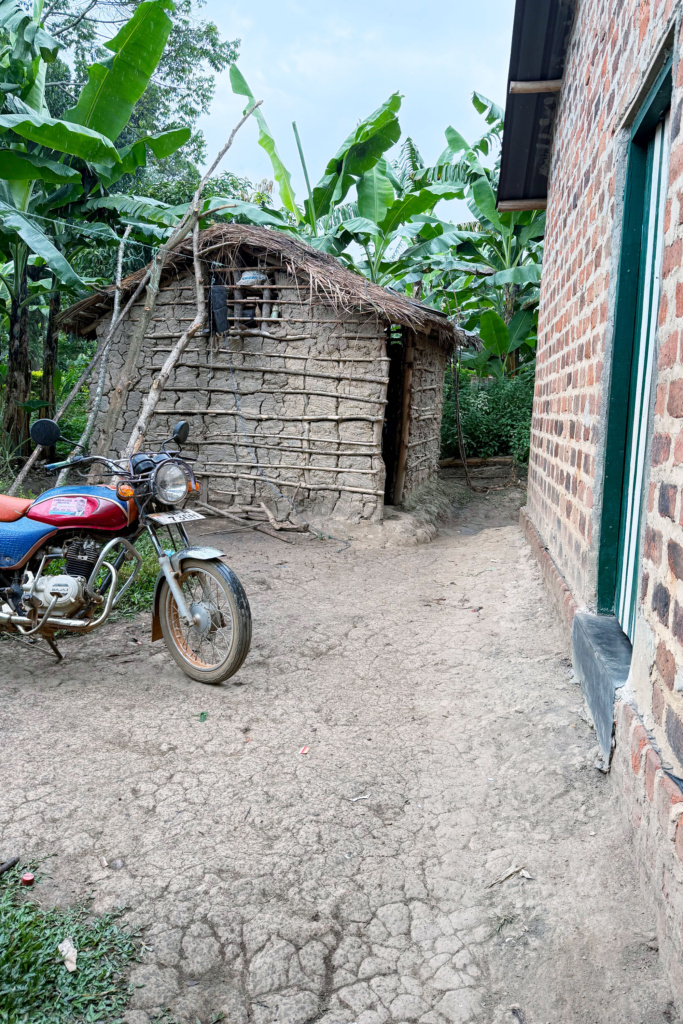
The smell reaches us before anything else does. It’s a smell that we know all too well from our lab. Some say it smells like a bonfire or like bacon. But we know that the smell is actually traditional charcoal production. Despite having a PhD on the topic and over a decade of experience in the field, this is the first time that we see this method of charcoal production in real life.
It’s December 2025, and we are driving through rural Uganda: a country that just a few months earlier, we didn’t expect to be visiting. We are here to meet our Ugandan partners, as well as to understand the challenge we’ve been tasked to solve, and to develop an idea that is supposed to help us do just that.
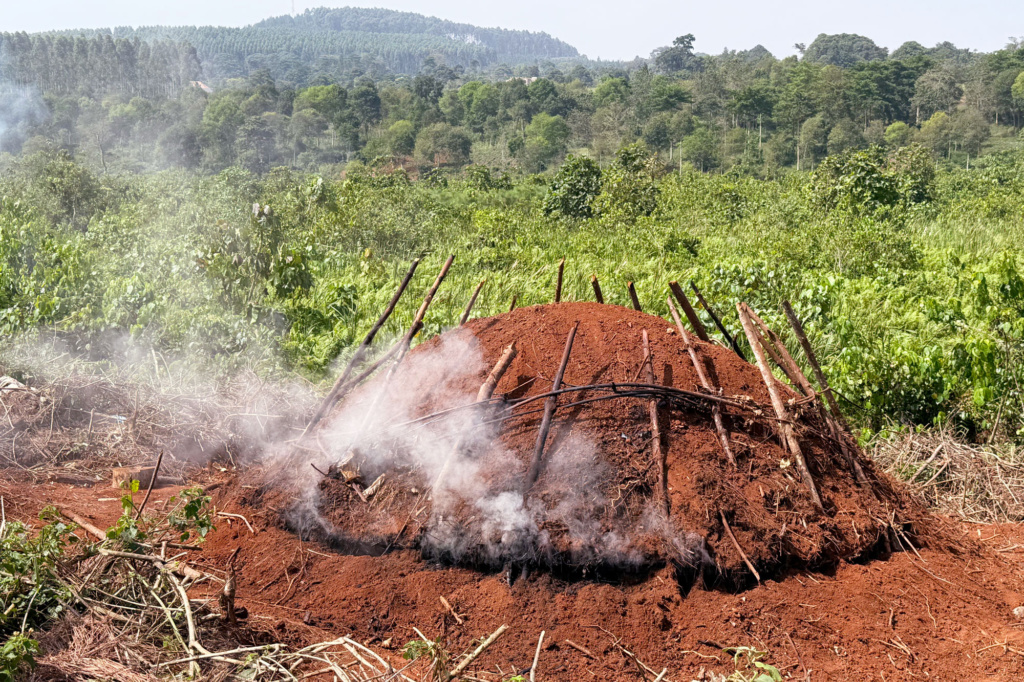
This is the first post in a series following our project on developing a sustainable biochar value chain for rural Uganda, a project funded by Norec, the Norwegian Agency for Exchange cooperation.
The challenge: charcoal production is a key chapter in the story of Uganda’s forests
Uganda is one of the ten most biodiverse countries on the planet, but it is also losing its forests fast to illegal logging. A lot of that wood ends up as charcoal, the fuel of choice for cooking, especially in urban and peri-urban areas, largely due to its affordability and strong connections to traditional Ugandan cooking methods.
This is the challenge we’re here to help solve.
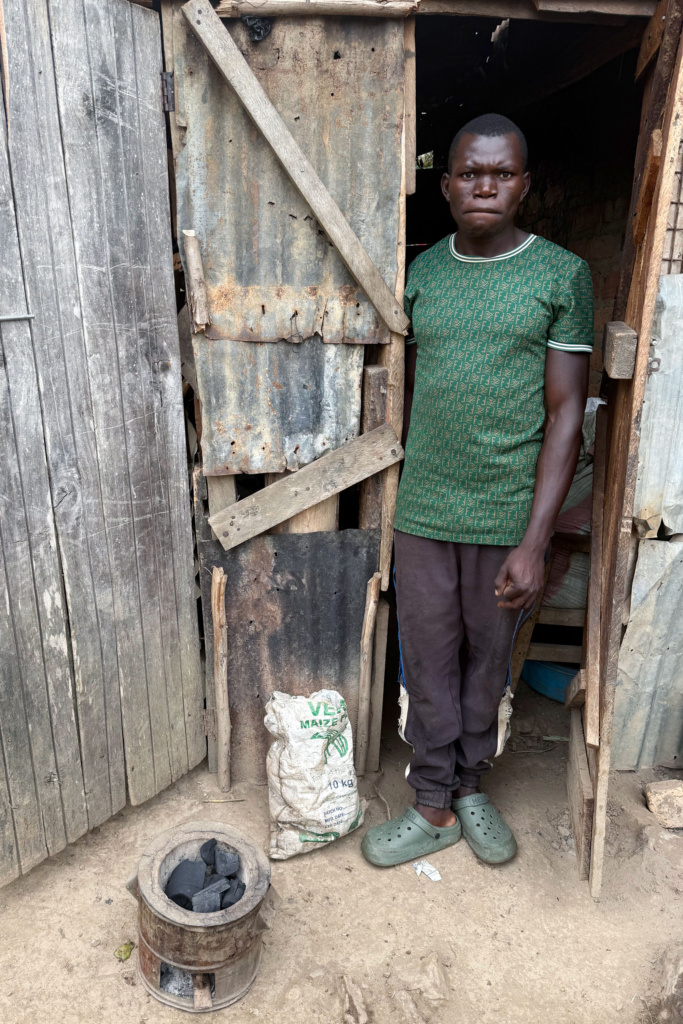
Over the last 20 years, Uganda has lost 1.2 million hectares of forest, which is 87% of its natural forest. In 2024 alone, natural forest cover shrank by 27,000 hectares. Not only does this result in a loss of biodiversity, but it also drives CO₂ emissions, erosion and flooding.
Furthermore, because charcoal-reliant cooking is a major source of airborne particulate emissions, Uganda’s air quality is now considered unsafe. In Uganda, the inhalation of smoke and particles is a leading cause of death, together with malaria and HIV.
There are initiatives to address this problem, such as the government’s National Integrated Clean Cooking Strategy. However, the cultural attachment to charcoal is strong, and even small changes are very difficult to implement; one cannot simply legislate people away from the fuel that their food is meant to be cooked over.
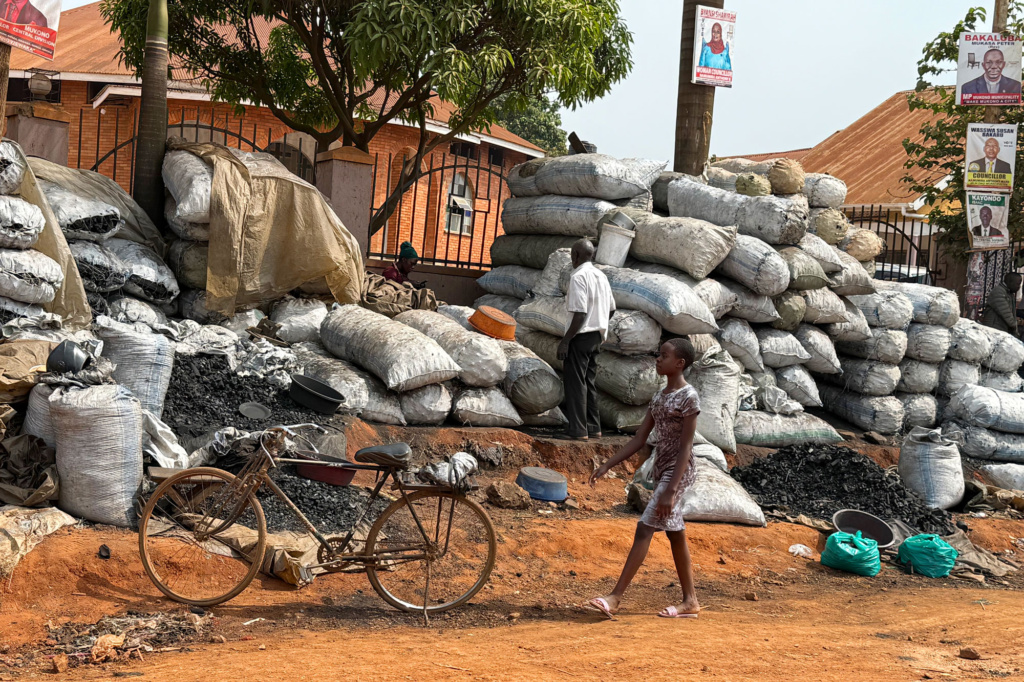
Norway has also backed a number of clean-cooking initiatives across Africa over the years. However, these initiatives, and plenty of similar projects elsewhere, have struggled to outlast their own funding period. This is often because the team didn’t fully understand the barriers to adoption, proposed solutions too expensive to scale, or didn’t involve local people early enough in implementation and learning.
Our idea: charcoal that doesn’t cost a forest
Our project started with a simple e-mail that we received in August of 2025 from a locally-run Ugandan non-profit entity looking for a contact with knowledge about biochar. When we answered that e-mail on a Friday evening after a busy work week, we had no idea it would be the start of a journey that we now hope will continue for many years.
Our starting point is simple: most initiatives that aim to move people away from charcoal as a fuel fail due to people’s deep attachment to cooking traditions. But what if we changed the fuel in a way that is not immediately obvious?
In other words, what if we kept charcoal and just changed how it is produced?
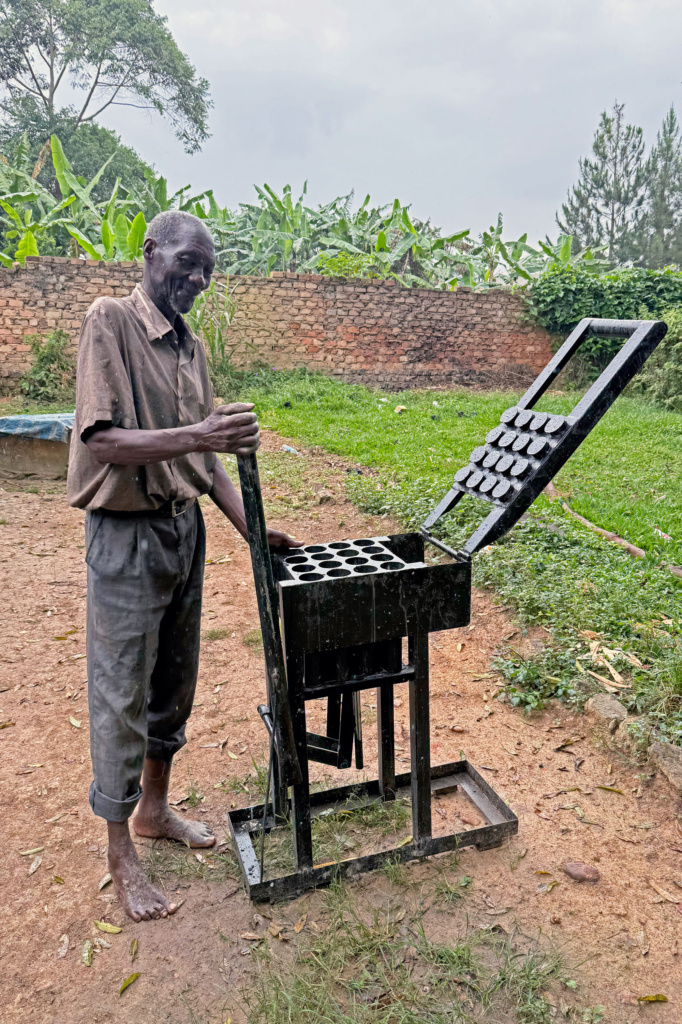
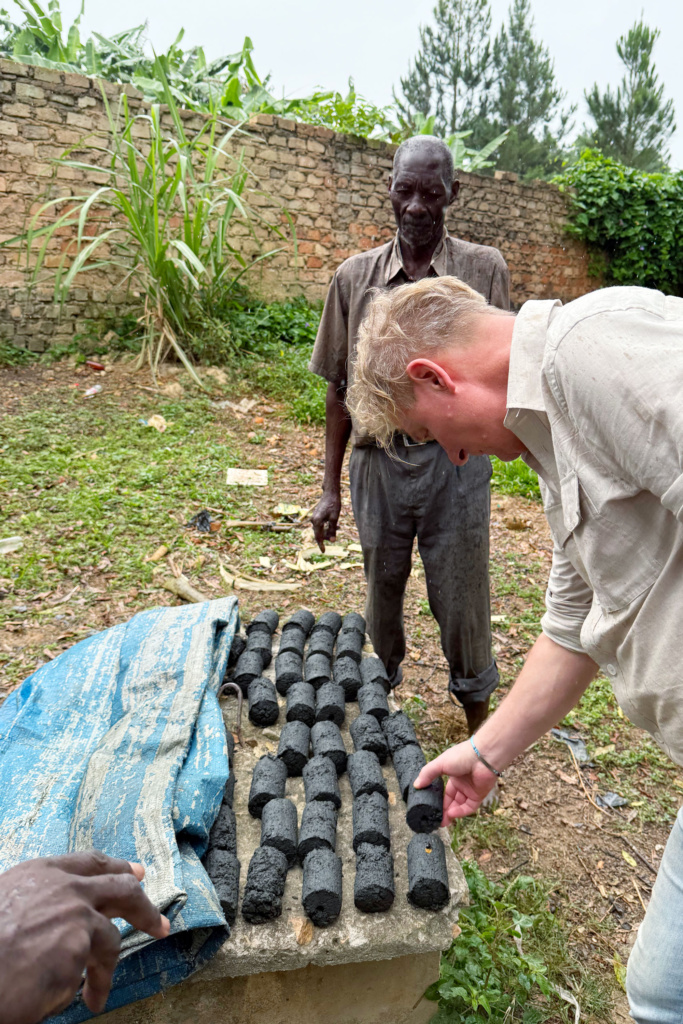
Uganda produces large volumes of agricultural residues: maize cobs and stalks, rice husks, coffee husks, and more, most of which is currently burned as waste or left to rot. The country also has an invasive, fast-growing wood species that land managers are often trying to remove. Both of these raw materials could be used to make biochar, which could replace the charcoal that is currently produced from the natural forest.
The project: a multilayered approach for sustainable change
Out of this basic idea, we have developed an approach that can provide several, complementary solutions at once:
1. A cleaner fuel value chain
Our goal is to investigate whether biochar-based bio-briquettes made from residues and invasive wood can be produced reliably and sold at an affordable price. This would take the pressure off natural forest without requiring anyone to give up charcoal.
2. Biochar as a soil amendment
Uganda’s soil and climate give it real potential for growing food. Agriculture is by far the country’s largest source of work, and employs over 70% of Ugandans under 30. Despite this, the country still relies heavily on imported food staples, and almost 60% of the population lives in poverty. Global warming has created further challenges for farming, as changing rain patterns cause more frequent flooding and erosion.
While some of the biochar would be used for cooking food, a portion could be added to the soil. Biochar in soil can improve water retention and nutrient availability, while locking carbon into the ground as a form of long-term storage. If the carbon storage can be verified and sold on the voluntary carbon market, this would create a new, plannable source of income for a rural community. Both results, a measurable improvement in crop yields for smallholder farmers as well as a predictable small income, are direct incentives to keep the value chain running beyond the duration of our project funding.
3. More efficient cooking
There is one major challenge that our biochar idea is unlikely to fully address: the critical pollution levels that result from burning it.
While how the biochar is used might be more challenging than its production, it is at least as important. In our project, we will evaluate the design and use of cooking stoves, to see where modest, culturally appropriate improvements could meaningfully reduce fuel consumption and emissions, and as a result, cost and smoke exposure.
Follow our journey: a professional and personal one
Over our many years in SINTEF, we have worked on numerous projects across the entire biochar value chain, often with high-profile Norwegian customers. Our project with Uganda is different – not only in terms of working in an entirely new culture, one that is still foreign to us, but the motivation has also become much more personal: working together with our partners to develop something that could benefit their communities.
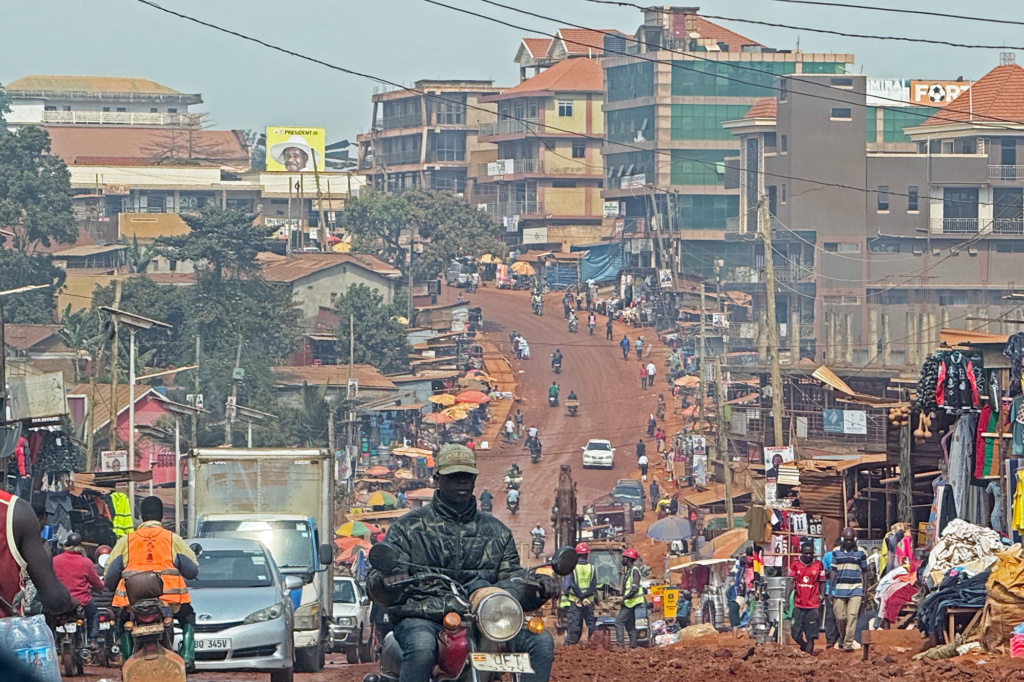
It’s been exactly one year since we first spoke to our partner in Uganda. Since then, we have turned a partnership into a friendship, and an idea into a project that we are now working to enact.
We are looking forward to having you join us on our journey in Uganda, and will keep you updated with a series of posts throughout the project’s duration.
Are you interested in learning more about the project, biochar, or how you can support our project? Get in touch with us: kathrin.weber@sintef.no.
Our visit to Uganda in December 2025 was funded by Norec, the Norwegian Agency for Exchange cooperation, and SINTEF Centre for Pioneering Climate Technologies.




Comments
No comments yet. Be the first to comment!