
Co-blogger: Martini Luciano
European Energy Research Alliances (EERA) Joint Program Smartgrids have a close and fruitful cooperation with the European Transmission System Operators (TSO). This close cooperation takes place both in terms of national member state TSOs – R&D partner cooperation, as well as in a more institutionalized form between the EERA JP.
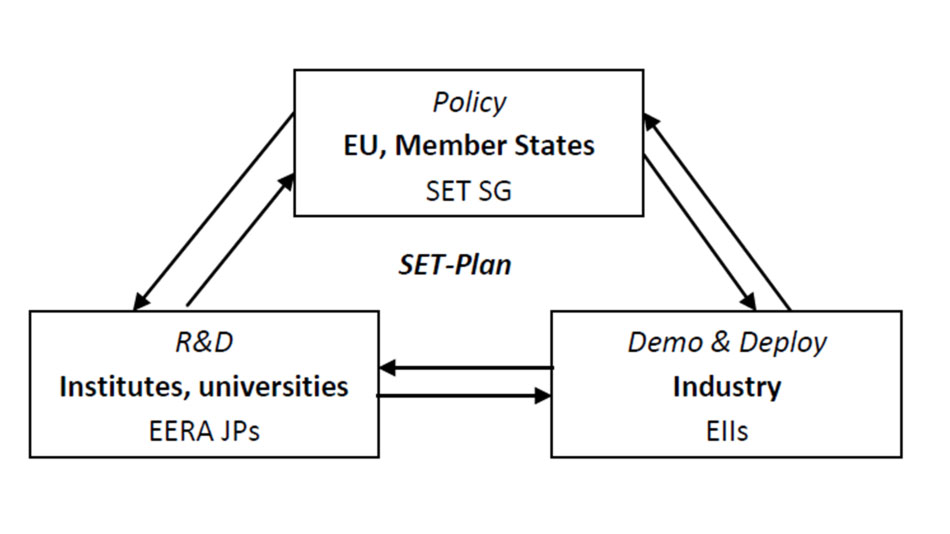
EERA serves several important purposes, stemming from the objective of realizing the goals of the SET-plan. EERA strives to be a catalyst to realizing the SET-plan by contributing to the success of the European Innovation Triangle (see below).
With regards to transmission networks, EERA acknowledge the importance of having a strong and close interaction with the industry, e.g. the manufacturers and the TSOs. To ensure this, EERA JP Smartgrids launched the Transmission Networks sub program in 2012. The sub program is coordinated by SINTEF (NO) together with RSE (IT).
The sub programs’ overall objective is to “contribute to the development of tools and methods for planning and operation of transmission networks to maintain an acceptable level of security of supply in the system with a high amount of renewable energy sources.”
To accomplish this, the work is organized in three research areas; Transmission planning (lead by IPE, LV), Transmission system operation (lead by INESC, PT) and Transmission network technologies (lead by University of Strathclyde, UK).
Further increase the benefit our cooperation
On March 31st EERA JP Smartgrids met with ENTSOe’s research and development committee (RDC) in Brussels to engage in discussions on how to further increase the benefits of our cooperation.
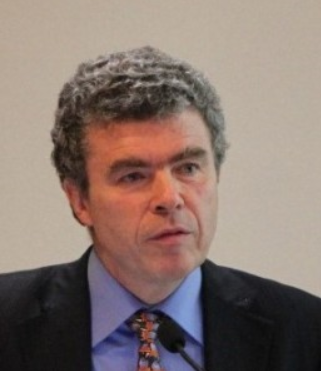
The mission of ENTSO-E’s Research and Development Committee (RDC), chaired by Jean Verseille, Director European Affairs at RTE, France, is to coordinate R&D activities and fulfil the mandate regarding the area of R&D under the EU Third Energy Package.
The role of the RDC and its working groups is amongst others to ensure that the interests of TSOs in the R&D domain are properly addressed to relevant stakeholders, to facilitate R&D work among TSOs, to provide comprehensive support to and a mutually built vision of the R&D activities of ENTSO-E Committees and other stakeholders, to promote the R&D concepts, methods and technologies that will compose and steer transmission systems in the future as well as to support standardisation and interoperability related activities.
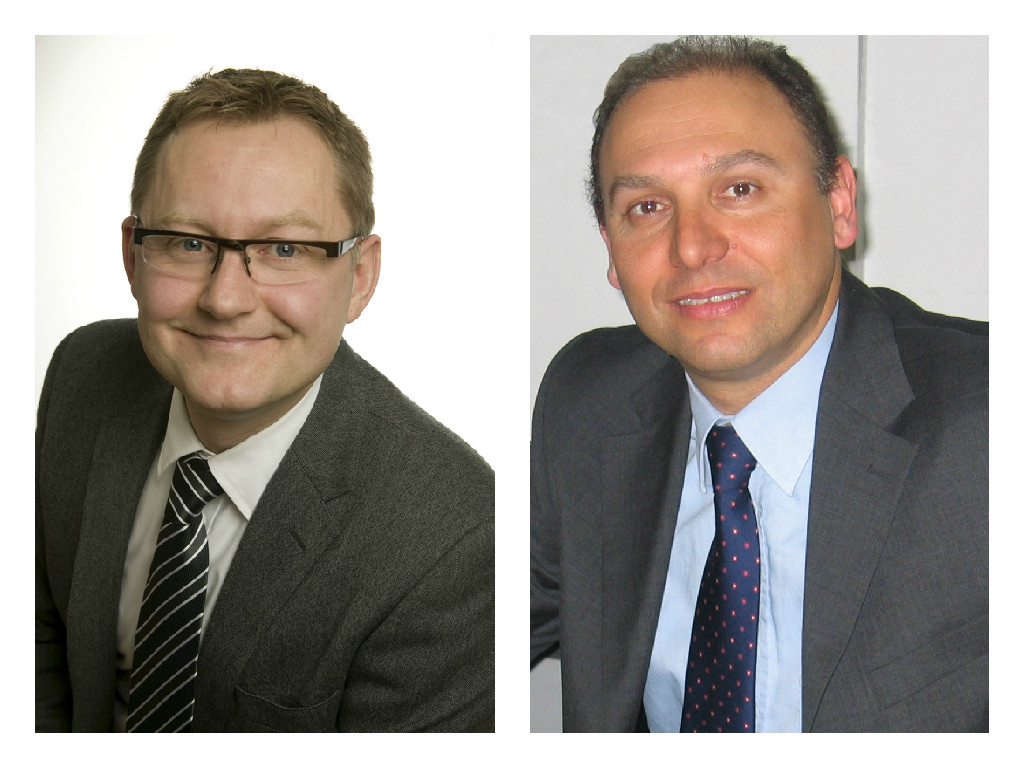
EERA JP Smartgrids was represented by us, Luciano who is the Smartgrid coordinator and Knut who is the transmission network coordinator. The discussions focused on EERAs role as a research provider for the individual TSOs and ENTSOe. Also the aligning of public funded Energy R&D in member states and by the EU to accelerate the realization of the goals of the SET-plan was addressed.
An important result of the discussions was the agreement to ensure a more structured form of the cooperation.





Comments
No comments yet. Be the first to comment!