

For over 20 years, the International Conference on the European Energy Market (EEM) has brought together experts from academia, industry, and policy to discuss cutting-edge energy market topics. However, it wasn’t until a few years ago that industrial flexibility showed up on the EEM agenda. And when it appeared, it was usually a single paper tucked into a poster session, easy to miss between panels on bidding zones and renewable forecasting.
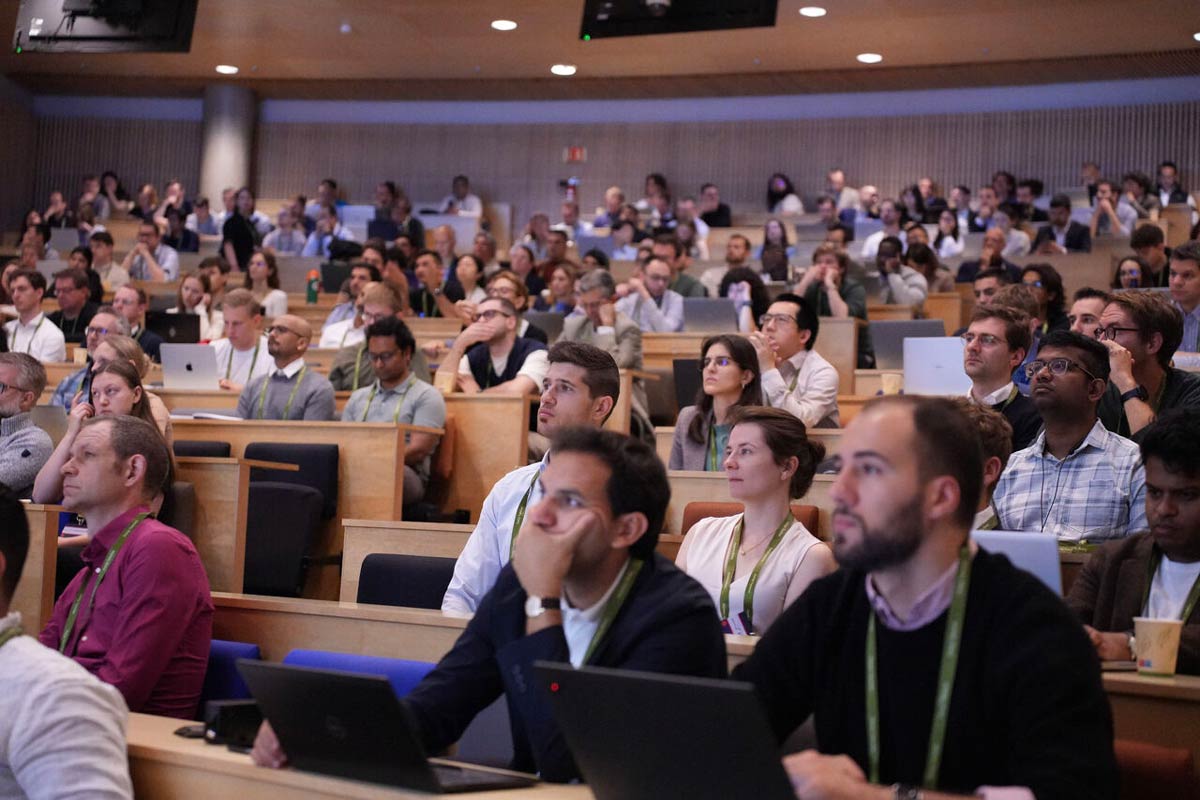
We noticed a clear shift when we attended EEM26 in Trondheim this year. There were multiple presentation sessions dedicated to industrial flexibility – in addition to a special poster session and a plenary panel featuring a DSO, an energy community operator, and an industrial cluster.
While industrial flexibility is still a minor part of the programme overall – as EEM remains, at its core, a conference about wholesale market design and balancing – the recent shift is a clear signal that the energy market research community is starting to take industry seriously as a flexibility resource.
This year’s EEM sessions on industrial flexibility weren’t about proving the technology works – the pilots presented did that almost in passing, as background. The real focus, across nearly all these sessions, was this: given that the technology already works, why is so little of that potential actually being captured today?
We noticed three themes kept coming up as potential answers.
1. Markets and tariffs still reward standing still
Electricity markets and grid tariffs were designed around a world of large, predictable generators and steady industrial consumers – not flexible loads that ramp up and down to chase the cheapest hours or support the grid when needed.
Jonathan Sejdija (FH Aachen University of Applied Sciences) showed just how directly this plays out in Germany: energy-intensive industry currently gets a 90% discount on grid fees if it maintains more than 8,000 full-load hours per year (80% above 7,000) – a straightforward incentive to run flat, not flexible. He presented alternative tariff designs built around dynamic low-tariff windows tied to cheap hours, which would let industry flex its consumption without losing the discount it depends on.
It’s a small design change with large implications: as long as the tariff structure punishes flexibility, no amount of clever equipment on the factory floor will fix the underlying incentive problem. The same point came up from a different angle in the EU-funded FLEX4FACT project, presented by Alexander Bade (Hochschule Albstadt-Sigmaringen) and Emil Scott Bale (SINTEF Energy Research): market structures, they argued, are still fundamentally built for generators, not consumers.
2. Nobody quite agrees who’s allowed to do what
Even when the economics clearly favour flexibility, the rules for capturing its value are tangled. Andrei Morch (SINTEF Energy Research), presenting business-model insights from a Norwegian demand-response pilot, described a landscape crowded with roles – balance responsible parties, balancing service providers, energy suppliers, aggregators – each with different rights and degrees of power over the others.
One detail stood out: two neighbouring industrial plants currently cannot be aggregated to jointly offer flexibility services unless they happen to share the same energy supplier.
The same tangle of roles surfaced again in the plenary panel, where Bernhard Kvaal (Aneo), reflecting on the Brattøra energy community pilot, argued that clarifying who is responsible for what – BRP, BSP, aggregator, asset owner, DSO, market operator – is still one of the biggest open questions for scaling local flexibility markets beyond pilot scale.
It isn’t only a regulatory gap, either: in the same panel, Håkon Skar (Thamsklyngen) pointed out that industrial actors in his own region often hold onto more grid capacity than they currently use, simply to preserve room for their own future expansion rather than releasing it to neighbours who need it now – a reminder that some of these barriers are about incentives and trust as much as rules on paper.
3. The hardest barriers are often inside the factory gates
Flexibility research has understandably focused a lot of attention on market rules and price signals – but several speakers pointed out that plenty of the resistance never even reaches the market.
Bade and Bale’s FLEX4FACT work mapped this out in detail: inside a factory, flexibility competes for attention with priorities that will always come first – operational stability, safety, protecting equipment – and flexibility is often difficult to even identify or quantify in the first place, compounded by limited market knowledge and processes never designed with flexibility in mind.
Maiken Omtveit (ABB), presenting a systematic review of industrial demand-side flexibility research, found much the same pattern from a different direction: across the literature, industrial actors consistently rank avoiding safety incidents and equipment damage above optimising energy use, and there is still no standard method for quantifying how much flexibility a given industrial process actually has to offer.
Challenges haven’t stalled progress on industrial flexibility
Even with markets, tariffs, and roles still catching up, plenty of progress was on display at EEM. In particular, there is a clear difference between some DSOs starting to exploit industrial flexibility already today, while others are waiting for more knowledge, demonstrations or changes in regulation. The DSOs taking advantage of flexibility, typically do so either for balancing services, or just for enabling new connections which would otherwise be turned down.
Sami Kojola (Helen Ltd) described how Helsinki’s energy utility connected 385 MW of new demand – including electric boilers for district heating – using non-firm grid connections, avoiding costly grid reinforcement while still decommissioning coal-based CHP plants.
Trond Rikard Olsen (Tensio), speaking from the DSOs’ perspective, presented new service categories such as voltage control and congestion management that treat flexible industrial loads as a resource to be actively used rather than a problem to manage around. These are workarounds more than permanent solutions, but they show that flexibility can move from pilot to practice without waiting for a perfectly redesigned market.
The takeaway
Industrial flexibility is still a small part of energy markers research – but a growing one, and what’s being discussed within it has shifted. It is now investigating how markets and tariffs originally built for handling flexible production and firm demand can be taken advantage of by flexible demand in industrial processes.
This is of high relevance to understand how the cost of industrial decarbonisation and electrification can be reduced, a task we are working on in cooperation with research scientists across the world through the IEA Task XIX on Electrification in Industry.


Presentations referenced (EEM26, Trondheim, 22–24 June 2026):
- Jonathan Sejdija, FH Aachen University of Applied Sciences – “Evaluating Dynamic Grid Fee Designs for Industrial Flexible Assets in Germany”
- Alexander Bade, Hochschule Albstadt-Sigmaringen & Emil Scott Bale, SINTEF Energy Research – “Industrial Demand-Side Flexibility: Barriers, Maturity Pathways and Enablers – Insights from the EU FLEX4FACT Project”
- Andrei Morch, SINTEF Energy Research – “Business Model Insights from a Norwegian Pilot on Large-Scale Demand Response for Balancing”
- Bernhard Kvaal, Aneo – “Life after pilot? Experiences and further outlook from Brattøra Energy Community” (plenary)
- Håkon Skar, Thamsklyngen – “Industrial flexibility in Orkanger – Thamshavnklyngen” (plenary)
- Maiken Omtveit, ABB – “Modelling and Control of Industrial Demand Side Flexibility: A Systematic Review”
- Sami Kojola, Helen Ltd – “Integrating Large Customers with Flexible Agreements: Forecasting and Demand Response in Helsinki’s Energy Transition”
- Trond Rikard Olsen, Tensio – “Beyond pilots: Flexibility from the DSO perspective” (plenary)
Conference programme: ntnu.edu/eem26










Comments
No comments yet. Be the first to comment!