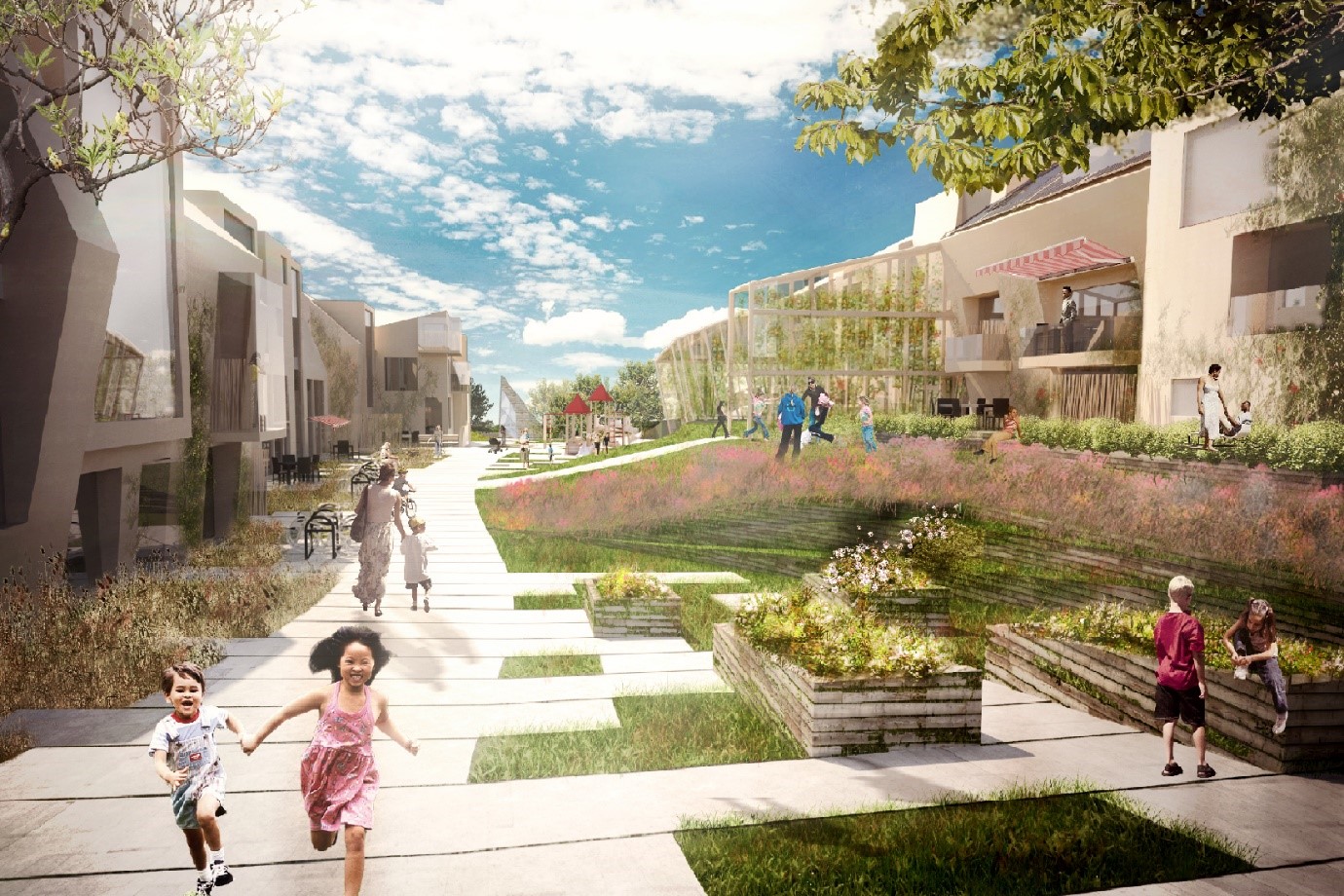

The first Nordic Conference on Zero Emission and Plus Energy Buildings will be arranged in Trondheim, Norway, November 6-7 2019. The conference will present state-of-the art research and practical solutions that pave the way towards a low carbon built environment, focusing on Nordic countries.
Abstract Submission Open
The abstract submission portal is now open, and we welcome contributions within the topic “Solutions for Zero Emission and Plus Energy Buildings and Neighbourhoods”. Abstracts should be submitted by February 1st 2019. Please visit the conference web-site for further information.
The Challenge
It is now widely known that the construction sector has a key role in contributing to the mitigation of global greenhouse gas emissions. In Europe, the construction and use of buildings is responsible for 42% of our final energy consumption, 35% of greenhouse gas emissions, and more than 50% of all extracted materials (European Commission, 2011). Acknowledging this, in 2011 the European Commission put forward the following ambition in the Roadmap to a Resource Efficient Europe:
By 2020 the renovation and construction of buildings and infrastructure will be made to high resource efficiency levels. The Life-cycle approach will be widely applied; all new buildings will be nearly zero-energy and highly material efficient, and policies for renovating the existing building stock will be in place so that it is cost-efficiently refurbished at a rate of 2% per year.
An important instrument to achieve this ambition, is the Energy Performance in Buildings Directive (EPBD, Directive 2002/91/EC). The directive aims to improve energy efficiency in buildings and encourage building renovation. By 2020, it requires that all new buildings should be ‘nearly zero energy’ in their operation. The directive also promotes cost-effective renovation work, introduces a smartness indicator for buildings, simplifies the inspection of heating and air conditioning systems, and promotes electro-mobility by setting up a framework for parking spaces for electric vehicles.
The Nordic countries have traditionally been frontrunners in implementing energy efficiency in buildings. Since 2008, researchers and professionals within the Nordic building industry have come together bi-annually in the Nordic passive house conference PassivhusNorden. The vision of the founders was to increase the construction of energy-efficient buildings and energy-efficient renovation of existing buildings in the Nordic region.
The common goal of the PassivhusNorden initiative was co-operation and coordination of national and local activities in the field of passive houses and energy-efficient buildings:
- To initiate and operate common research and development projects
- To act together for a continuous knowledge increase around energy-efficient buildings and to spread experiences from projects to the whole Nordic Region
- To coordinate standards, definitions and terms for passive houses and energy-efficient buildings
- To act for a coordinated commercial Nordic platform for increasing the market of products and systems for energy-efficient buildings.
These goals, formulated 10 years ago, are still valid today. However, over the years, the ambitions for energy efficient buildings have increased, and the scope has widened. We have progressed from passive and low energy buildings to nearly zero-energy buildings, carbon neutral buildings, and even plus-energy buildings. The scope has gone from focusing on single buildings, to taking a neighbourhood or even district level perspective. At the last conference in Helsinki in 2017, it was therefore decided to change the name and focus of the conference. The result was the Nordic Conference on Zero Emission and Plus Energy Buildings.
However, the overall goal remains; to accelerate the transformation towards a carbon neutral building sector. We look forward to continuing the fruitful dialogue and valuable knowledge exchange!






Comments
No comments yet. Be the first to comment!