Skip to content

SINTEF Blog Gå til forsiden

  • Energy
  • Ocean
  • Digital
  • Health
  • Industry
  • Climate and environment
  • Building
  • Society
  • EN
  • NO
Energy Ocean Society

TCCS-8: Aligning European Energy Research

author
Mona J. Mølnvik
Research Director
Published: 18. Jun 2015 | Last edited: 16. Apr 2025
3 min. reading
Comments (0)
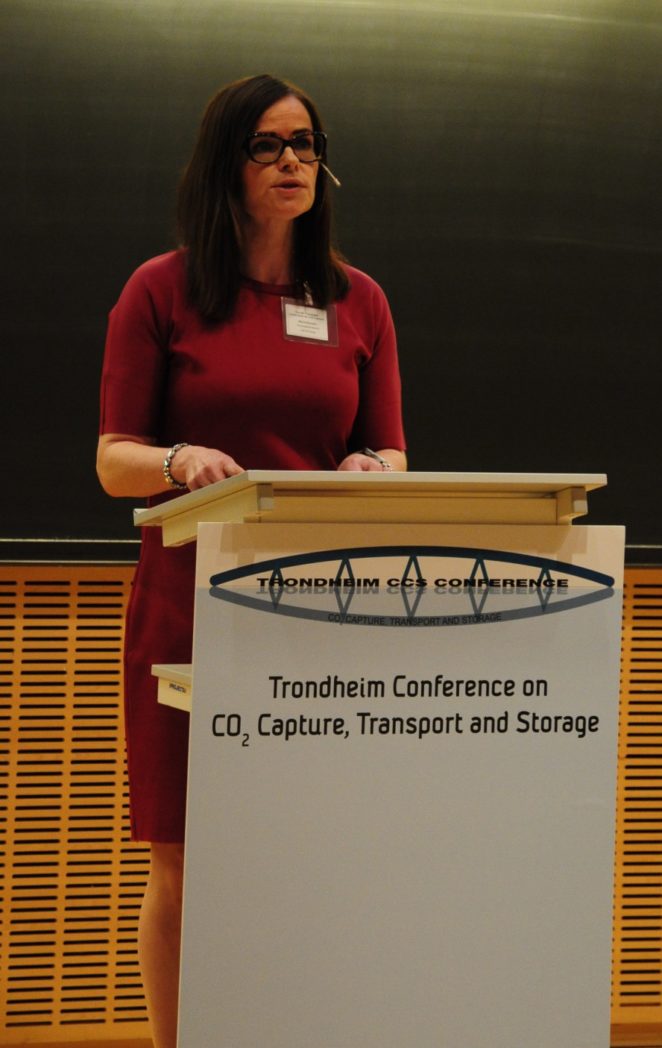
Dr. Marie Bysveen, Vice President Research, SINTEF Energy Research, giving her keynote talk at the TCCS-8 conference: Doing what it takes in Europe – Excellent R&I collaboration across borders.

Marie Bysveen from SINTEF started her keynote talk at the TCCS-8 conference by stating that we do see a clustering of research in Europe. And that this clustering is essential for Europe to maintain its competitive edge.

Blog: TCCS-8 has started

The European Energy Research Alliance (EERA) is the most efficient measure for alignment of European energy research. Aim of the joint program for CCS, is that CCS is an integrated part of the H2020 program and the SET plan.

An example of excellent research across borders is BIGH2. Here ALSTOM, SINTEF and DLR work together in the effort of developing hydrogen turbines for pre-combustion capture. The project is funded both by the CLIMIT program in Norway the CORETEC program in Germany.

Marie also presented the two new EU H2020 projects Gateway and CEMCAP coordinated by SINTEF Energy Research. Marie ended her talk by stating announcing that a new ERA NET Co-fund proposal for CCS was submitted May 5th. This will be a great possibility for us to respond with high quality research and collaborative skills towards our common climate challenge Marie said.

We need to start this now!

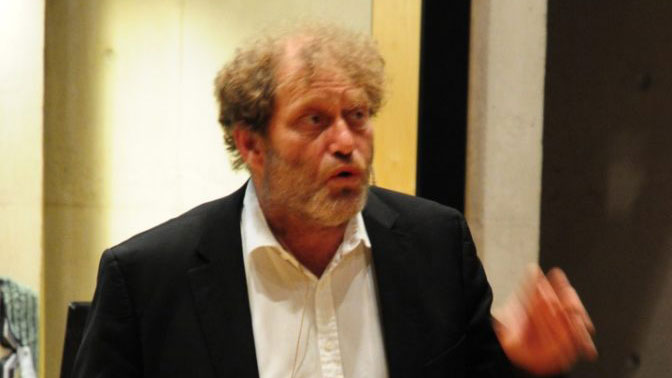
Frederic Hauge, the founder and president of the Bellona Foundation said in his keynote talk that it will be 70% more expensive to reach the climate targets without CCS.
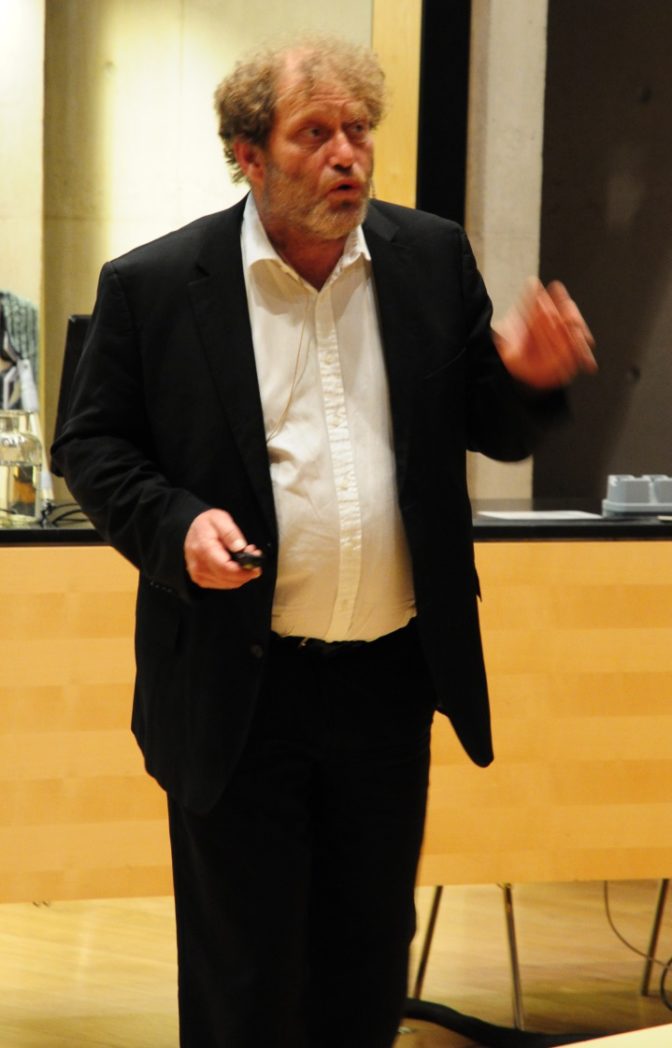
Mr. Frederic Hauge, Founder and President, The Bellona Foundation giving his keynote talk: Scaling of CO2 storage to enable a carbon-negative future.

We can create 330.000 jobs in Europe related to CCS. It is so much more expensive not doing anything about it. Europe is lacking behind, but there are promising projects as Peterhead in UK, ROAD in The Netherlands and in Norway the Norcem Heidelberg in Brevik and the Oslo municipality’s plan for CCS in incineration combustion. Bellona is now heavily involved in CO2 storage focusing mainly on injectivity to be able to estimate the storage capacity. UK is active working on how to develop a business case for CO2 storage.

It is a big shame how we in Norway are lacking behind. We need to start this now! he said.

Bellona is also interested in new ways of producing biomass, including using the ocean biomass. 10 Gigatonnes of CO2 can be removed from the atmosphere every year by BIO-CCA. Frederic ended his talk by stating that we are re-vitalizing CCS again.
Comments

No comments yet. Be the first to comment!

Leave a comment Cancel reply

Your email address will not be published. Required fields are marked *

More about Energy

How much can energy-efficient voyage planning save? Evidence from 11 months of North Atlantic data

Author Image
Author Image
2 forfattere
Infographic showing the flow of thermal energy storage (TES) from surplus heat or cold to end users. On the left, red and blue thermometer icons represent surplus heat and cooling, accompanied by the text “Surplus heat or cold – Captured and stored for when it’s needed.” In the centre, a large panel titled “Thermal Energy Storage (TES)” presents three storage technologies. The top section, “Sensible TES,” shows a container with a thermometer and the text “Stores heat in one single phase.” The middle section, “Latent TES,” shows a water droplet and snowflake connected by circular arrows, with the text “Stores heat through phase change.” The bottom section, “Thermochemical TES,” shows two connected coloured circles that separate and reconnect, illustrating a reversible reaction, with the text “Stores heat through reversible reactions.” A large pale arrow-shaped wedge points from the TES panel toward the right side of the figure. On the right, three application areas are shown in separate boxes with icons: industrial processes, buildings, and data centres. The layout conveys that surplus heat or cold can be stored using sensible, latent, or thermochemical TES technologies and later supplied to industrial facilities, buildings, and data centres.

Thermal energy storage is already commercial  

Jorge Salgado Beceiro
Research Manager

Burning ammonia cleanly: How timing changes everything 

Author Image
Author Image
2 forfattere

Technology for a better society

  • About this blog
  • How to write a science blog
  • Sign up for our newsletter
  • News from NTNU and SINTEF
  • Facebook
Gå til SINTEF.no
SINTEF logo
© 2026 SINTEF Foundation
Privacy Editorial Press contacts Website by Headspin