
Skip to content

SINTEF Blog Gå til forsiden

  • Energy
  • Ocean
  • Digital
  • Health
  • Industry
  • Climate and environment
  • Building
  • Society
  • EN
  • NO
Energy

Tailor-made molecules for increased CO2-EOR efficiency

Injection of CO2 into oil fields can increase the amount of oil produced (CO2-EOR), while at the same time storing large amounts of CO2.

CO2-EOR
author
Alv-Arne Grimstad
Senior Researcher
Published: 24. Apr 2018 | Last edited: 14. Apr 2025
3 min. reading
Comments (0)

This is the only currently available method to significantly reduce the overall cost of a CCS chain.

CO2-EOR has been in use for several decades at onshore fields in North America.

  • Read more about SINTEF’s work on CO2-EOR here: Reservoir management and EOR, NCCS
  • This blog is based on the work of FME NCCS. For more NCCS cases, see their 2017 Annual report here

Reduced efficiency

The density difference between CO2 and oil leads to gravity segregation and reduced efficiency. The lower viscosity of CO2 also contributes to reduced efficiency, since the gas will tend to bypass the oil.

Onshore, the relatively low cost of drilling new wells makes short well distances possible. This reduces the overall impact of gravity segregation. Offshore, like on the Norwegian Continental Shelf, the cost of wells is much higher, and the well distance therefore tends to be much larger than onshore.

Something else is therefore needed in order to increase the efficiency of CO2-EOR.

Slowing down CO2

The density of CO2 at reservoir conditions is already quite high compared to other substances that are gaseous at surface conditions. Much research effort has therefore been focused on methods that can slow down the CO2, such as generation of foam or increasing its viscosity.

It is also desirable to find substances that can be carried by the CO2 deep into the reservoir, since this would improve the efficiency. Several chemicals have been found that can do this, but unfortunately these are either too expensive or unacceptable from an environmental viewpoint.

Designer materials

Enter nanotechnology. With the advent of this technology came methods for creation of new hybrid materials. The FunzioNano® technology developed at SINTEF can be used to graft hand-picked active molecular groups on to nano-sized inorganic cores. The result is tailor-made hybrid molecules that can have complex functionalities.

In NCCS this technology will be employed to try to create novel materials that will stabilize CO2-water foam and thereby slow down the CO2 and increase oil production efficiency.

a)A basic starting form of the nanomaterials that SINTEF's group in Oslo is working with; an inorganic core with multiple amine branches.
a) A basic starting form of the nanomaterials that SINTEF’s group in Oslo is working with; an inorganic core with multiple amine branches.

The first few test batches of hybrid materials have been synthesized in SINTEF’s laboratories in Oslo, and are currently being tested in the SINTEF’s Reservoir Technology laboratory in Trondheim. The testing will guide the selection of molecular groups for the next batches of materials.
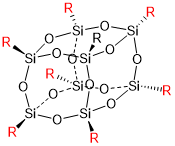
b)The trick in making efficient EOR chemicals is to identify replacement branches with functional groups (R) with the desired properties.
b) The trick in making efficient EOR chemicals is to identify replacement branches with functional groups (R) with the desired properties.

Open research questions

There are still many open research questions, such as picking the right molecular groups for the desired functionality, development and testing of synthetization methods, properties in laboratory tests and at field scale, and the cost of manufacturing and deployment of such new materials. In NCCS we hope to answer some of these, and thereby possibly enable the next generation of CO2-EOR.

Contact persons: Torleif Holt and Monika Pilz
Comments

No comments yet. Be the first to comment!

Leave a comment Cancel reply

Your email address will not be published. Required fields are marked *

More about Energy

How much can energy-efficient voyage planning save? Evidence from 11 months of North Atlantic data

Author Image
Author Image
2 forfattere
Infographic showing the flow of thermal energy storage (TES) from surplus heat or cold to end users. On the left, red and blue thermometer icons represent surplus heat and cooling, accompanied by the text “Surplus heat or cold – Captured and stored for when it’s needed.” In the centre, a large panel titled “Thermal Energy Storage (TES)” presents three storage technologies. The top section, “Sensible TES,” shows a container with a thermometer and the text “Stores heat in one single phase.” The middle section, “Latent TES,” shows a water droplet and snowflake connected by circular arrows, with the text “Stores heat through phase change.” The bottom section, “Thermochemical TES,” shows two connected coloured circles that separate and reconnect, illustrating a reversible reaction, with the text “Stores heat through reversible reactions.” A large pale arrow-shaped wedge points from the TES panel toward the right side of the figure. On the right, three application areas are shown in separate boxes with icons: industrial processes, buildings, and data centres. The layout conveys that surplus heat or cold can be stored using sensible, latent, or thermochemical TES technologies and later supplied to industrial facilities, buildings, and data centres.

Thermal energy storage is already commercial  

Jorge Salgado Beceiro
Research Manager

Burning ammonia cleanly: How timing changes everything 

Author Image
Author Image
2 forfattere

Technology for a better society

  • About this blog
  • How to write a science blog
  • Sign up for our newsletter
  • News from NTNU and SINTEF
  • Facebook
Gå til SINTEF.no
SINTEF logo
© 2026 SINTEF Foundation
Privacy Editorial Press contacts Website by Headspin