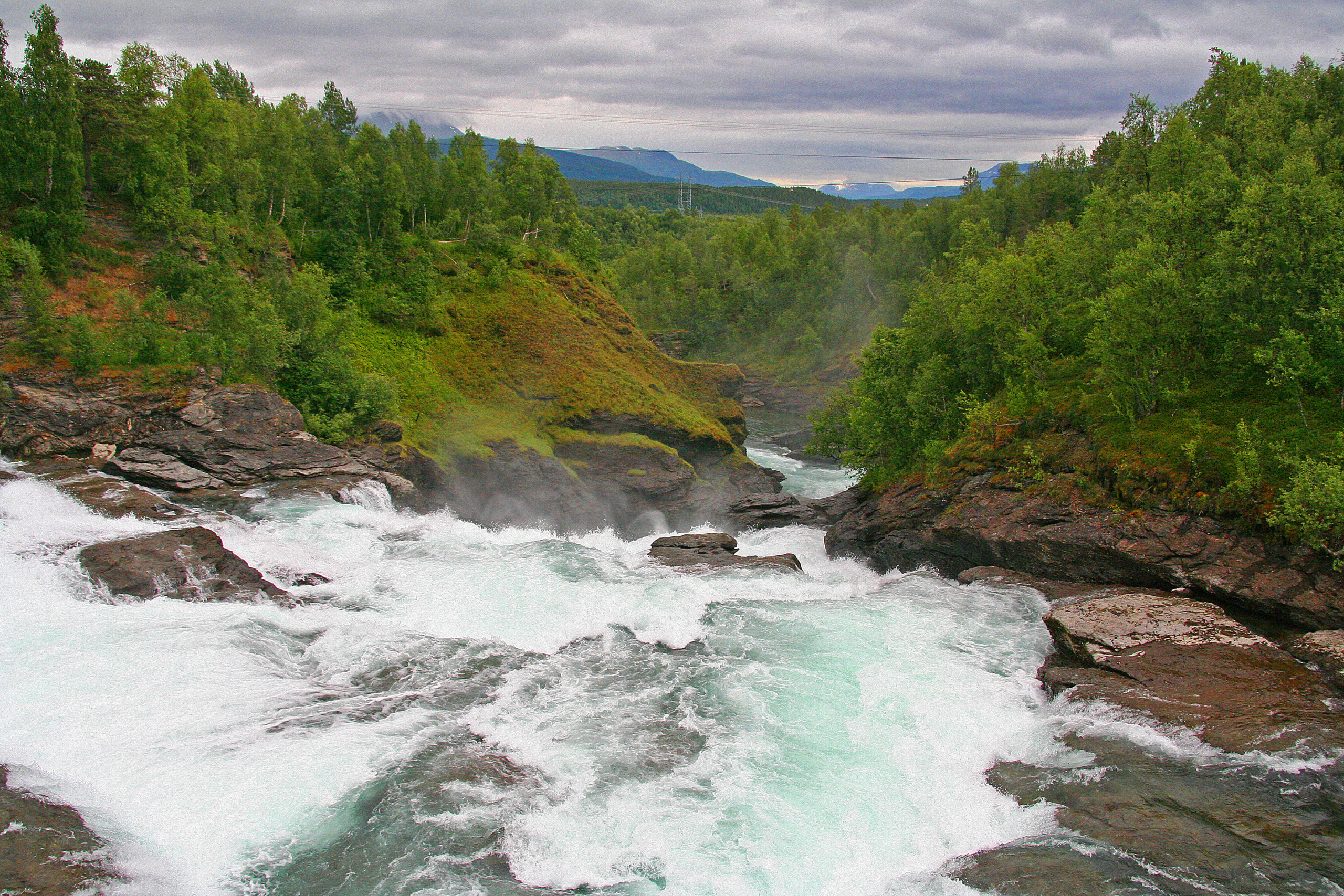

Hydropower accounts for about 50 % of the electricity production in the North Pool area and 99 % of Norwegian production. It is estimated that every percent that we are able to increase the value of Norwegian hydropower in the interplay with Europe we increase the value for society with 63 Mill €.
This is where SHOP comes in.
My PhD study is about value chain optimization in forestry and petroleum industries. Before I began my work in the department of Energy Systems / Generation Scheduling (Produksjonsplanlegging) at SINTEF Energy Research, I had not dealt with hydro power issues.
Therefore, in the interview when my future boss Michael Belsnes said to me “according to your background, I suggest you to start from SHOP”, it was the first time I heard about “SHOP” and my first reaction was that “because I am a woman, they think I like shopping…”
But I still became a research scientist at SINTEF, who performs analysis, development and maintenance of SHOP, which turned out to stands for Short-term Hydro Operation Planning model.
SHOP: Short-term Hydro Operation Planning model
As the name suggests, SHOP is originally designed to solve the short-term hydro operation planning problem. The program is based on a deterministic optimization formulation where complex and detailed hydraulic configurations of water courses can be modelled.
The general objective of the program is either to maximize the profit against an expected market price profile or to minimize the cost of fulfilling a fixed load obligation.
With the nearly 20-year persistent development by brilliant experts, not only is SHOP among the best in the world for market-based hydro thermal scheduling, but also it performs more than its original intention.
With the nearly 20-year persistent development by brilliant experts, (…) it performs more than its original intention.
The possibility of hydraulic connections between reservoirs, coupling with mid-term model, multiple price areas with production area, generator types, pump units, head optimization, creek intake, commitments in the frequency reserve market, and many other functionalities have been realized.
New functionalitites simulation model
Recently, a simulation model has been successfully developed. It covers all the existing optimization functionalities in SHOP. This gives consistent behavior between optimization and simulation on the input and functionality side, as well as the subroutine level.
It also makes it easy to find which part causes the infeasible solution and then to add new constraints into the optimization models as a closed loop. The time resolution of simulation model can be as fine as one second. Non-linearity and State dependency in the watercourses, such as head and head loss, overflow, flow between connection gates, and other dynamic features can be calculated much more accurately.
Communication strenghtened from 2015
We have kept good communication with customers and tried our best to fulfill their demands. As of 1st January 2015, communication with the users is strengthened. The SHOP developers at SINTEF Energy Research will interact with customers directly, which means better understanding, more effective discussion and less time-consuming process.
Of course my daily work involved with SHOP is not as easy as shopping in DownTown Trondheim. On the contrary, it is extremely challenging. However, that is exactly what I like. Once I fix a tricky coding challenge or finish the new functionality that is required by the customer, I will feel a great sense of accomplishment.
I mentioned to start with that every percent that we are able to increase the value of Norwegian hydropower, we increase the value for society with 63 Mill €. This is the major motivations for us to continuously improve SHOP together with other SINTEF scheduling models. In other words, SHOP really helps people do more shopping.






Comments
No comments yet. Be the first to comment!