Skip to content

SINTEF Blog Gå til forsiden

  • Energy
  • Ocean
  • Digital
  • Health
  • Industry
  • Climate and environment
  • Building
  • Society
  • EN
  • NO
Energy Digital

Safer operations with new cable monitoring system

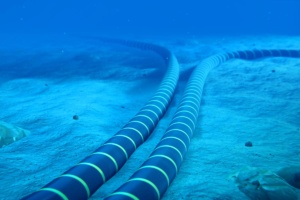
The LIRA Power project has developed a method enabling LIRA measurements on cables without putting them out of service. This enables cable owners and operators to monitor the condition of their cables without any service disruptions.

author
Sigbjørn Kolberg
Published: 7. Jan 2018 | Last edited: 14. Apr 2025
2 min. reading
Comments (1)

Electrical cables for power distribution can be considered as the arteries in any power network delivering energy from power generation plants to oil and gas installations, public infrastructure and consumer households. The condition of a vast part of these (often old) cables are unknown and they represent a significant risk with regards to security of supply.

  • Read more about instrumentation for harsh environments at SINTEF

Reduce the risk with LIRA

(LIRA), an already established technology, can contribute to reduction of this risk by gathering measurement data from a cable and perform analysis based on those data which can say something about the condition of the cable. Today, these measurements must be performed manually, which implies that the cable have to be out of service.

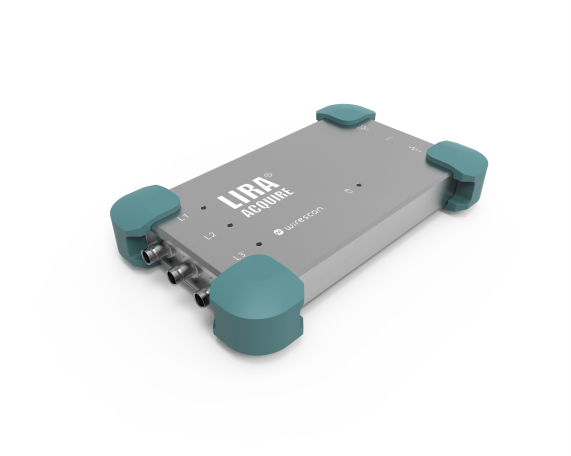
Since startup, the project has developed a patent pending technology and a prototype for LIRA based measurements on power cables in operation.

Field trials in Denmark

In December of 2017 SINTEF and Wirescan executed field trials based on the world’s first LIRA-based cable condition monitoring system for cables in operation. One of these trials is a permanent installation of the system on a 1850 kVA distribution net line in Denmark. The results shows that the LIRA system identifies defects and splices over the cable length. The system is now monitoring the cable continuously to detect changes in the 50 year old oil-filled cable.
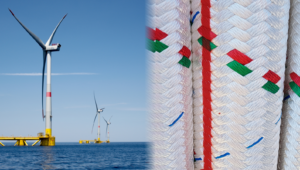
The system is now monitoring the cable continuously to detect changes in the 50 year old oil-filled cable.



Comments

shamik purkayastha says:
5. September 2020 at 21:53

Great to know about this development !! What had been the key findings? Can you share the details. We at CESC Limited, a power utility operating in city of Kolkata are interested to know & try-out the online LIRA for our cable condition monitoring.

Reply

Leave a comment Cancel reply

Your email address will not be published. Required fields are marked *

More about Energy

How much can energy-efficient voyage planning save? Evidence from 11 months of North Atlantic data

Author Image
Author Image
2 forfattere
Infographic showing the flow of thermal energy storage (TES) from surplus heat or cold to end users. On the left, red and blue thermometer icons represent surplus heat and cooling, accompanied by the text “Surplus heat or cold – Captured and stored for when it’s needed.” In the centre, a large panel titled “Thermal Energy Storage (TES)” presents three storage technologies. The top section, “Sensible TES,” shows a container with a thermometer and the text “Stores heat in one single phase.” The middle section, “Latent TES,” shows a water droplet and snowflake connected by circular arrows, with the text “Stores heat through phase change.” The bottom section, “Thermochemical TES,” shows two connected coloured circles that separate and reconnect, illustrating a reversible reaction, with the text “Stores heat through reversible reactions.” A large pale arrow-shaped wedge points from the TES panel toward the right side of the figure. On the right, three application areas are shown in separate boxes with icons: industrial processes, buildings, and data centres. The layout conveys that surplus heat or cold can be stored using sensible, latent, or thermochemical TES technologies and later supplied to industrial facilities, buildings, and data centres.

Thermal energy storage is already commercial  

Jorge Salgado Beceiro
Research Manager

Burning ammonia cleanly: How timing changes everything 

Author Image
Author Image
2 forfattere

Technology for a better society

  • About this blog
  • How to write a science blog
  • Sign up for our newsletter
  • News from NTNU and SINTEF
  • Facebook
Gå til SINTEF.no
SINTEF logo
© 2026 SINTEF Foundation
Privacy Editorial Press contacts Website by Headspin