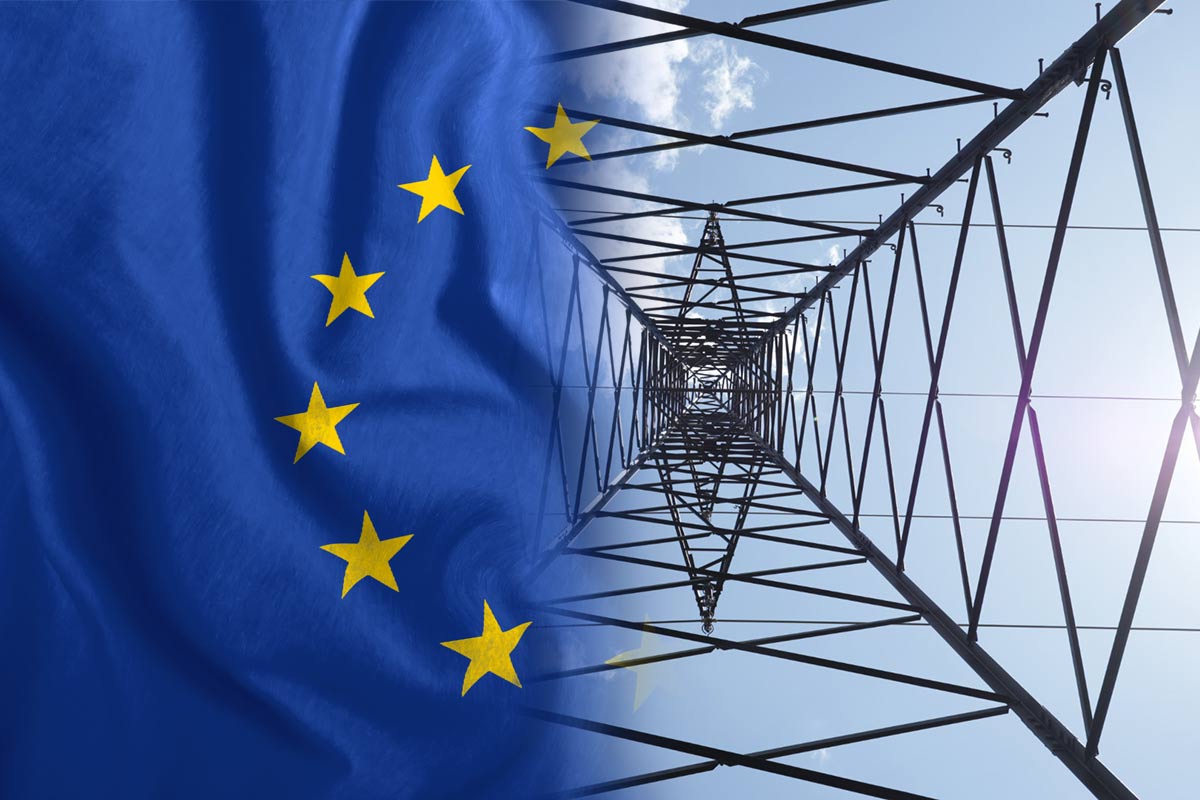


A single system
Europe’s electricity networks, gas pipelines, hydrogen corridors, district heating, and CO₂ infrastructure have traditionally been planned as separate problems, by separate institutions, using separate models. That made sense when they served largely separate purposes. It makes much less sense now that these various sectors are converging. A heat pump rolled out in Oslo is a power-system question. A steel plant’s electrification is a grid-capacity question. Offshore wind in the North Sea is a hydrogen question. These decisions interact, and planning them in isolation produces infrastructure that is individually defensible but collectively suboptimal, and often considerably more expensive than it needed to be.
The European Grids Package, presented by the Commission in December, takes this problem seriously for the first time at EU level. Its most consequential commitment, in my view, is not the Energy Highways or the permitting reforms, important as those are. It is the decision to develop a central EU scenario that is coherent across electricity, hydrogen, gas, CO₂, and district heating, and to use that scenario as the basis for identifying infrastructure needs. This is a significant shift. For more than a decade, the European energy research community has argued that cross-sectoral, co-optimised planning is the only way to make sense of an integrated energy system. That argument is now becoming policy.
What integration actually means
The Commission defines energy system integration as stronger links between energy carriers (electricity, gas, heat, fuels), between infrastructures, and between consumption sectors, with the aim of delivering decarbonised and reliable energy services at the lowest possible cost. This is exactly right, but it is abstract. What does it look like in practice?
Consider heat pumps. They currently meet about 14% of building heating demand in the EU. To reach a 1.5°C pathway, that figure needs to rise to roughly 50% by 2035. What this means for the grid depends entirely on where you are. In countries that heat with gas, replacing boilers with heat pumps shifts load from the gas network to the electricity network and sharpens the winter power peak. In countries that already heat with electricity, more efficient heat pumps replacing direct electric heating can actually reduce electricity demand for heating. In southern Europe, where heat pumps are used for cooling, the same technology drives a summer peak that interacts with solar generation. None of these effects can be assessed in isolation: you cannot plan the gas network’s future without knowing the heat pump rollout, you cannot size the grid without knowing how much heat will come from district heating or waste heat, and you cannot plan district heating without knowing the electricity price signal it will compete against.
The same logic applies to offshore wind and hydrogen, to industrial electrification and CO₂ transport networks, to electric vehicles and distribution-grid reinforcement. Every one of these couplings is a place where a decision in one sector rewrites the optimal choice in another. Planning them separately means, in practice, planning most of them wrong.
The scenario question
The Commission’s proposal for a single central EU scenario has not been universally welcomed. ENTSO-E, which has long led scenario work for the Ten-Year Network Development Plan, has raised concerns and come with suggestions of its own. Its argument is that a single scenario risks being too coarse to reflect genuine differences between Member States in energy mix, electrification pace, industrial structure, and political circumstances. If applied normatively, such a scenario could become disconnected from national plans and from the operational realities that systems operators deal with every day. There is something to this concern. National diversity is real, and a single scenario used as a forecast, or as a top-down constraint that overrides national analysis, would be a mistake.
But this is an argument about how the scenario is built and used, not about whether Europe needs one. The current arrangement, in which national plans and TSO-led scenarios are loosely coordinated but not genuinely co-optimised, has not produced infrastructure decisions that hang together at European scale. The cross-border capacity gap, the persistent price differentials between regions, the slow progress on hydrogen corridors: these are symptoms of planning that is fragmented at exactly the level where the system has become integrated.
The right question is not centralisation versus bottom-up. It is whether the scenario regime, whoever runs it, has three properties: it covers all the converging sectors together, it is open enough to be tested and adapted by Member States and the research community, and it is built in genuine dialogue with national plans rather than imposed on them. The institutional question of who develops the scenario, and what role TSOs and national regulators play, is genuinely difficult, and ENTSO-E is right that operational experience cannot be replaced by methodology alone. But a scenario regime that is closed, top-down, and disconnected from national plans would fail regardless of who ran it.
This is also why openness is not a presentational nicety. Cross-border infrastructure planning involves trade-offs between Member States, between regions, between industries and households. Those trade-offs are only politically legitimate if the underlying assumptions can be scrutinised, challenged, and varied by stakeholders outside the Commission and the TSOs. The case for making the EU scenario, and the models behind it, openly available is fundamentally about the robustness of the decisions that follow from it, and about whether national actors can engage with the analysis on its own terms.
Intelligence, not just copper and steel
Most of the public discussion of the Grids Package has focused on physical infrastructure: new interconnectors across the Pyrenees, the Great Sea Interconnector to Cyprus, the Bornholm Energy Island, the South hydrogen corridor. These are genuinely important projects, and the permitting and financing reforms that accompany them matter. But the discussion understates something the package itself acknowledges: the cheapest, fastest, and least environmentally damaging capacity is the capacity we can extract from infrastructure that already exists, or from new infrastructure operated more intelligently.
The Commission’s own figures suggest that grid-enhancing technologies and digital tools can increase European network capacity by between 20% and 40% by 2040, at roughly a third of the cost of equivalent traditional expansion. Demand-side flexibility, storage, sector coupling, and smarter operational tools can do similar work on the demand side. None of this replaces the physical investment that the Grids Package mobilises, but it changes how much physical investment is actually required, and where. A planning framework built around integrated, scenario-based analysis can identify these opportunities. A planning framework built around incremental sectoral reinforcements largely cannot.
This is also where the trade-offs the Grids Package wrestles with, between cost, speed, public acceptance, and impact on nature, are most tractable. Every kilometre of transmission line that does not need to be built is a permitting process avoided, a landscape preserved, and a community spared a confrontation it might otherwise have.
What integrated planning reveals
Integrated modelling tends to produce results that siloed modelling misses. A few examples from recent work illustrate this.
In the Horizon 2020 project Open ENTRANCE, we analysed the full European energy system on a country-by-country basis, covering power, heating, transport, and industry together. One finding was that meeting a 1.5°C target costs only about 5% more than limiting warming to 2°C, measured across the whole European system. That number is only visible if you model the sectors together, because the additional cost in one sector is partly offset by the savings made possible in another. Analysis of electricity alone, or heating alone, cannot produce that answer.
The same approach is now being adapted to a very different context through OpenMod4Africa, a Horizon Europe project building open energy-system modelling capacity for the West and East African power pool regions in addition to Tunisia. The technical challenge is different (data is sparser, institutions are less established, renewable resources are abundant in different ways), but the underlying principle is the same: planning decisions that cross sectors and borders need tools that cross sectors and borders.
At the Norwegian level, FME InterPlay is now pushing this further by incorporating biodiversity alongside cost, emissions, and security of supply in the same planning framework. This is not a minor extension. Land use is the dominant pathway by which energy infrastructure affects biodiversity, and Norway is committed under the Nature Agreement to protecting 30% of its land area by 2030. A planning model that treats biodiversity as an external constraint, applied after the fact, will systematically produce infrastructure proposals that run into local opposition and permitting delays. A model that treats it as a co-equal objective produces different, and generally better, answers.
The broader point is that integrated planning is a moving frontier rather than a fixed method. The questions being asked of it are getting harder: more sectors, more objectives, more geographical scales, more uncertainty. The European research community has been building the tools for this for some time.
What the EU still needs
The Grids Package sets the right direction. To deliver on it, three things in particular will matter.
The first is openness. As argued above, the EU’s central scenario, and the data and code behind it, should be publicly available, consistent with the Commission’s own open-source strategy. The research community already uses open tools for precisely this kind of analysis. The Commission should too.
The second is scope. Integrated planning at EU level needs to incorporate, from the start, the dimensions that cause infrastructure projects to stall in practice: land use, biodiversity, and the distribution of costs and benefits across regions. These are not separate concerns to be handled by other directorates. They are part of the system being planned, and the models need to reflect that.
The third is the research instrument to match the policy instrument. The Grids Package is, implicitly, a research and innovation agenda. Open and integrated EU-wide scenarios, grid-enhancing technologies at scale, biodiversity-aware planning, demand-side flexibility, the digital infrastructure to coordinate it all: none of this is off-the-shelf. It requires sustained investment in research, development, and innovation, sized to match the ambition of the package itself. It would be a natural and necessary step for the next Framework Programme and the European Competitiveness Fund to pick up this agenda explicitly, and to fund it at the level the policy ambition implies. Europe has the research capacity to deliver on the Grids Package. The methods exist, the tools are maturing, and the experience of applying them across European, African, and national contexts is accumulating. What is needed now is for the EU’s research instruments to match the scale of what the EU’s policy instruments have promised.
Authors Ingeborg Graabak and Knut Samdal both work at SINTEF Energy Research. Ingeborg is a Senior Research Scientist and leads FME InterPlay and the Horizon Europe project OpenMod4Africa. Knut is Vice President of Research, currently based in Brussels, where he promotes Norway’s interests in energy research.







Comments
No comments yet. Be the first to comment!