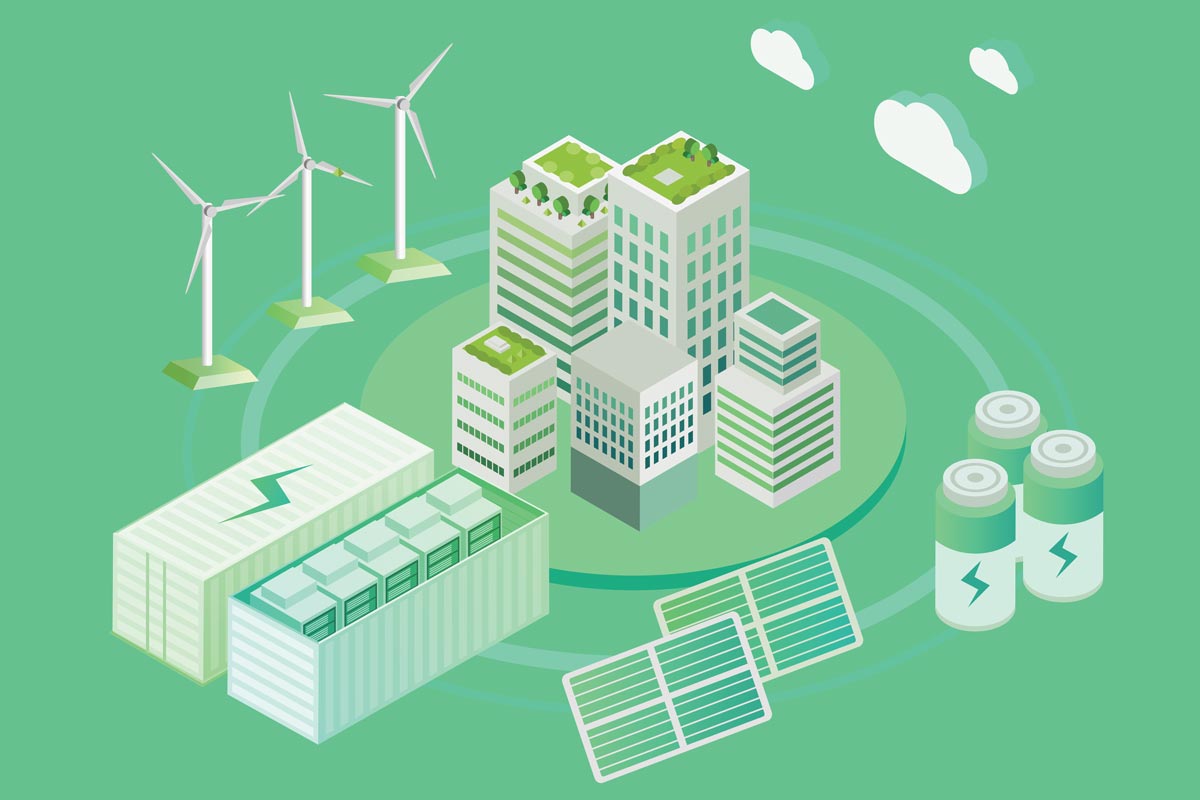

I’ve been involved the Rezilient project for a while, and one point keeps coming back to me: long-duration energy storage isn’t a niche research topic anymore; it’s a strategic necessity, especially for critical infrastructures like data centres. Rezilient’s work, which connects sustainable material development and demonstrations, makes a strong case that now is the time to move towards long-duration solutions if we want reliable digital services in a world of more frequent extreme weather, volatile energy markets, and rapid uptake of renewable generation.
Why short-term batteries aren’t enough
Short-duration batteries such as lithium-ion have revolutionised backup power and frequency response in the grid. They’re fast, efficient, and have become the go-to choice for many uninterruptible power supply systems and ancillary services. But they are not a silver bullet for all resilience challenges. Critical facilities such as data centres, hospitals, and telecom hubs need the ability to ride out multi-hour or even multi-day disruptions.
Think sustained grid outages after storms, prolonged fuel supply interruptions for diesel generators, or extended periods of low renewable output. Long-duration energy storage, which I’ll refer to as LDES, encompasses technologies and strategies capable of maintaining operations for many hours to days. This reduces reliance on diesel and provides a buffer that short-duration systems simply can’t achieve.
What long-duration energy storage means for data centres
Data centres are among the most energy dense and mission critical facilities in modern society. Their services underpin finance, healthcare, government and communications. Customers expect near-zero interruption; even short outages are costly in reputation, service-level agreement penalties and immediate economic loss. LDES extends the window of clean power availability beyond minutes to hours or days without refuelling. Diesel generators remain common as long-duration backups, but they bring environmental, logistical and regulatory downsides.
LDES paired with onsite renewables reduces the system’s carbon footprint and avoids supply chain vulnerability tied to fuel delivery during crises. Higher renewable penetration on grids also comes with periods of low wholesale prices and curtailment; LDES can store low-cost surplus energy and discharge it during high-price or low-generation periods, reducing operating costs while supporting grid stability. Many data centre loads are flexible, non-critical compute, batch jobs and scheduled backups, and LDES enables smarter load shaping, where the most essential services run off long-duration backup power while less critical work is deferred.
Critical raw materials and the case for CRM-free storage
As Rezilient notes, the choice of storage technology matters not only for performance but for supply-chain risk and sustainability. Many battery chemistries rely on critical raw materials (abbreviated CRM) such as cobalt, nickel or rare earth elements — materials that are geographically concentrated, environmentally costly to mine and subject to price volatility. Dependency on those supply chains can be reduced through CRM-free or low-CRM storage options, such as redox flow chemistries, advanced thermal storage, or mechanical storage. This has the added benefits of lowering environmental impact and improving long-term security of supply for operators of critical infrastructure.
We are already seeing major demonstrations of this shift. Notably, the world’s largest flow battery is currently under construction in Switzerland; a clear signal that large-scale flow technologies, often lower in CRM exposure, are moving from pilot projects to commercial deployment. Projects like that complement Rezilient’s roadmap by showing the industry’s growing confidence in flow batteries and similar LDES options for critical infrastructure.
How to deploy LDES in critical infrastructure
Adopting LDES for critical infrastructure is not a one-size-fits-all exercise. Successful approaches combine technology, operations and planning. Hybrid systems that pair short-duration batteries for power quality and instantaneous response with long-duration systems for extended outages deliver the best of both worlds. Multi-vector resilience such as coupling electrical storage with thermal storage, onsite renewables and demand-side measures, can extend uptime more efficiently. For example, leveraging thermal inertia in cooling systems reduces electrical demand during an outage.
Procurement should be CRM-aware: include material exposure, recyclability and supplier diversification as evaluation criteria, not just upfront cost and peak performance. Integrated controls and forecasting tools that use weather, load and market-price predictions will optimise when to charge and discharge, minimising cost while maximising reliability. Lifecycle and safety planning are important too, because long-duration systems often have different maintenance and end-of-life requirements compared with lithium-ion.
There’s a real window of opportunity to re-architect resilience around long duration, CRM-aware solutions. Projects like Rezilient and large flow-battery deployments in Europe are helping demonstrate the practical pathways, from pilots to standards and business cases, that can make LDES mainstream in critical infrastructure. If you’re responsible for operations, planning, or investment in data centres or other critical sites, now is the time to evaluate long-duration and CRM-free options.
Start with a resilience gap analysis: how many hours or days of uninterrupted operation do your services truly need? Map that to available LDES and hybrid options, run a few cost/resilience scenarios, and pilot a small-scale deployment tied to your most critical loads. We can keep relying on short-lived fixes and fuel chains that may break when we need them most — or we can invest in storage systems that turn renewable energy and local flexibility into true operational freedom. For critical infrastructure, the choice is straightforward: build resilience for the long haul.
The Rezilient project develops and demonstrates a new zinc-air flow battery technology. This technology will fill the gap between short-term electrochemical energy storage (EES) and long-term fuel storage.

This project is funded under HORIZON EUROPE The European Innovation Council (EIC)






Comments
No comments yet. Be the first to comment!