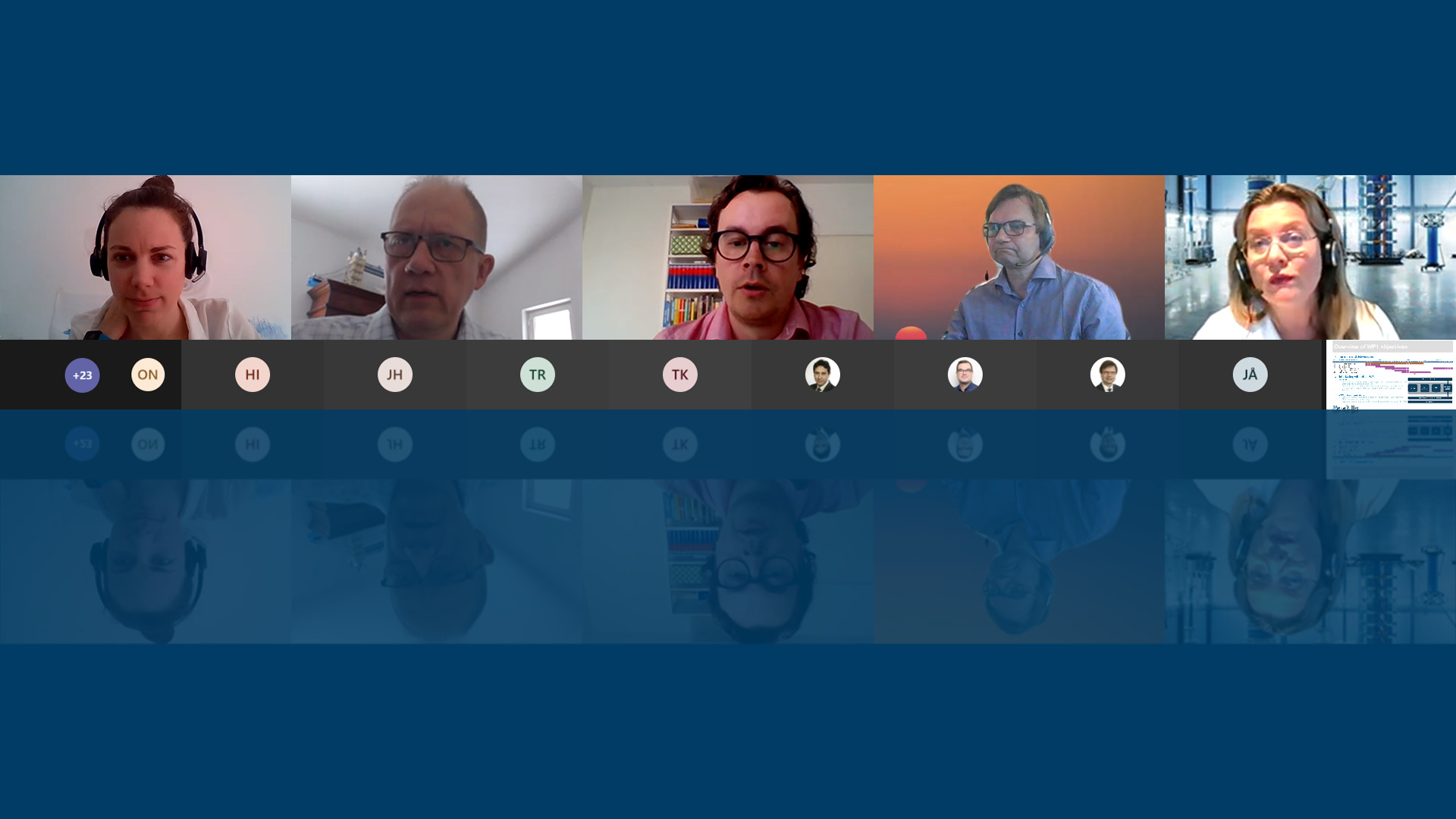

The ongoing coronavirus situation has unfortunately caused delays to component deliveries and hindered in-person inspections and other working situations for the MegaRoller project. However, it didn’t hinder the general assembly, which was successfully held online last week.
A positive online experience
While many of us have adjusted to working from home and using online communication tools for short meetings, it was the first experience of an in-person conference gone digital for many participants.
Originally scheduled to be hosted by SINTEF over 1.5 days in Trondheim, Norway, members of the project instead used Microsoft Teams with a condensed one-day agenda. More than 30 people participated throughout the day.
K2 Management‘s Pauline Laporte Weywada said the experience was positive: “The fact that we had to do it online of course brings some limitations, mostly around missing the visual contact and what it can convey and facilitate. Nonetheless I think each of us were still able to share what we wanted to bring to this meeting, and all in all make some progresses on the next steps for the project.”
Read more:
Pauline had planned to attend the conference by train from Portugal, but still highlighted the carbon emissions saved by holding the remote meeting. “I think virtual conferencing is something to really consider in the future, and there are quite a lot of very nice tools we can use to continue improving remote meetings like these,” she added. Her LinkedIn post about the experience received a lot of interaction.
Overcoming delays to the project
While technical progress has been continuous, there are delays on the project that mean some deliverables will be late. This includes the impact from the current coronavirus situation, which is causing delays to procurement activities, site inspection visits and general travel required for some project activities.
“But there is light at the end of the tunnel,” said AW Energy‘s Jussi Aakerberg, who chaired the meeting. While the new test facility is not yet open, the HV design is approved so what remains is mostly contractual. The automation system is ready, which has allowed the implementation phase to begin. Participants discussed these issues openly and several solutions were proposed for moving things forward.
“The biggest benefit from bringing together all project participants for one day was the ability for everyone to see the bigger picture. It gave partners the possibility to suggest a solution for an issue in another work package that they are not involved in on a daily basis,” said SINTEF Energy Research’s Hans Christian Bolstad, WP lead on Dissemination, Standardization and Exploitation for MegaRoller.
More to come from MegaRoller
From a communications perspective, there were several interesting presentations relevant to anyone interested in MegaRoller. We will be publishing several articles in the weeks to come to share these stories with you. In the meantime, you can learn more about MegaRoller on the project website.




Comments
No comments yet. Be the first to comment!