Skip to content

SINTEF Blog Gå til forsiden

  • Energy
  • Ocean
  • Digital
  • Health
  • Industry
  • Climate and environment
  • Building
  • Society
  • EN
  • NO
Energy Industry

“L’ingegnere” for Ferrari is coming to Trondheim on May 11th to visit SINTEF and NTNU

author
Andrea Gruber
Senior Researcher
Published: 2. May 2017 | Last edited: 15. Apr 2025
2 min. reading
Comments (0)

Legendary Ferrari Formula 1 engineer is coming to Trondheim on May 11th for an open lecture – and you are invited!

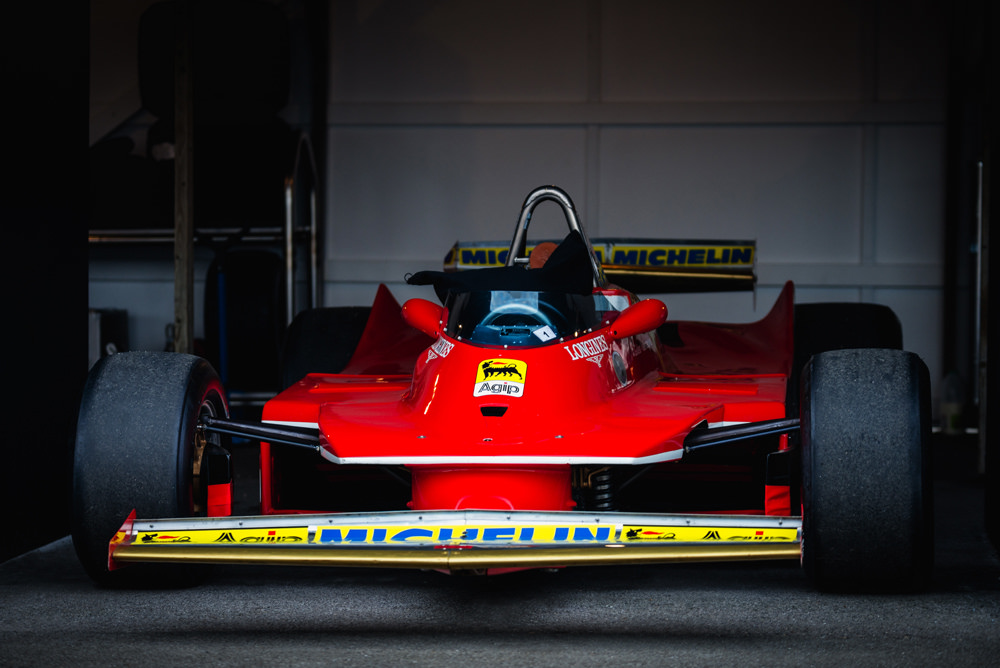
Mauro Forghieri, former Technical Director of the Scuderia Ferrari Formula 1 Racing Department for a time period of nearly 30 years, will visit SINTEF and NTNU at the Gløshaugen Campus in Trondheim on May 11th for a series of meetings with researchers and academics focusing on innovation.

Countless innovations from Formula One

The need for continuous development of technically extreme solutions, a requirement to become and stay competitive in Formula One, has resulted over the years in countless innovations across a wide spectrum of scientific disciplines as aerodynamics, propulsion and material technology.

Many of these innovations, originally ideated to win Formula One competitions, have found their way into commercial products for the general public with contributions to energy efficiency and safety as important examples.

Answering questions on innovation

I have recently come in contact with Forghieri and invited him to Trondheim with the ambition to address some important questions about innovation:

  • Is extreme competition the perfect (necessary) condition to spur innovation?
  • How are innovations created?
  • As a result of group work or individual effort?
  • Are technical specialists able to innovate or a diverse background is required?

Forghieri, well known in Italy as “L’ingegnere” (The Engineer) and throughout the F1 world as one of the most successful, innovation-oriented and prolific all-round mechanical engineer, will hold an open seminar with the title “30 years of technological innovations in Ferrari F1: methodological approach and lessons learned” (Auditorium EL2 10:00-12:00).

The seminar is open to all. Come early!


Andrea Gruber is part of the The CFD group at SINTEF Energy Research that has more than 30 years of experience in performing numerical modelling of chemically reactive processes in laminar and turbulent flows consisting of single-phase (gaseous fuels combustion) or multi-phase (solid fuels combustion) configurations.


Comments

No comments yet. Be the first to comment!

Leave a comment Cancel reply

Your email address will not be published. Required fields are marked *

More about Energy

How much can energy-efficient voyage planning save? Evidence from 11 months of North Atlantic data

Author Image
Author Image
2 forfattere
Infographic showing the flow of thermal energy storage (TES) from surplus heat or cold to end users. On the left, red and blue thermometer icons represent surplus heat and cooling, accompanied by the text “Surplus heat or cold – Captured and stored for when it’s needed.” In the centre, a large panel titled “Thermal Energy Storage (TES)” presents three storage technologies. The top section, “Sensible TES,” shows a container with a thermometer and the text “Stores heat in one single phase.” The middle section, “Latent TES,” shows a water droplet and snowflake connected by circular arrows, with the text “Stores heat through phase change.” The bottom section, “Thermochemical TES,” shows two connected coloured circles that separate and reconnect, illustrating a reversible reaction, with the text “Stores heat through reversible reactions.” A large pale arrow-shaped wedge points from the TES panel toward the right side of the figure. On the right, three application areas are shown in separate boxes with icons: industrial processes, buildings, and data centres. The layout conveys that surplus heat or cold can be stored using sensible, latent, or thermochemical TES technologies and later supplied to industrial facilities, buildings, and data centres.

Thermal energy storage is already commercial  

Jorge Salgado Beceiro
Research Manager

Burning ammonia cleanly: How timing changes everything 

Author Image
Author Image
2 forfattere

Technology for a better society

  • About this blog
  • How to write a science blog
  • Sign up for our newsletter
  • News from NTNU and SINTEF
  • Facebook
Gå til SINTEF.no
SINTEF logo
© 2026 SINTEF Foundation
Privacy Editorial Press contacts Website by Headspin