

Skip to content

SINTEF Blog Gå til forsiden

  • Energy
  • Ocean
  • Digital
  • Health
  • Industry
  • Climate and environment
  • Building
  • Society
  • EN
  • NO
Energy

HighEFF collaboration – KIFEE Professor Yamaguchi from Doshisha University visits Trondheim

Urban area
author
Ingrid Camilla Claussen
Published: 10. Oct 2017 | Last edited: 14. Apr 2025
2 min. reading
Comments (0)

Professor Hiroshi Yamaguchi from Doshisha University, one of the KIFEE professors, visited NTNU and SINTEF for a two week period starting from the end of August 2017, hosted by Adjunct Professor Petter Nekså, Professor Trygve M. Eikevik and Professor Armin Hafner. The visit was financed by the KIFEE Intpart program.
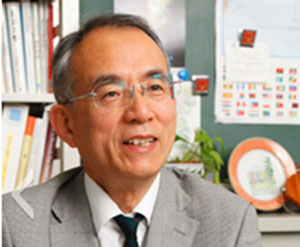
Professor Hiroshi Yamaguchi from Doshisha University

Central topics for discussions were university collaboration between NTNU and Doshisha and project collaboration through the new FME (Centre for environmentally-friendly energy research) HighEFF, where University of Doshisha is one of the research partners.

HighEFF is focusing on energy efficiency in the industry, an area where Professor Yamaguchi has much relevant research activity.

One of Yamaguchi’s expert fields, and where work is performed as a part of the HighEFF Centre, is cooling and cold storage concepts at ultra low temperatures (-70⁰C) based on CO2 dry-ice sublimation and storage. Professor Yamaguchi’s and the coauthor’s work related to this has been published as a conference paper at “The World Engineers Summit – Applied Energy Sumposium, Fourm: Low Carbon Cities and Urban Energy Joint Conference (receiving the best paper award), and a journal article has been submitted for review in the Elsevier journal Energy Procedure. These papers are coauthored by Professor Nekså.

Professor Yamaguchi also gave lectures related to magnetic fluids and the many exciting possible applications of such fluids. Within the energy sector a potential utilization of ferro-fluids as an advanced heat transfer fluid gains interest. The magnetic characteristics varying by temperature enables development of a pumping effect without mechanical moving parts. Research in this area is also performed at SINTEF and NTNU. Further collaboration in the area was discussed.

Last, but not least, overall level meetings related to KIFEE was arranged, with planning of the next KIFEE-9 in Norway as the main topic.


Comments

No comments yet. Be the first to comment!

Leave a comment Cancel reply

Your email address will not be published. Required fields are marked *

More about Energy

How much can energy-efficient voyage planning save? Evidence from 11 months of North Atlantic data

Author Image
Author Image
2 forfattere
Infographic showing the flow of thermal energy storage (TES) from surplus heat or cold to end users. On the left, red and blue thermometer icons represent surplus heat and cooling, accompanied by the text “Surplus heat or cold – Captured and stored for when it’s needed.” In the centre, a large panel titled “Thermal Energy Storage (TES)” presents three storage technologies. The top section, “Sensible TES,” shows a container with a thermometer and the text “Stores heat in one single phase.” The middle section, “Latent TES,” shows a water droplet and snowflake connected by circular arrows, with the text “Stores heat through phase change.” The bottom section, “Thermochemical TES,” shows two connected coloured circles that separate and reconnect, illustrating a reversible reaction, with the text “Stores heat through reversible reactions.” A large pale arrow-shaped wedge points from the TES panel toward the right side of the figure. On the right, three application areas are shown in separate boxes with icons: industrial processes, buildings, and data centres. The layout conveys that surplus heat or cold can be stored using sensible, latent, or thermochemical TES technologies and later supplied to industrial facilities, buildings, and data centres.

Thermal energy storage is already commercial  

Jorge Salgado Beceiro
Research Manager

Burning ammonia cleanly: How timing changes everything 

Author Image
Author Image
2 forfattere

Technology for a better society

  • About this blog
  • How to write a science blog
  • Sign up for our newsletter
  • News from NTNU and SINTEF
  • Facebook
Gå til SINTEF.no
SINTEF logo
© 2026 SINTEF Foundation
Privacy Editorial Press contacts Website by Headspin