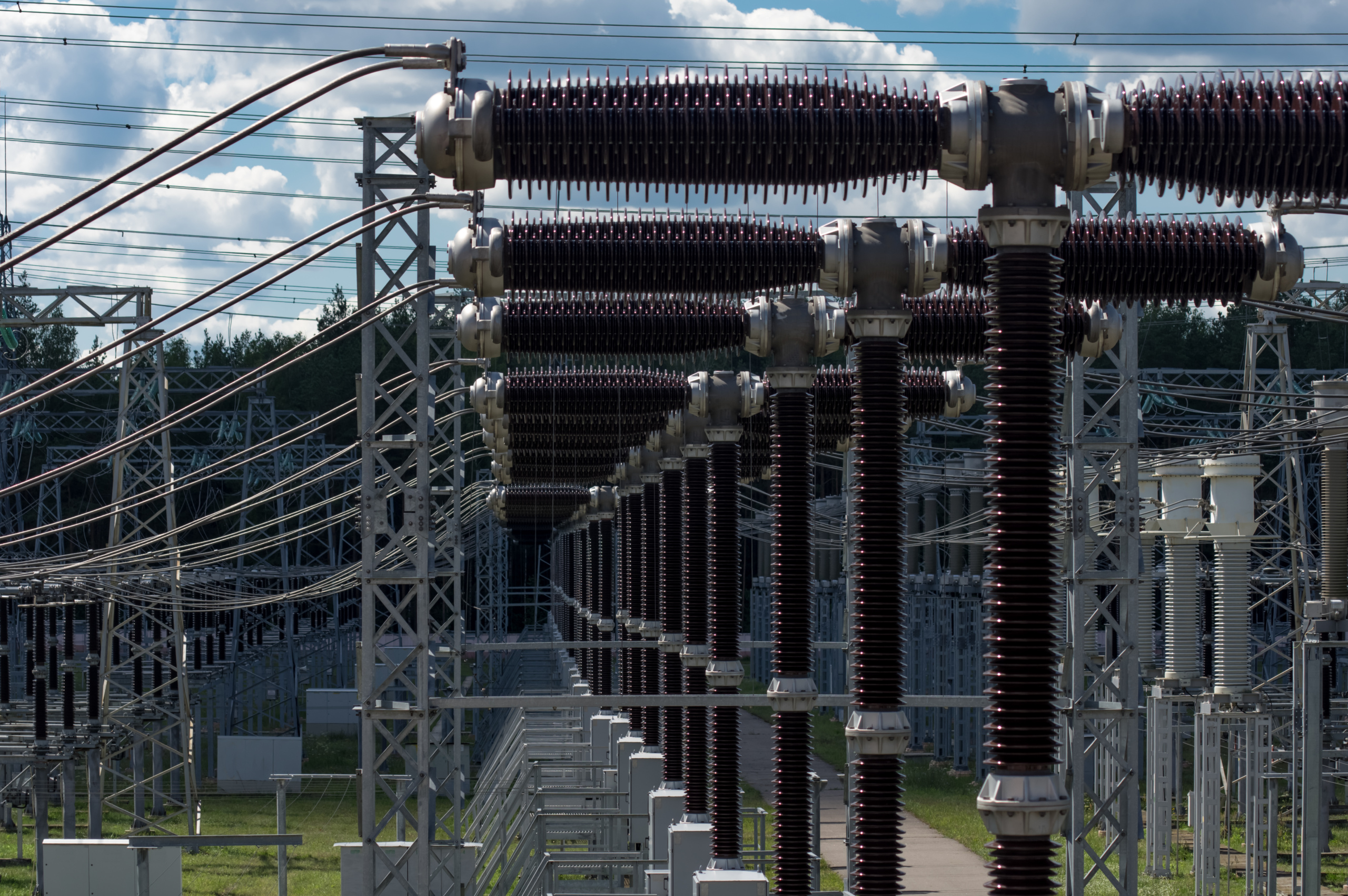

We are in the midst of an energy transition, as more and more sectors are being electrified. This transition is essential if we are to meaningfully reduce our greenhouse gas emissions, but it also places growing demands on the robustness of our power system. Key to meeting these demands is our ability to control the flow of energy in the grid – something achieved in part through circuit breakers. These devices, also called switchgear, are used across both distribution and transmission networks and must remain highly reliable over long periods of time, with a typical service life of 40–50 years.
The issue in brief:
- PFAS (per- and polyfluoroalkyl substances) is a large group of molecules – several thousand different types – characterised by short or long carbon chains with fluorine atoms attached. Many of these molecules have known negative effects on human health and the environment. They are often very stable and do not break down in nature, hence the nickname “forever chemicals.”
- SF6 (sulfur hexafluoride) is a potent greenhouse gas that has long been widely used as an insulating gas in large switchgear across the power grid, but is now being phased out.
- Virtually all circuit breakers – both those with and without SF6 – also contain PFAS, which is now subject to its own proposed restrictions.
SF6 is reliable, but a major climate liability
For several decades, the dominant technology for these circuit breakers has been based on SF6 gas (sulfur hexafluoride). This gas is stable, has good thermal conductivity, and is an excellent electrical insulator. Unfortunately, all these positive properties are overshadowed by the fact that it is also the most potent greenhouse gas we know of.
Although annual SF6 leakages from installed switchgear in Norway have been considerably reduced and have remained below 0.25% for the past eight years, SF6 emissions still represent over 70% of the direct greenhouse gas emissions of Statnett in 2024, Norway’s transmission system operator.
The EU has now set various end dates for the use of SF6 in new circuit breakers and switchgear between 2026 and 2032, depending on voltage and current levels. The industry has therefore been working intensively over the past 10–20 years to develop more environmentally friendly alternatives that are equally reliable. Different companies have taken different approaches, and many have now brought SF6 -free circuit breakers to market across their entire product range.
The EU’s broad PFAS restriction proposal could affect breaker technology
Alongside the SF6 phase-out, the EU is also working to ban other substances that may be harmful to the climate, environment, and human health. In early 2023, five member states of ECHA (the European Chemicals Agency) submitted a draft of a broad restriction proposal on PFAS.
Many PFAS molecules are very stable and have excellent technical properties – which is likely why they have become so widely used. Examples include cosmetics, ski wax (fluorine-based waxes are now banned in ski competitions because of their harmful effects on nature), non-stick cookware, rain jackets, and also electronics and batteries.

The original proposal called for a ban on all use, sale, and production of PFAS, with certain phase-in delays for some applications. Based on several thousand submissions received during the first consultation period in 2024, an updated restriction proposal – the Draft Background Document – has since been issued. ECHA supports a broad PFAS restriction and has opened the SEAC draft opinion for a 60-day public consultation.
PFAS in switchgear: What is it used for and what would the proposal change?
The following section covers where PFAS is found in circuit breakers, why it has been used, and what the restriction proposal – both the Draft Background Document and the SEAC draft opinion – says about phasing these substances out. Two important caveats before reading on:
- This is still a proposal. It has already been modified since it was first launched in 2023, and it may be changed or rejected in the future. That said, it is a serious and thoroughly developed proposal that will be considered by the EU in the coming years.
- The PFAS restriction proposal runs to several thousand pages across multiple documents. This article is my attempt to interpret the text, and there may be misunderstandings or errors – so please do read the proposal yourself if it is relevant to you.
Teflon nozzles
Several PFAS substances are used in circuit breakers, and some are essential for the breaker to function at all. One example is PTFE nozzles, commonly known as teflon nozzles, which guide cool gas to extinguish the intense electric arc that burns between the contacts during a switching operation.

The arc reaches temperatures above 10,000 degrees Celsius, and some of the teflon vaporises during the process. This actually aids arc interruption, since fluorine has very good electrical insulating properties – SF6 , for instance, consists of six fluorine atoms. The teflon is essential both for its robustness and because the material worn away from it contributes positively to the switching process.
No one has yet found a full replacement for teflon nozzles, though active research is underway. They are currently used in both existing SF6 breakers and in breakers using alternative gases. The only exception is vacuum circuit breakers, which have not been developed for all voltage and current levels and are often more expensive than gas-insulated switchgear.
Under the current PFAS restriction proposal, teflon nozzles would be banned in all new circuit breakers:
- 18 months after the restriction enters into force, for breakers up to and including 145 kV
- 6.5 years after the implementation date, for breakers above 145 kV
Existing breakers containing teflon nozzles may continue to be used for the remainder of their service life, but spare parts made of teflon may not be installed after 21.5 years (26.5 years for breakers above 145 kV) following the implementation date.
Teflon nozzles fall under ECHA’s PFAS sub-category “Energy.”
Fluoronitrile gas
One of the most popular SF6 alternatives for transmission-level switchgear is gas mixtures containing 3–6% fluoronitrile gas (C4F7N), introduced around 2015. This too is a PFAS, consisting of multiple carbon atoms with fluorine attached – meaning it risks being banned just a few years after its introduction.
Under the current proposal, fluoronitrile gas would be banned in all new circuit breakers:
- 18 months after the implementation date, for breakers up to and including 145 kV
- 6.5 years after the implementation date, for breakers above 145 kV
Refilling of fluoronitrile gas in existing circuit breakers would be permitted for the entire service life of the breaker. (The wording here is somewhat unclear, so the rules may differ slightly for breakers installed after the 18-month deadline for breakers above 145 kV.)
Fluoronitrile gas falls under ECHA’s PFAS sub-category “Fluorinated gases.”
Electronics, wiring, seals, and lubrication
PFAS is also found in many other parts of switchgear, including the electronics that control the breaker. It can also be found – often in the form of teflon – in lubricants that keep moving parts functioning over many years, and in seals that keep the switchgear gas-tight.
Under the current proposal, all such products and components would need to be PFAS-free within 13.5 years of the implementation date. Spare parts for existing switchgear could continue to be used for up to 33.5 years after the implementation date.
These more general products fall under “General applications” in ECHA’s PFAS restriction proposal.
A new round of technology development – this time without PFAS
As mentioned before, the industry has worked hard over the past 10–20 years to develop more environmentally friendly breaker technology without SF6 . Now it may have to start over, developing breakers free of teflon and other PFAS substances.
This will not be easy. PFAS materials are used precisely because of their excellent technical properties: they withstand high temperatures, reduce friction on sliding surfaces, aid arc interruption when fluorine is released from the nozzle, and provide electrical insulation.
The industry has already demonstrated remarkable capacity for technological development, successfully bringing SF6 -free technology to market. It may well do so again. Many are asking, however, whether it has now reached its limits as the power system requires reliable solutions built to last for decades. Will strict PFAS restrictions constrain breaker technology to the point where it compromises reliability?
Do you want to weigh in on the proposed PFAS restrictions?
ECHA has opened a consultation on the PFAS restriction proposal. The consultation period started on 26 March and closes on 25 May 2026 – individuals, companies, and organisations can all submit arguments and relevant information on the socio-economic aspects of PFAS restrictions across various sectors.
If you have input, details on how to submit can be found on the ECHA website. It is important that all perspectives are heard, so that the final decision is as well-informed as possible.
Achieving the clean energy transition requires solid power grids with circuit breakers that work – and that are themselves environmentally friendly. The challenge is knowing how strict our environmental requirements can be before they begin to affect security of supply.
The IPN FreeSwitch project is researching this topic:
In the IPN FreeSwitch project, ABB, SINTEF Energy Research, and NTNU are working together to develop a three-position load-break switch for 12 and 24 kV, using gases of natural origin and without any breaker components containing PFAS.
The project also seeks to understand the physics of gases of natural origin at high pressure as an insulating medium in switchgear, and will conduct full-scale tests in accordance with relevant product standards.








Comments
No comments yet. Be the first to comment!