
The concept of “saving the world” has become part of our everyday challenge. We are continually reminded by scenarios and reports on climate change, and the urgency of making changes. With all this going on, it is easy to become impatient – and a little anxious. This is why Centres for Environment-friendly Energy Research (FME) have been collaborating closely in FME Innovation Task Force to identify ways to create more innovation from energy research – thus creating value for society and contribute to saving the world. In this blog I’ll explain FME Innovation Task Force in more detail and present five recommendations for more innovation in energy research, based on our work.
FME Annual reports 2018
Climate challenges are overwhelming, but we can contribute with solutions
The research teams at NTNU and SINTEF are used to working with the challenges facing society – in collaboration with industry and the public authorities. What makes us less anxious, but perhaps more impatient, is the knowledge that we are working every day to find and develop solutions.
NTNU and SINTEF are both deeply involved in the FMEs. The FMEs represent both key instruments for society as a whole, and a major investment. This is because the FMEs are the cradles of exactly those solutions that will “save the world”. They are the natural places to begin because it is here that the three climate change “musketeers” – know-how, industry and the public authorities – come together to carry out long-term research with the aim of developing skills and innovation related to environmentally-friendly energy and carbon management.
It’s possible to make an even greater impact
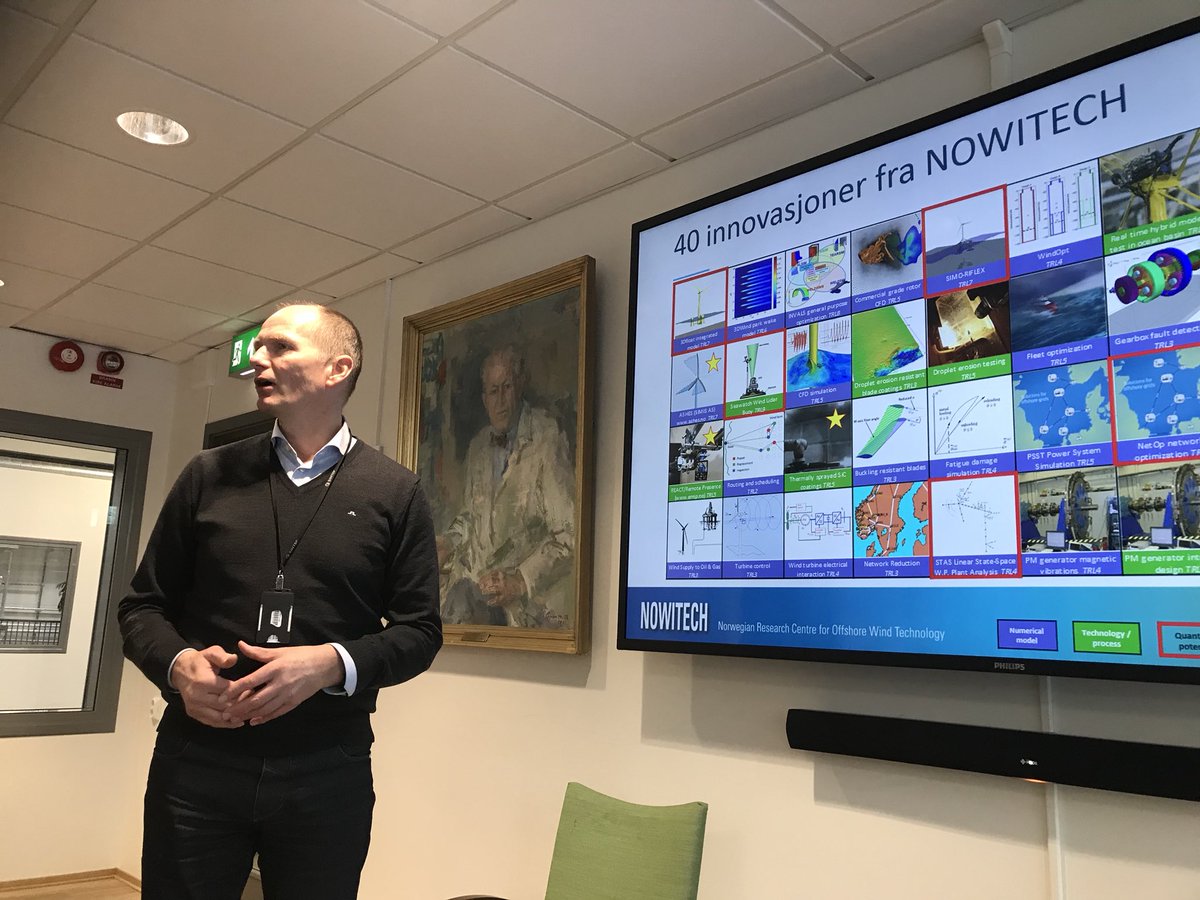
We believe that it is possible for the FMEs to make an even greater impact by adopting an even sharper focus on innovation. Our experience from the now concluded FMEs such as NOWITECH, CEDREN and BIGCCS demonstrates that management commitment, systematic work and knowledge development, cultural development, innovation categorisation and counting, as well as effective dissemination, combine to create support for innovation-related work and help to highlight the impact of, and the potential inherent in, the FMEs.
Partners working at the FMEs are not alone. The FMEs can be regarded as “Norwegian national teams” in their fields, providing a joint boost to both industry and the research institutions and large centres in which they are rooted. Together, we have the ability to identify solutions to some of the major challenges that society faces, and by doing so contribute to the creation of jobs and wealth.
With this in mind, managers from SINTEF Energy Research, NTNU Energy, the various FMEs headed jointly by SINTEF and NTNU, as well as the Technology Transfer Offices (TTO), legal departments, innovation managers and communicators, have all come together with the aim of giving a joint boost to innovation activities.
FME Innovation Task Force: huge benefits of collaboration across FMEs
Know-how and experience have been shared, needs analysed, and a joint understanding of, and agreement on, the benefits of collaboration across the FMEs affirmed. Agreement has been reached to pool our ideas, experience, tools and methodologies – enabling all those involved to learn from each other and raise their work to a higher level. In order to take this work forward, a group called the “FME Innovation Task Force” was assembled.
This report is the result of the work carried out within the group, summarised in the form of five principal recommendations accompanied by a set of proposed actions and suggestions for further work.
The five recommendations from the FME Innovation Task Force for greater levels of innovation are as follows:
- A high level of management commitment is essential, and all FME Managers must assume the role of a committed promoter of innovation.
- It is essential to have a plan in place at each FME for the development of an innovation culture, adapted to the particular circumstances of the FME in question.
- It will be sensible to assign a dedicated person (Innovation Manager) to follow up this plan. He or she shall supervise all aspects of innovation within the FME and maintain contact with the other FMEs, perhaps by means of an innovation forum.
- The task force recommends the use of tools to facilitate the systemisation and valuation of concepts and technical innovations. Some of these tools will be generic, although the FMEs may also gain benefit from a variety of other tools reflecting the research fields in which they are engaged. This report does not name specific tools, but recommends that work be started to identify and adopt tools that can be utilised by all FMEs.
- In order to demonstrate the societal benefits of technical innovations, and to ensure that these and any new knowledge are applied, it is recommended that a systematic project be conducted to highlight the technical innovations generated by the FMEs. This project should be linked to the FMEs’ ongoing dissemination work.
Here are all the FME’s
CO2-management
Norwegian CCS Research Centre – NCCS
NCCS web page: www.sintef.no/nccs
Hydropower
Norwegian Research Centre for Hydropower Technology – HydroCen
HydroCen web page: www.ntnu.no/hydrocen
Boifuel
Norwegian Centre for Sustainable Bio-based Fuel and Energy – Bio4Fuels
Bio4Fuels web page: www.nmbu.no/en/services/centers/bio4fuels
Energy sytems
Centre for intelligent electricity distribution – CINELDI
CINELDIs hjemmeside :www.sintef.no/cineldi
Energy efficiency in the industry
Centre for an Energy Efficient and Competitive Industry for the Future – HighEFF
HighEFFs hjemmeside: www.sintef.no/projectweb/higheff/
Solar cell technology
Research Centre for Sustainable Solar Cell Technology
SuSolTechs hjemmeside: www.susoltech.no
Zero emission transport
Mobility Zero Emission Energy Systems – MoZEES
MoZEES hjemmeside: www.mozees.no
Zero emission neighbourhoods
The Research Centre on Zero Emission Neighbourhoods in Smart Cities – ZEN Centre
ZEN hjemmeside: www.fmezen.no





Comments
No comments yet. Be the first to comment!