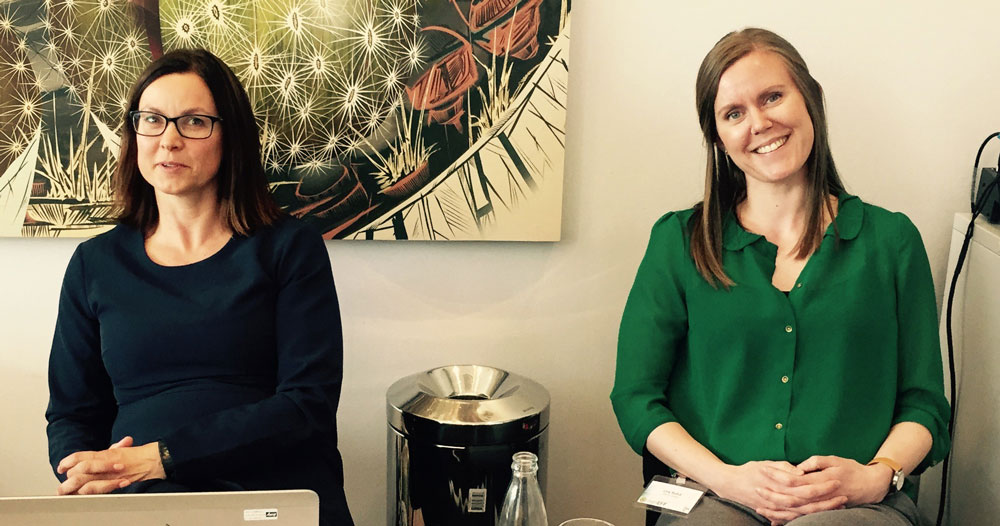
The first official FME HighEFF Annual Meeting was arranged in Trondheim 19-20 June approximately a year after the allocation of research funding from The Research council of Norway.
FME HighEFF
FME HighEFF was given the largest grant ever thanks to all efforts from the consortium. November 28th in 2016 was the first of many milestones for the Centre, the Kick-off meeting. HighEFF was officially opened by the State Secretary Kjell Børge Freiberg, who expressed the importance of collaboration between industry, academia and R&D to achieve profitable production, more efficient use and utilization of energy, and energy efficiency in the industry.
“low-emission society”
Especially important for HighEFF will be to further develop Norwegian industry for “low-emission society” and the key is multidisciplinary cooperation to achieve innovation and economic development.
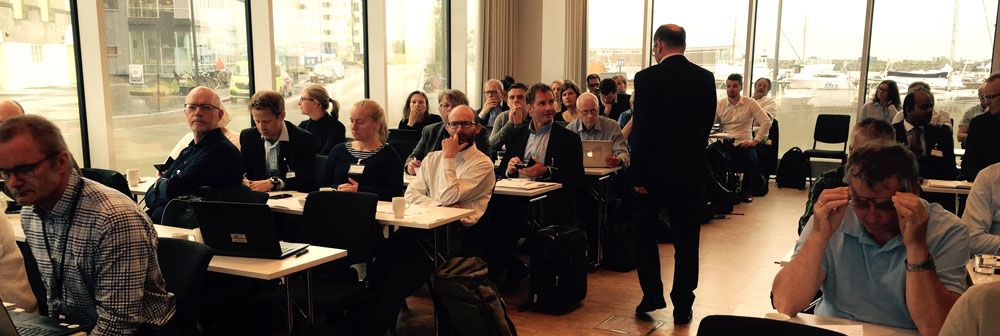
The good spirit was continued during the meeting , with presentations both from industry and research partners.
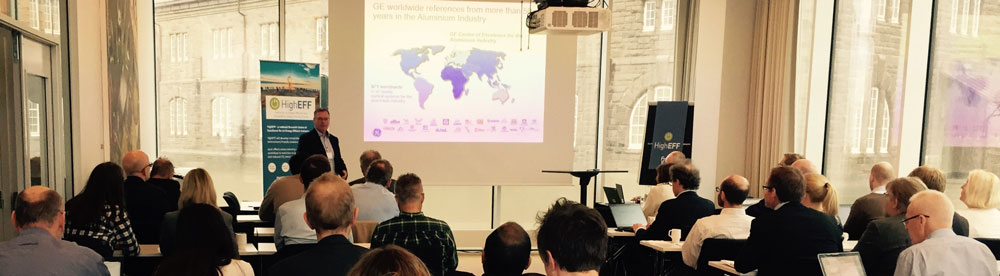
Presentations:
Day one
- Thermodynamics for dummies, Trond Andresen and Petter Nekså, SINTEF
- Alternative processes for aluminium production, Asbjørn Solheim, SINTEF
- Presentations from six HighEFF PhD candidates and Postdocs
- Quantifying resource quality and efficiency in a circular economy, Elisa Magnanelli, Postdoc NTNU
- Low temperature power cycles for waste heat utilization, Mina Shahrooz, PhD KTH
- Optimization of work and heat exchange networks, Matias Vikse, PhD NTNU
- Applications of ORC (Organic Rankine Cycle) in industry, Haoshui Yu, Postdoc NTNU
- Collective energy systems – green industry clusters, Jens Petter Johansen, PhD NTNU
- Heat-to-power conversion from variable medium – to high-temperature heat sources, Juan Cristancho, PhD NTNU
- Steam turbocompressors for cost efficient high-temperature heat pumping, Michael Bantle, SINTEF
Day two
- Design of heat exchangers under scaling conditions, Anders Sørhuus, GE Power Norway
- Heat pump concepts for combined heating and cooling application in industrial food processing, Karoline Kvalsvik, SINTEF
- Opportunistic researchers and impatient industry partners, Roger Sørheim, NTNU
- Using dynamic models for analysis and design of complex energy systems– Daniel Rohde, NTNU
- From industrial needs to application (design) – Use case metallurgical industries – Bernd Wittgens, SINTEF
- HighEFF in-kind: examples and reporting, Line Rydså, SINTEF
- Info about RA-meetings, Petter Nekså, SINTEF
In addition to the plenary sessions there were both General Assembly, Executive Board and RA-meetings.
HighEFF introduced the new Centre manager- Petter Røkke (SINTEF), and we wish our first Centre Manager Anne Karin Hemmingsen all the best in her new duties as full-time student!

Comments
No comments yet. Be the first to comment!