Skip to content

SINTEF Blog Gå til forsiden

  • Energy
  • Ocean
  • Digital
  • Health
  • Industry
  • Climate and environment
  • Building
  • Society
  • EN
  • NO
Energy

The first announcement of EERA DeepWind’2021

author
John Olav Giæver Tande
Research Manager / Chief Researcher
Published: 11. May 2020 | Last edited: 28. Nov 2024
2 min. reading
Comments (0)

18th Deep Sea Offshore Wind R&D Conference
Trondheim, Norway, 13 – 15 January 2021
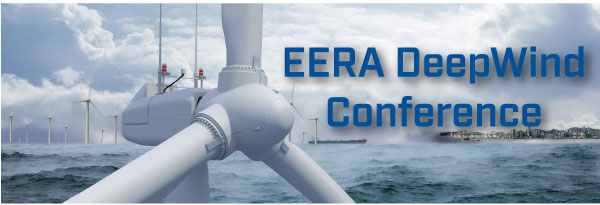

More information and registration (will open in August) at the conference website.

The conference is hosted by SINTEF and NTNU and organized in cooperation with the European Energy Research Alliance (EERA) joint programme on wind energy.

This international event aims at presenting the best on-going R&D on deep sea offshore wind farms, both bottom fixed and floating. Be part of it and issue your abstract now for oral or poster presentation.

Deadline for abstract submission: 15 October 2020.

Please send your one or two-page (A4) abstract in English as a Microsoft Word or Acrobat pdf file by e-mail to deepwind@sintef.no using the template found on the conference website.

Preparation of full papers is optional. These will go through a full peer-review and successful submissions will be published on-line in an accredited journal. There will be an award for best poster.

Please distribute this invitation to colleagues as you see fit. We would suggest you register well in advance, as the maximum number of participants is 200.

If you don’t know Trondheim, find out more at VisitNorway.


The conference has been developing every year since 2004, and is established as an important venue on deep sea offshore wind R&D. The programme includes a mix of plenary presentations with broad appeal and presentations in parallel sessions or by posters on specific science and technology themes.


COVID-19: We will adopt the organisation of the conference depending on the development of the COVID-19 pandemic.

We shall keep the conference as always to deliver top quality and at the same time ensure that it is safe. We foresee that the conference can be partly with physical presence and partly through digital platforms. The latter may include streaming of presentations and that presentations may be held without physical presence at the conference. The final solutions we will come back to once we know better how the COVID-19 pandemic is developing.


We will publish Newsletters with topics regarding the EERA DeepWind’2021,
follow this link to subscribe.


 

Comments

No comments yet. Be the first to comment!

Leave a comment Cancel reply

Your email address will not be published. Required fields are marked *

More about Energy

How much can energy-efficient voyage planning save? Evidence from 11 months of North Atlantic data

Author Image
Author Image
2 forfattere
Infographic showing the flow of thermal energy storage (TES) from surplus heat or cold to end users. On the left, red and blue thermometer icons represent surplus heat and cooling, accompanied by the text “Surplus heat or cold – Captured and stored for when it’s needed.” In the centre, a large panel titled “Thermal Energy Storage (TES)” presents three storage technologies. The top section, “Sensible TES,” shows a container with a thermometer and the text “Stores heat in one single phase.” The middle section, “Latent TES,” shows a water droplet and snowflake connected by circular arrows, with the text “Stores heat through phase change.” The bottom section, “Thermochemical TES,” shows two connected coloured circles that separate and reconnect, illustrating a reversible reaction, with the text “Stores heat through reversible reactions.” A large pale arrow-shaped wedge points from the TES panel toward the right side of the figure. On the right, three application areas are shown in separate boxes with icons: industrial processes, buildings, and data centres. The layout conveys that surplus heat or cold can be stored using sensible, latent, or thermochemical TES technologies and later supplied to industrial facilities, buildings, and data centres.

Thermal energy storage is already commercial  

Jorge Salgado Beceiro
Research Manager

Burning ammonia cleanly: How timing changes everything 

Author Image
Author Image
2 forfattere

Technology for a better society

  • About this blog
  • How to write a science blog
  • Sign up for our newsletter
  • News from NTNU and SINTEF
  • Facebook
Gå til SINTEF.no
SINTEF logo
© 2026 SINTEF Foundation
Privacy Editorial Press contacts Website by Headspin