Skip to content

SINTEF Blog Gå til forsiden

  • Energy
  • Ocean
  • Digital
  • Health
  • Industry
  • Climate and environment
  • Building
  • Society
  • EN
  • NO
Energy Society

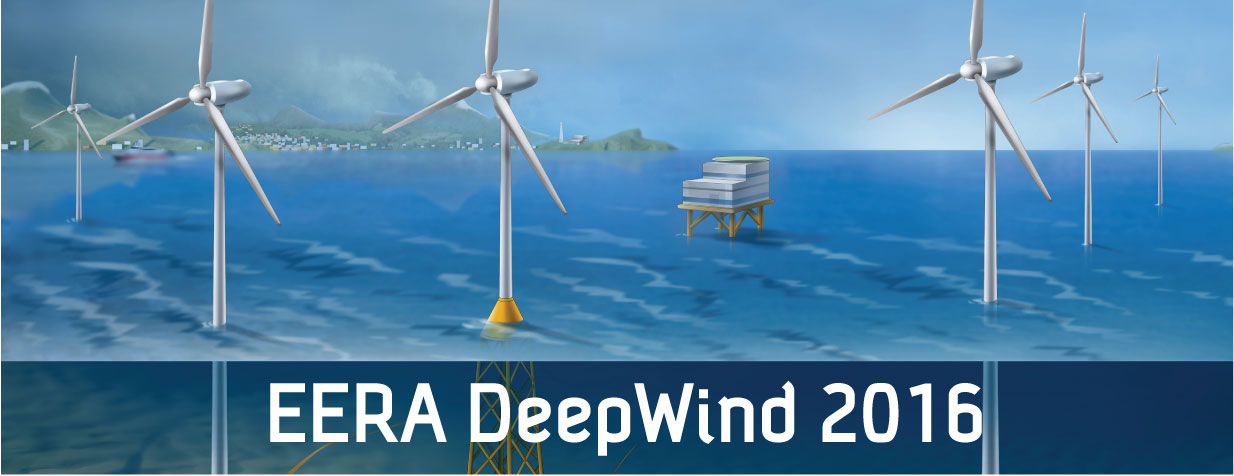
EERA DeepWind 2016 conference in Trondheim

EERA DeepWind 2016 is the 13th Deep Sea Offshore Wind R&D Conference to be held in Trondheim, Norway - 20 - 22 January 2016

author
John Olav Giæver Tande
Research Manager / Chief Researcher
Published: 19. Jan 2016 | Last edited: 16. Apr 2025
3 min. reading
Comments (0)

Organized by the research parties in NOWITECH in cooperation with the European Energy Research Alliance (EERA) joint programme on wind energy and NORCOWE, this international event aims at presenting the best on-going R&D on deep sea offshore wind farms, both bottom fixed and floating.  The programme includes about 50 oral presentation and 70 poster presentations, but also ample time for networking. The Conference has developed into an important international event for the offshore wind R&D community including plenary sessions with broad appeal and specialist parallel sessions.  The aim is to present the latest and best on-going R&D on deep sea offshore wind farms.

(…) this international event aims at presenting the best on-going R&D on deep sea offshore wind farms, both bottom fixed and floating

Keynote presentations include presentations of NOWITECH, NORCOWE, but also:

  • Initiative for Global Leadership in Offshore Wind, Matthijs Soede, Research Programme Officer, European Commission
  • Hywind Scotland, Knut Erik Steen, Technical Manager, Statoil
  • EERA research programme on wind energy and the offshore challenges, Thomas Buhl, DTU
  • Type Validation for the SeaWatch Wind Lidar Buoy, V. Neshaug, Fugro OCEANOR
  • Increasing wind farm profit through integrated condition monitoring and control, Berit Floor Lund, Kongsberg Renewables
EERA-DeepWind'2016_2

For the specialist sessions there are many exciting new results that will be presented. It is really nice to see how well the research is developing providing new knowledge, improved methods, tools, technologies etc. that reduce the cost of offshore wind energy, creating new jobs and export of goods and services.

Offshore wind farms will be an important part of a future sustainable energy system.

Offshore wind farms will be an important part of a future sustainable energy system. IEA expects offshore wind to supply 5 % of the global electricity demand in 2050(1). A potential for EUR 300 billion of global offshore wind capital expenditure over the next ten years is reported(2). This represents a golden opportunity for development of new knowledge-based jobs. The technology and market is still in an early phase with great potential for development and cost reductions. Targets are set to reduce the levelized cost of energy (LCoE) from offshore wind farms by 50 % within 2030(3). This Deepwind Conference provides insight and finger on the pulse of the ongoing R&D to reach such cost reduction, new jobs and a green transition.

  1. IEA Technology Roadmap (2013) 2DS scenario
  2. World Offshore Wind Market Forecast 2016-2025
  3. European Wind Energy Technology Platform (TPwind), 2014, Strategic Research Agenda

Read more on the conference on the conference website.

Comments

No comments yet. Be the first to comment!

Leave a comment Cancel reply

Your email address will not be published. Required fields are marked *

More about Energy

How much can energy-efficient voyage planning save? Evidence from 11 months of North Atlantic data

Author Image
Author Image
2 forfattere
Infographic showing the flow of thermal energy storage (TES) from surplus heat or cold to end users. On the left, red and blue thermometer icons represent surplus heat and cooling, accompanied by the text “Surplus heat or cold – Captured and stored for when it’s needed.” In the centre, a large panel titled “Thermal Energy Storage (TES)” presents three storage technologies. The top section, “Sensible TES,” shows a container with a thermometer and the text “Stores heat in one single phase.” The middle section, “Latent TES,” shows a water droplet and snowflake connected by circular arrows, with the text “Stores heat through phase change.” The bottom section, “Thermochemical TES,” shows two connected coloured circles that separate and reconnect, illustrating a reversible reaction, with the text “Stores heat through reversible reactions.” A large pale arrow-shaped wedge points from the TES panel toward the right side of the figure. On the right, three application areas are shown in separate boxes with icons: industrial processes, buildings, and data centres. The layout conveys that surplus heat or cold can be stored using sensible, latent, or thermochemical TES technologies and later supplied to industrial facilities, buildings, and data centres.

Thermal energy storage is already commercial  

Jorge Salgado Beceiro
Research Manager

Burning ammonia cleanly: How timing changes everything 

Author Image
Author Image
2 forfattere

Technology for a better society

  • About this blog
  • How to write a science blog
  • Sign up for our newsletter
  • News from NTNU and SINTEF
  • Facebook
Gå til SINTEF.no
SINTEF logo
© 2026 SINTEF Foundation
Privacy Editorial Press contacts Website by Headspin