

The decarbonisation of the power sector is at the core of the transition to a future sustainable energy. In parallel with the growth in renewables, the costs of solar photovoltaic (PV) and electrical energy storage (EES) are decreasing, which facilitates installation of these devices at the residential level. When power is produced at the residential/consumer level we call it distributed generation (DG). A consumer who also produce some or all of its own energy is called a prosumer. With a higher penetration of DG and EES, private end-users are taking a more active role in the power grid, not only consuming energy but also producing it (prosumers). This blogpost focuses on the cost benefit of cooperation between consumers and prosumers, and how we used cooperative game theory to research the benefits. This blog-post is based on the paper “E. Tveita, M. Löschenbrand, S. Bjarghov, and H. Farahmand, Comparison of Cost Allocation Strategies among Prosumers and Consumers in a Cooperative Game, 2018 International Conference on Smart Energy Systems and Technologies – SEST” in WP5 of the CINELDI FME center.
More opportunities for consumer and prosumer cooperation
Currently, the independent operation of, e.g., PVs is most common, but with an increased amount of DG and EES available, opportunities for cooperation through power exchanges arise, thus making independent operation less common in the future.

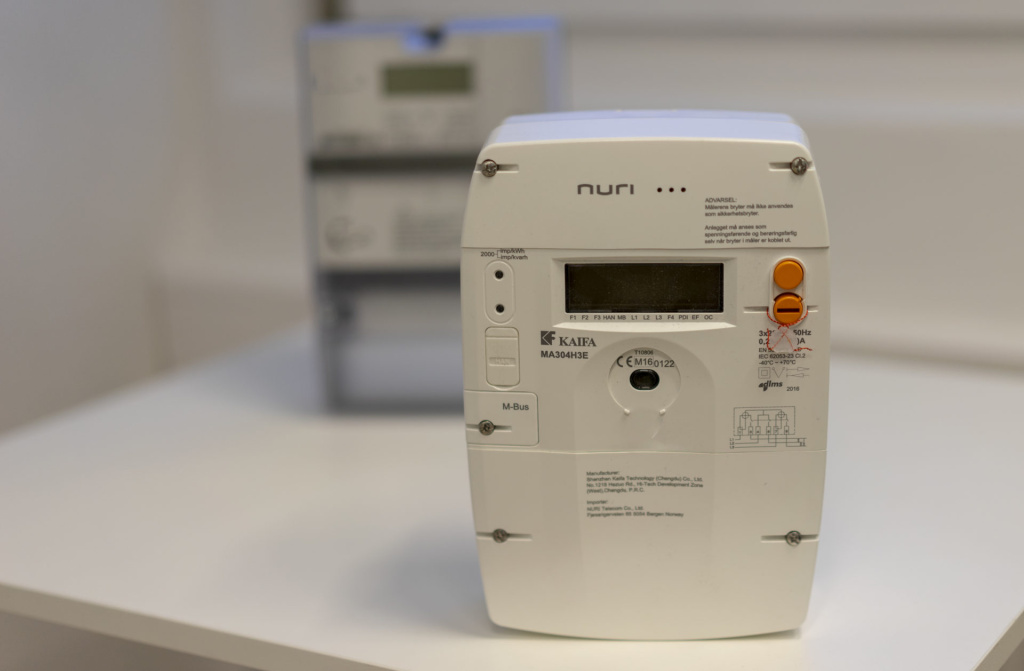
With the advanced measure systems (AMS) that have been be installed in every Norwegian household, new possibilities for interchange of information between the end-users and the DSOs appear. The AMS technology offers a two-way flow of information between the end-users and the DSOs, hence facilitates the end-users to take an active role in the power grid. As PV-systems and battery storage units are expected to become more economical viable during the future years, we believe that, an increased amount of end-users might invest in these technologies. If several end-users in a given geographical area are equipped with PV-systems and battery storage units, possibilities for cooperation among these end-users occur. If end-users with local PV-production are able to contribute to supply their neighbouring demand in periods where there is surplus of local produced power, a higher share of the produced power could be utilized. At the same time, less power might be bought from the power grid.
Preliminary studies (conducted by coauthors) show that cooperation among prosumers and consumers yields reduced annual electricity cost compared to independent operation of e.g. solar panels on resident homes since less power is required to be bought from the main grid, and each individual prosumer and consumer has to pay less for the grid tariffs.
Cooperative game theory – how it works
In our research, I used a methodology known as cooperative game theory. The goal is to analyse the value of sharing storage among consumers and prosumers in a cooperative manner, and conclude that all players in an energy community. The energy community can be modelled as a cooperative game where all players cooperate under mutual benefits. A benefit of game theory is the creation of a framework for interaction between agents. This can be both cooperative or non-cooperative, but the former includes concepts of how to develop stable coalitions and share benefits. Each coalition formed by the players will lead to an outcome in the form of the annual electricity cost. Further, the outcome of each coalition depends on the interaction among the players. The players act rational, with self-interest. Thus, the objective of each player is to minimize their individual electricity cost. Although the players act with self-interest, the grand coalition will form due to the concept of superadditivity, where the utility obtained by the coalition is equal or more than the payoff obtained individually. In this case, disjoint coalitions always have an incentive to combine. In other words, the grand coalition always forms. Differences in solution approaches within cooperative game theory are due to their interpretation of fairness. A solution concept to find a fair allocation is the nucleolus method. The idea is to minimise the largest dissatisfaction of the players. The nucleolus interprets fairness from the perspective of minimising the maximum dissatisfaction. However, fairness can also be considered by the contributions agents make. To provide a proper representation of this was the objective of Shapley value introduced by Lloyd Shapley. The method is based on a set of axioms, which contain intuitive and straightforward interpretations of fairness to distribute the generated surplus among the agents contribute in a coalition.
How I modelled consumer and prosumer behavior
Focusing on cost allocation among end-users equipped with rooftop PV and batteries, the objective of the research was to analyse two possible solution concepts for consumer and prosumer cooperation; the nucleolus and the Shapley value.

This paper aims to examine whether the deviation between the cost allocation methods increases as the value of the battery system is changed. The simulated energy community is based on data from private residences in Norway, provided by Trønderenergi Nett, a local distribution system operator (DSO). Four scenarios are analyzed in total, and within each scenario, there are four players. Player 1 and 2 are prosumers with one rooftop PV system and one battery each, whereas player 3 and 4 are consumers. Using two different sets of load profiles and two different sets of electricity spot prices four scenarios are identified. The cost of grand coalition under scenarios are shown in the following table. In the table, the load profiles are represented by L1 and L2. The two sets of spot prices are taken from Norway (NO3) and Germany (GER), respectively. Results show that both nucleolus and the Shapley value provide stable cost allocations under minor deviations, depending on the case. Results also show that the deviation between the methods increases, as the value of the battery system increases. The highest deviation between the methods is of 3 % corresponds to a minor cost difference of 136.8 NOK in the evaluated scenarios. In this scenario, the value of the battery system is 8.84 %, which also represents the highest value of batteries within the considered scenarios.









Comments
No comments yet. Be the first to comment!