
Skip to content

SINTEF Blog Gå til forsiden

  • Energy
  • Ocean
  • Digital
  • Health
  • Industry
  • Climate and environment
  • Building
  • Society
  • EN
  • NO
Energy

Innovation on the agenda for CINELDI PhDs

author
Ida Fuchs
PhD Fellow
Published: 24. Sep 2019 | Last edited: 10. Apr 2025
2 min. reading
Comments (0)

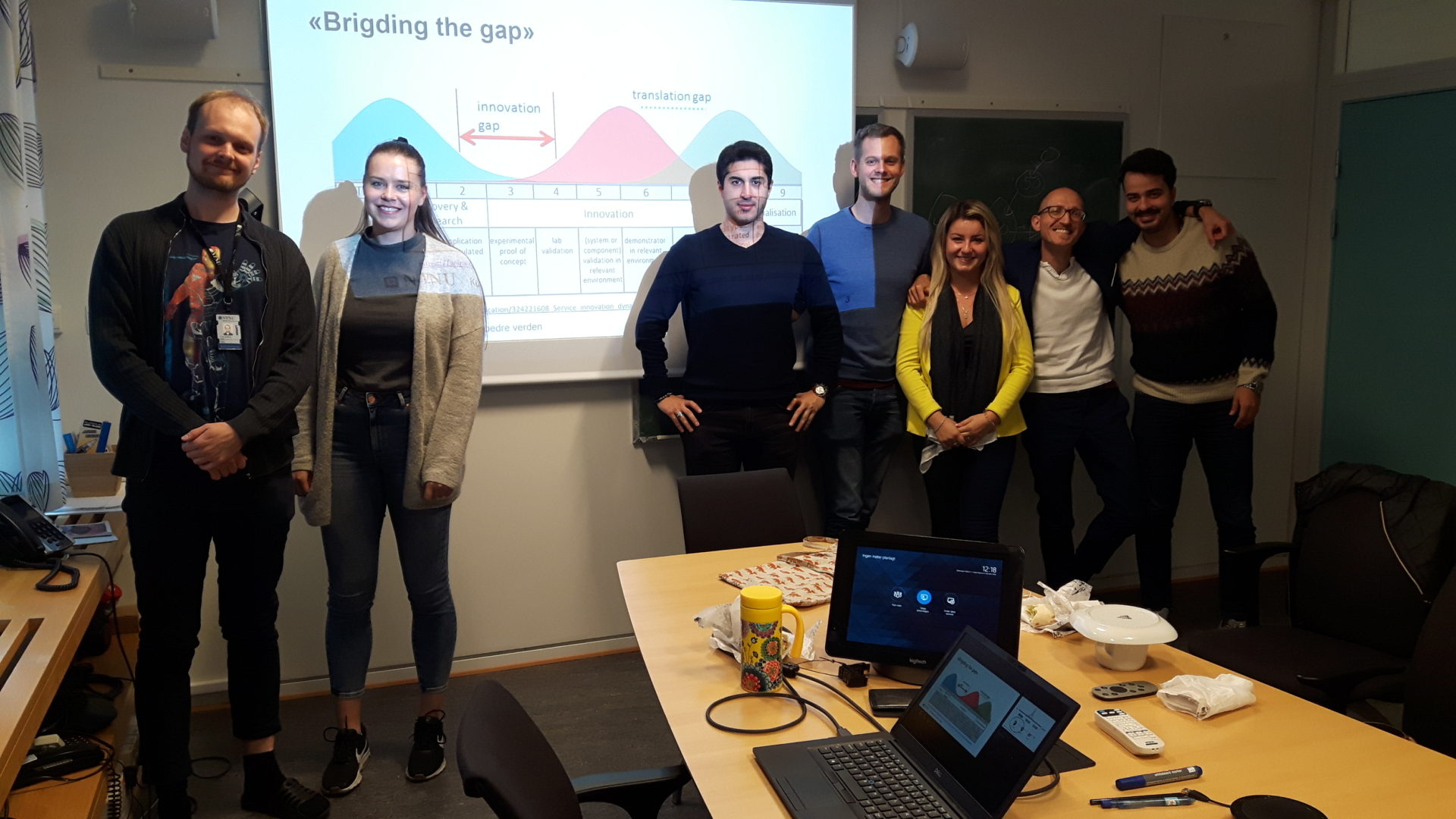
CINELDI PhDs met for their first innovation lunch colloquium. There are two main purposes with those meetings. The first is to meet frequently for short updates and discussions among each other, since the PhDs are spread over many departments at NTNU, they do not necessarily meet on a daily basis. But we believe that information exchanges will increase creativity and interdisciplinary cooperation.

The second purpose is to increase knowledge on innovation processes and innovations tools and methodologies. We intent to not only learn about methods like Hackathons, Design Thinking, Design Sprint, World Café ect., but also test those to solve issues and dive into ideas that we have. Additionally, the PhDs will learn about NTNU’s and external funding for innovation.

At the first meeting, Ida Fuchs, Innovation manager for Digital Electrical Energy, presented an intro to innovation including NTNUs Strategic program for knowledge-based innovation (SKI) launched last year, where NTNU hired 15 innovation managers.

Further on, Ida Fuchs presented the innovation work that has been done during the first year and some results of the actions. After that the general innovation process at NTNU was briefly presented and the pros and cons for patenting where discussed with the CINELDI PhDs in a group work.

Finally, the meeting was evaluated and the CINELDI PhDs gave input how to make the innovation lunch highly relevant for themselves. The next innovation colloquium will be in 3 weeks, and two CINELDI PhDs will give a presentation on their common work. They will focus on presenting their results in a way that explains it in a broader picture, and not dive deep into the core of the research. Further on, Ida Fuchs will give an overview on NTNU funds for financing innovation and commercialization projects.

CINELDI presenterte forskning på CIRED konferansen

Comments

No comments yet. Be the first to comment!

Leave a comment Cancel reply

Your email address will not be published. Required fields are marked *

More about Energy

How much can energy-efficient voyage planning save? Evidence from 11 months of North Atlantic data

Author Image
Author Image
2 forfattere
Infographic showing the flow of thermal energy storage (TES) from surplus heat or cold to end users. On the left, red and blue thermometer icons represent surplus heat and cooling, accompanied by the text “Surplus heat or cold – Captured and stored for when it’s needed.” In the centre, a large panel titled “Thermal Energy Storage (TES)” presents three storage technologies. The top section, “Sensible TES,” shows a container with a thermometer and the text “Stores heat in one single phase.” The middle section, “Latent TES,” shows a water droplet and snowflake connected by circular arrows, with the text “Stores heat through phase change.” The bottom section, “Thermochemical TES,” shows two connected coloured circles that separate and reconnect, illustrating a reversible reaction, with the text “Stores heat through reversible reactions.” A large pale arrow-shaped wedge points from the TES panel toward the right side of the figure. On the right, three application areas are shown in separate boxes with icons: industrial processes, buildings, and data centres. The layout conveys that surplus heat or cold can be stored using sensible, latent, or thermochemical TES technologies and later supplied to industrial facilities, buildings, and data centres.

Thermal energy storage is already commercial  

Jorge Salgado Beceiro
Research Manager

Burning ammonia cleanly: How timing changes everything 

Author Image
Author Image
2 forfattere

Technology for a better society

  • About this blog
  • How to write a science blog
  • Sign up for our newsletter
  • News from NTNU and SINTEF
  • Facebook
Gå til SINTEF.no
SINTEF logo
© 2026 SINTEF Foundation
Privacy Editorial Press contacts Website by Headspin