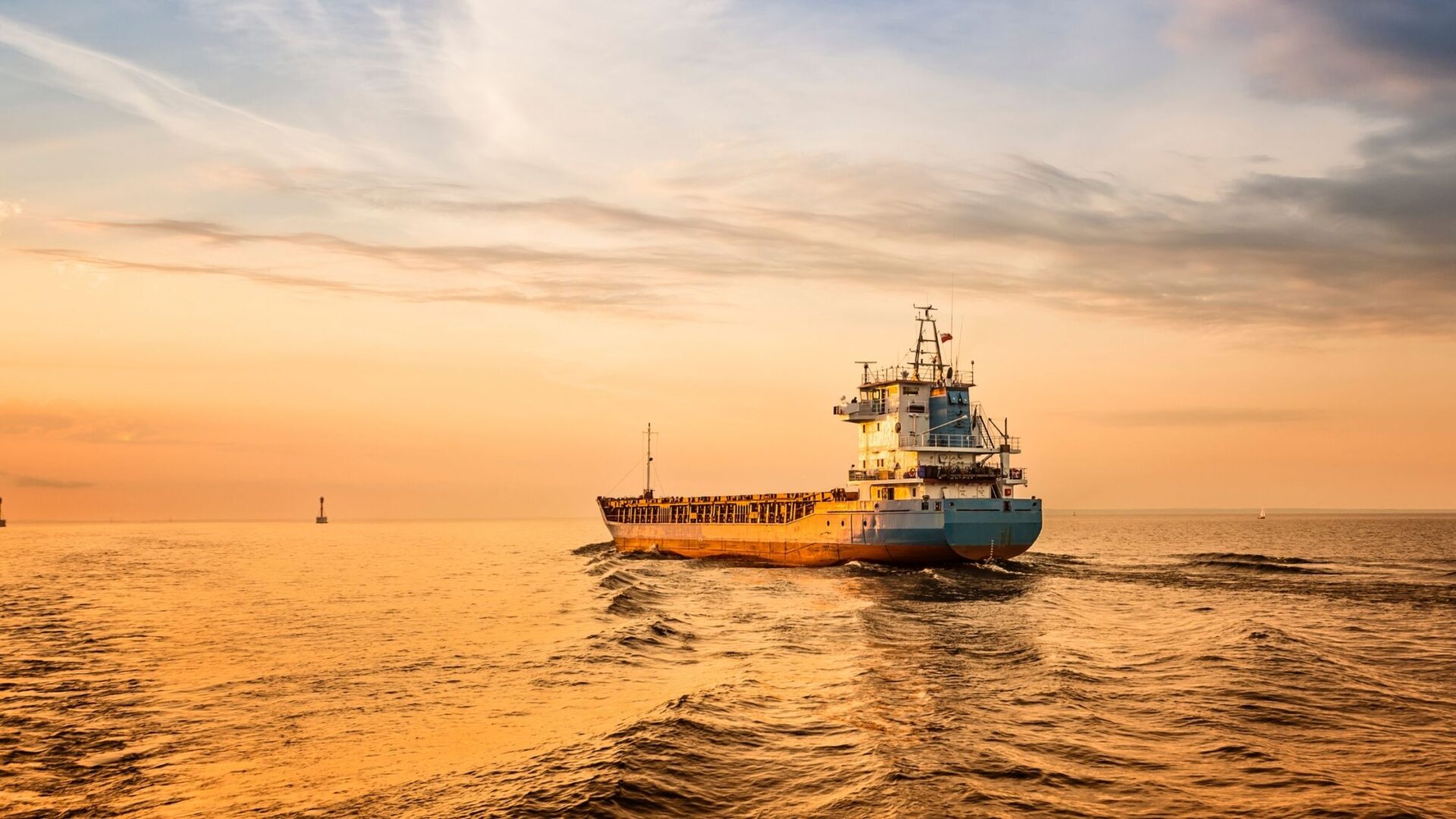

CO2 emissions from global shipping
As an efficient transport method, maritime shipping has been the backbone of the world economy, accounting for over 75% of the global trade by volume. Consequently, international shipping is responsible for more than 2% of global greenhouse gas emissions (GHG).
To meet the objective of the Paris Agreement, it is critical to significantly reduce shipping GHG emissions. This will have a significant impact on Norway as the 5th largest ship owning country and the marine industry as a whole.
CCS as one of the solutions
Several technologies could be used to reduce these emissions, including the use of zero-carbon fuels such as hydrogen and ammonia, electrification and carbon capture and storage (CCS).
The deployment of zero-carbon fuels will be necessary for the decarbonization of maritime transport. Nevertheless, the low maturity of technology and supporting infrastructure make zero-carbon fuels relevant mainly as long-term solutions.
Due to its already high maturity for onshore applications, on-board CO2 capture systems can play an important role in meeting the shipping emission target before zero-carbon fuels become viable. Considering the long lifespan of existing and planned hydrocarbon-fueled ships, on-board CO2 capture is also expected to be a long-term measure.
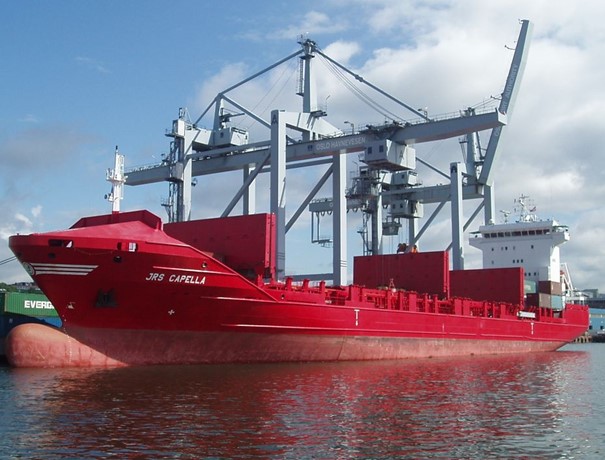
Deploying CCS for ships
To develop knowledge and technologies required to achieve such deployment, SINTEF Energy Research is leading a new project called CCShip, which focuses on deploying CCS for ships to enable maritime CO2 emission mitigation.
The main objective of the CCShip project is to develop cost-effective solutions for CCS from ships, as well as understand when CCS can be a more attractive technology than alternative solutions to reduce CO2 emissions from ships.
While solvent-based CO2 capture (also considered as a base case in CCShip) has been shown to be feasible but very likely to be an expensive solution, the CCShip project will also focus on potential of different novel CO2 capture solutions in terms of weight, compactness, integration, efficiency, and cost.
In addition, to maximize opportunities for CO2 capture implementation, CCShip will investigate opportunities for different ship types and transport applications (size, fuel type, voyage distance), as well as consider both new-build and retrofitting of vessels.
In addition to SINTEF Energy Research, the CCShip project gathers other key research and industrial organizations in the fields, namely SINTEF Ocean, NTNU, University of Oslo, Seoul National University, Wärtsilä Moss, Klaveness and Calix Limited. The CCShip project is funded by Wärtsilä Moss, Calix Limited, Klaveness, the Norwegian CCS Centre NCCS, as well as the Norwegian Research Council through the MAROFF program (project no. 320260).
For more information, please contact Research Scientist Simon Roussanaly and Research Manager Stefania Gardarsdottir.






Comments
It is excellent to see serious development in this area! We have been working on it for a couple of years now and have exciting progress to share.
Ionada Inc. has a unique CC technology that has been developed to work on vessels, as well as single point emissions of land based systems with around 200,000 MT CO2 per year.
We provide a marine proven design that uses membrane contractors – this method has a much smaller foot-print and significantly lower capture cost than traditional CC systems.
Most importantly we are at TRL 6/7 and be ready to commercial deployment in 2022. If you are serious about marine decarbonization we would love to hear from you.
Hi Robert,
Sure do not hesitate to contact me via e-mail.
Simon Roussanaly
Congratulations! A new project, CCShip. IMO moves with the speed of a snail, but it moves! Several projects are started as respons to new restrictions on emissions. CCShip looks well scientifically based, but you are as SINTEF Energy allways was, preoccupied with liquid absorbents. Interesting to see 50 m high contact towers on board? To bring technology for huge power stations aboard seams odd?
What about opening the eyes for technologies more adapted to a ships scale? What about PSA or TSA?
The Danes have crazy plans to pressure and freeze CO2 into hydrate, form it as a torpedo and drop into the sea bottom? Ocean currents would dissolve the hydrate into the water through som weeks, speeding up todays transition of CO2 from the atmosphere to the deep oceans – acidify the water faster and kill creatures and plants quicker?
Tore A Torp, Trondheim
Thanks Tore for the many positive feedback.
You are indeed right that it is important to look at more compact and energy-efficient solutions than amine and it is indeed a significant part of our project.
I am not aware of the Danish project you mention. Personally, I do not think that solutions that reject the captured CO2 (reacted or in solid phase) in the ocean are very interesting. As you point out, they often lead to other environmental issues and are permanently storing the CO2.
Simon Roussanaly