Waste-to-energy (WtE) plants are among the largest single sources of greenhouse gas emissions in many cities, which makes them an obvious target for carbon capture and storage (CCS), all the more so because capturing biogenic CO₂ can deliver genuinely negative emissions. The technology is feasible. The hard part is everything around it: the societal, regulatory and economic factors are still uncertain and evolving, and what is true today may not hold next month. In Trondheim, a research project set out to navigate exactly this, and distilled what it learned into 14 concrete recommendations.
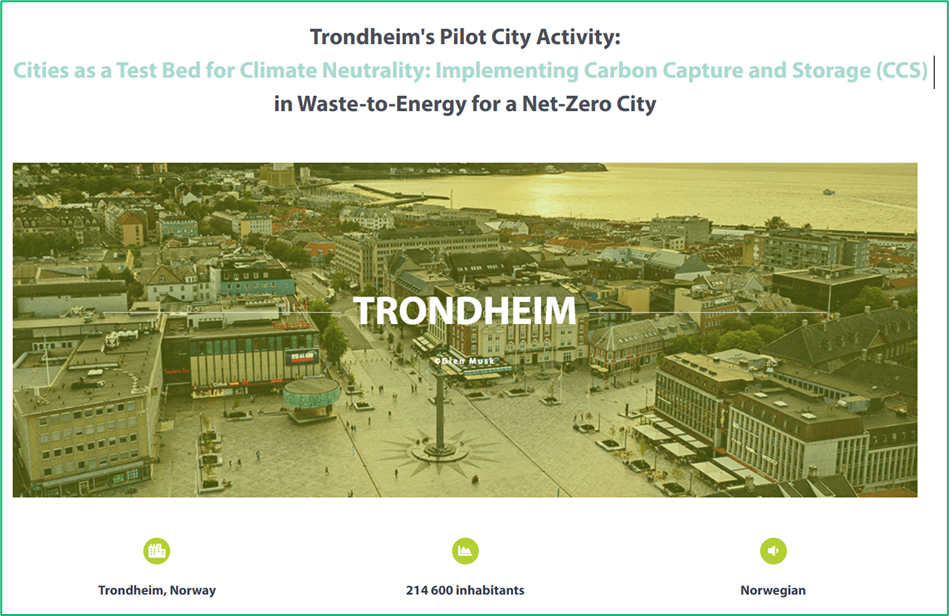
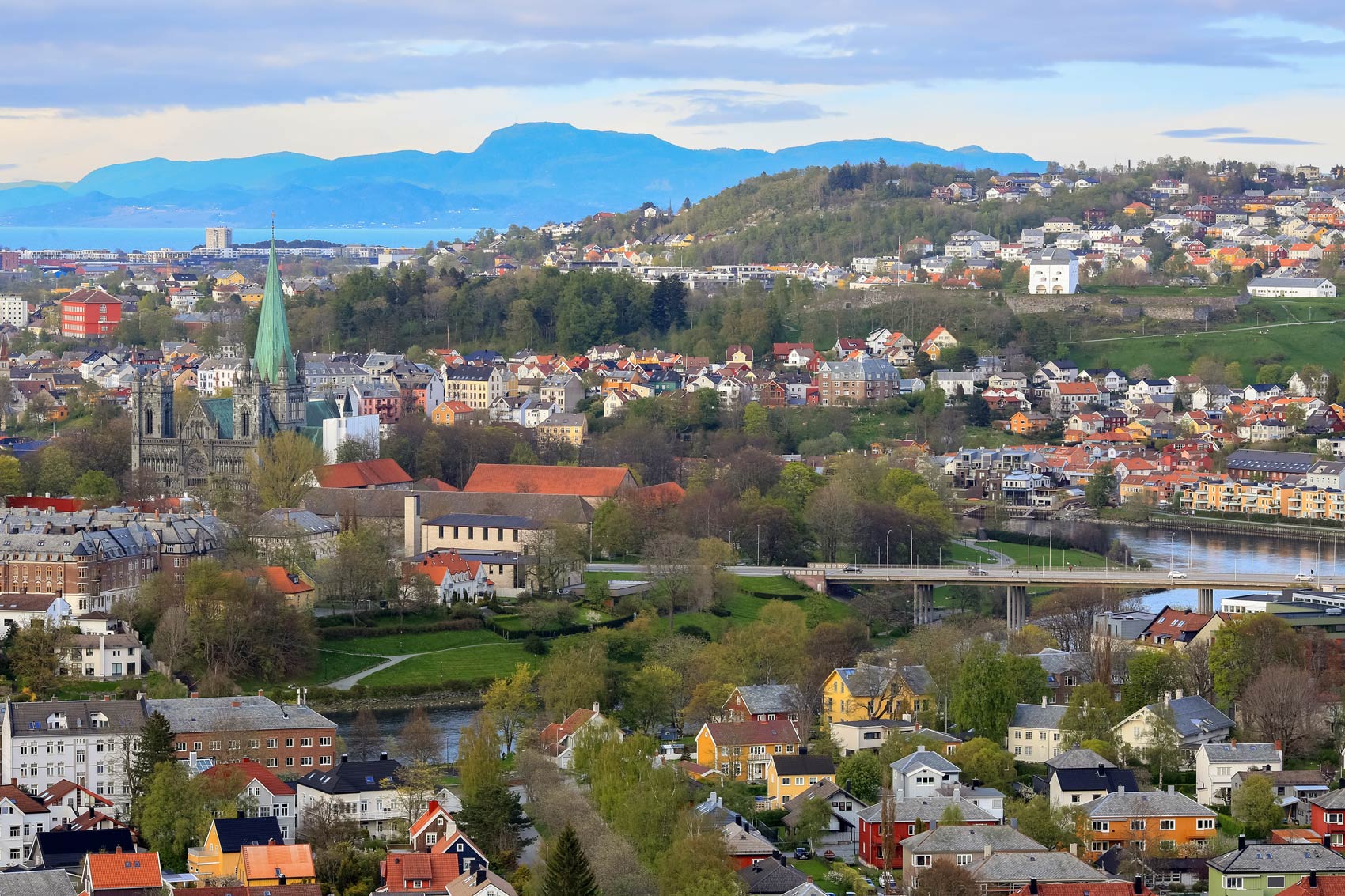
Recognizing that WtE is one of the city’s largest single sources of greenhouse gas emissions, the CCWaSte4NetZero project established a common starting point by engaging key stakeholders, including municipal authorities, industry, research institutions, and the public, to align on the importance of WtE-CCS.
The project represents an important step in Trondheim’s journey toward climate neutrality. By addressing technical, financial, and social challenges associated with CCS for WtE, the project aimed to:
- Strengthen policy frameworks at municipal, national, and EU levels.
- Develop a viable business model that balances costs, incentives, and regulatory support.
- Enhance public and stakeholder engagement.
- Leverage international best practices from Zurich, Oslo, and European CCS initiatives.
- Include research insights from ACCSESS, CaptureX, and other CCS and/or municipal waste-related projects.
By combining technology, governance, finance, and public participation, this project set the foundation for a replicable CCS model that other European cities can adopt.
The project’s key objective has been to develop a viable business model that makes CCS financially sustainable and scalable while securing public trust and policy/regulatory support. The initiative demonstrates that cities can take a leading role in driving CCS adoption, ensuring that waste incineration remains a sustainable solution within the broader transition to a climate-neutral, circular economy.
One of the central focus points of the project was to develop a shared understanding of systemic challenges and opportunities, ensuring that WtE-CCS is integrated into the city’s broader climate action and circular economy strategies. By learning from best practices in Zurich, Oslo, and other European cities, Trondheim aims to position itself as a leading example in urban CCS deployment.
A critical component has been to identify barriers and drivers of CCS. This activity built on research insights from ACCSESS (EU Horizon 2020), CaptureX, IEA Bioenergy Intertask project on BECCUS, CCS Mid-Norway and KSP CircWtE, which provide valuable knowledge on business models, regulatory frameworks, and technical integration. Policy alignment at the EU, national, and municipal levels is essential for the project’s realization, as it ensures that CCS incentives, financial mechanisms, and carbon taxation policies support its implementation. Additionally, Trondheim’s WtE operator, Lunera Energi, is active in the KAN-network, a group of eight Norwegian WtE plants exploring CCS, enhances shared learning and infrastructure development for CO2 transport and storage.
WtE CCS is feasible and an essential contributor to negative emissions. But it is also complex, with many societal, technological, regulatory and economical challenges to address. Many of these elements are still uncertain and evolving (the EU Emissions Trading System, for example) and this lack of stability makes the deployment of WtE CCS difficult.
In the project, we gathered up-to-date information and knowledge on enablers and barriers from a wide variety of sources – from EU regulations to R&D projects and industrial case studies. These were distilled in a list of 14 concrete recommendations. This list encompasses essential ingredients for the development of WtE CCS full-scale projects. The axes were selected to encompass all dimensions of a WtE CCS project. Different recommendations are aimed at different actors (municipalities, WtE operators, authorities, technology, R&D) and aim to cover all stakeholders interested in developing a CCS WtE project in Europe.
Keeping up with such a dynamic landscape is difficult, and what is true today may not hold next month. Yet many actors are committed to making WtE CCS happen, and they are calling for a stable framework to deliver on circularity and climate action.
14 concrete recommendations for the development of full-scale WtE CCS projects
Waste-to-Energy CCS
Click any theme heading to explore its details
energy CCS
Societal aspects
- Communicate CCS through co-benefits, such as cleaner air and climate neutrality.
- Use targeted/tailored public engagement on a regular basis.
- Develop and use transparent communication tools (incl. infographic) for emissions, costs, benefits and risks to build and foster trust.
Regional & national coordination
- Align municipal climate, waste and energy plans.
- Implement a regional waste strategy for predictable CO₂ capture operation.
- Explore coordination possibilities with other regional CO₂ emitters, to leverage funding/innovation/impact opportunities.
- Push for national authorities to deliver a stable framework for incentive instruments (such as CCfD, reversed auctions) and regulations, as well as strategic coordination for infrastructure.
Infrastructure
- Reserve space for equipment, i.e. absorber/stripper, DCC and buffer tanks.
- Secure transport and storage MoUs early.
- Evaluate infrastructure synergies with regional CCS clusters to reduce costs.
regulation
Business models
- Explore how to stack revenues such as Innovation Fund, national funding opportunities, ETS avoidance + CDR/removals + waste fees + energy sales.
- Explore opportunities for private capital investments
EU ETS (Emissions Trading System)
- Prepare ETS ready MRV systems using the mandatory EU monitoring plans required from 2024.
- Run ETS scenario modelling to replace the Norwegian combustion tax with future ETS cost curves.
- Push nationally for predictable CO₂ pricing across waste fractions to reduce uncertainty.
EPR (Extended Producer Responsibility)
- Support modulated EPR fees for hard to recycle plastics (and textiles) to finance CCS on fossil CO₂.
- Document the avoidance value of CO₂ emissions from fossil plastics and textiles combustion.
- Collaborate with national authorities for EPR revenue to co fund CCS OPEX at WtE plants.
CDR (Carbon Dioxide Removal)
- Implement high-quality biogenic MRV, aligned with CRCF and VCM rules.
- Pilot third-party verification early, aligned with CRCF and VCM rules.
- Explore long-term offtake agreements for stable CDR revenues.
EU Taxonomy
- Attempt to obtain green loan for CCS even if WtE remains excluded.
- Collaborate on approaches to validate that only non-recyclable (and difficult-to-recycle) residual waste is treated by WtE; critical for possible inclusion.
Permitting
- Explore permitting pathways with authorities (integrated vs separated).
- Conduct baseline environmental surveys early (air, soil, water).
- CO₂ capture with amines: agree on amine and nitrosamine (degradation product) modelling approach (formation, dispersion and destruction processes) with the authorities.
R&I
Circular economy
- Consider implementing advanced mixed waste sorting alongside CCS.
- Evaluate CRM recovery from WtE bottom and fly ash as potential additional revenue stream.
- Communicate WtE CCS as a complement to recycling—not a competitor.
Innovation & R&D
- Develop alternatives to amine-based capture technologies.
- Assess WtE sector-specific flue gas characteristics to understand resulting CO₂ capture requirements.
- Join modelling research – energy integration, techno-economic analysis, national/European infrastructure.
operation
Plant operation – WtE & CCS
- WtE: Consider upgrading, if necessary, flue gas treatment to meet capture quality requirements.
- CO₂ capture with amines: Monitor solvent degradation to evaluate need to improve plant operation.
- CO₂ capture: Tailor DCC operation to incoming gas and capture technology.
Waste
- Implement continuous waste composition monitoring to reduce CO₂ capture process fluctuations.
- Strengthen quality control on waste sorting to stabilise WtE feedstock.
Energy
- Quantify energy demand impacts and integrate CCS into energy planning to maintain energy security.
- Investigate energy integration solutions to reduce the CO₂ capture energy penalty.
- Use CCS to communicate about climate-positive district heating from waste (biogenic fraction).






Comments
No comments yet. Be the first to comment!