
Skip to content

SINTEF Blog Gå til forsiden

  • Energy
  • Ocean
  • Digital
  • Health
  • Industry
  • Climate and environment
  • Building
  • Society
  • EN
  • NO
Energy

Call for abstracts – EERA DeepWind’2021

EERA DeepWind'16
author
John Olav Giæver Tande
Research Manager / Chief Researcher
Published: 2. Oct 2020 | Last edited: 28. Nov 2024
2 min. reading
Comments (0)

18th Deep Sea Offshore Wind R&D Conference

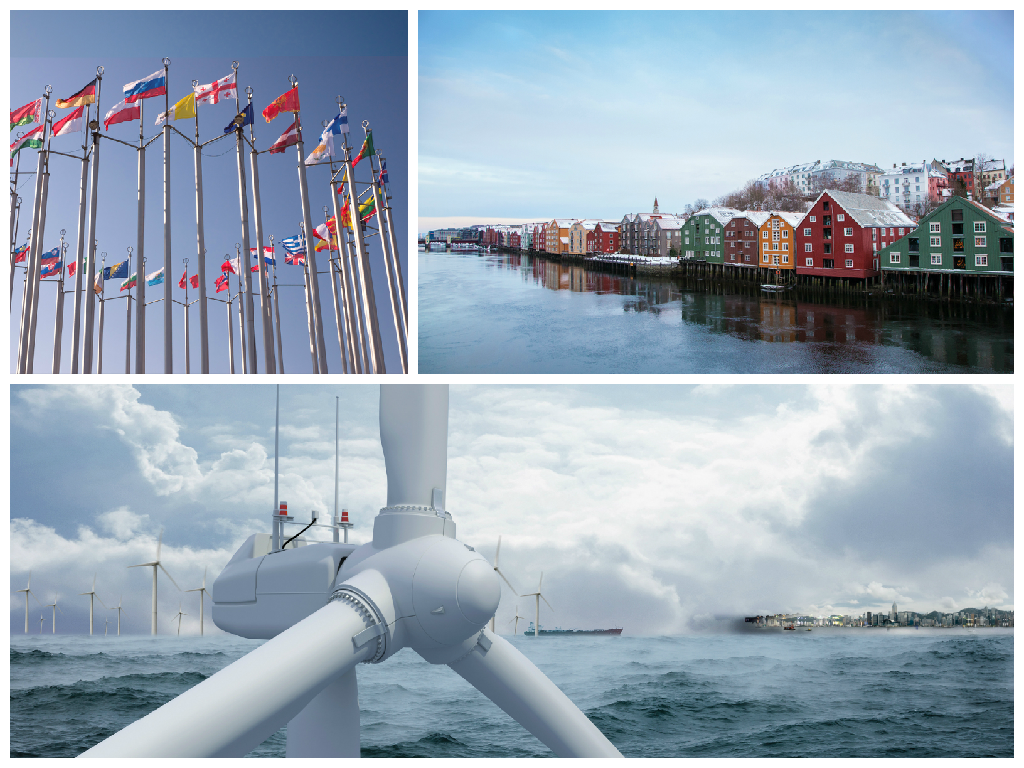
EERA DeepWind 2021 is an international event aiming to present the best on-going research and innovation related to deep sea offshore wind farm, both bottom-fixed and floating. The conference will take place in Trondheim, Norway, 13 – 15 January 2021.
Deadline for submission of abstracts is set to 15 October 2020.

[blue_box]

Conference topics:

  • New turbine and generator technology
  • Grid connection and power system integration
  • Met-ocean conditions
  • Operation & maintenance
  • Installation and sub-structures
  • Wind farm optimization
  • Experimental testing and Validation
  • Wind farm control systems
  • Public engagement and environmental aspects
  • Energy transition perspectives

[/blue_box]

Please send your one or two-page (A4) abstract in English as a Microsoft Word or Acrobat pdf file by e-mail to deepwind@sintef.no using the template found on the conference website.

Preparation of full papers is optional. These will go through a full peer-review and successful submissions will be published on-line in an accredited journal. There will be an award for best poster.


EERA DeepWind Conference 2021 will be a hybrid conference, gathering attendees and speakers both physically and digitally. The hybrid format allows us to present speakers from different parts of the world, whilst ensuring a good meeting for what’s important: hard science on offshore wind.


We will publish Newsletters with topics regarding the EERA DeepWind’2021,
follow this link to subscribe.


Comments

No comments yet. Be the first to comment!

Leave a comment Cancel reply

Your email address will not be published. Required fields are marked *

More about Energy

How much can energy-efficient voyage planning save? Evidence from 11 months of North Atlantic data

Author Image
Author Image
2 forfattere
Infographic showing the flow of thermal energy storage (TES) from surplus heat or cold to end users. On the left, red and blue thermometer icons represent surplus heat and cooling, accompanied by the text “Surplus heat or cold – Captured and stored for when it’s needed.” In the centre, a large panel titled “Thermal Energy Storage (TES)” presents three storage technologies. The top section, “Sensible TES,” shows a container with a thermometer and the text “Stores heat in one single phase.” The middle section, “Latent TES,” shows a water droplet and snowflake connected by circular arrows, with the text “Stores heat through phase change.” The bottom section, “Thermochemical TES,” shows two connected coloured circles that separate and reconnect, illustrating a reversible reaction, with the text “Stores heat through reversible reactions.” A large pale arrow-shaped wedge points from the TES panel toward the right side of the figure. On the right, three application areas are shown in separate boxes with icons: industrial processes, buildings, and data centres. The layout conveys that surplus heat or cold can be stored using sensible, latent, or thermochemical TES technologies and later supplied to industrial facilities, buildings, and data centres.

Thermal energy storage is already commercial  

Jorge Salgado Beceiro
Research Manager

Burning ammonia cleanly: How timing changes everything 

Author Image
Author Image
2 forfattere

Technology for a better society

  • About this blog
  • How to write a science blog
  • Sign up for our newsletter
  • News from NTNU and SINTEF
  • Facebook
Gå til SINTEF.no
SINTEF logo
© 2026 SINTEF Foundation
Privacy Editorial Press contacts Website by Headspin