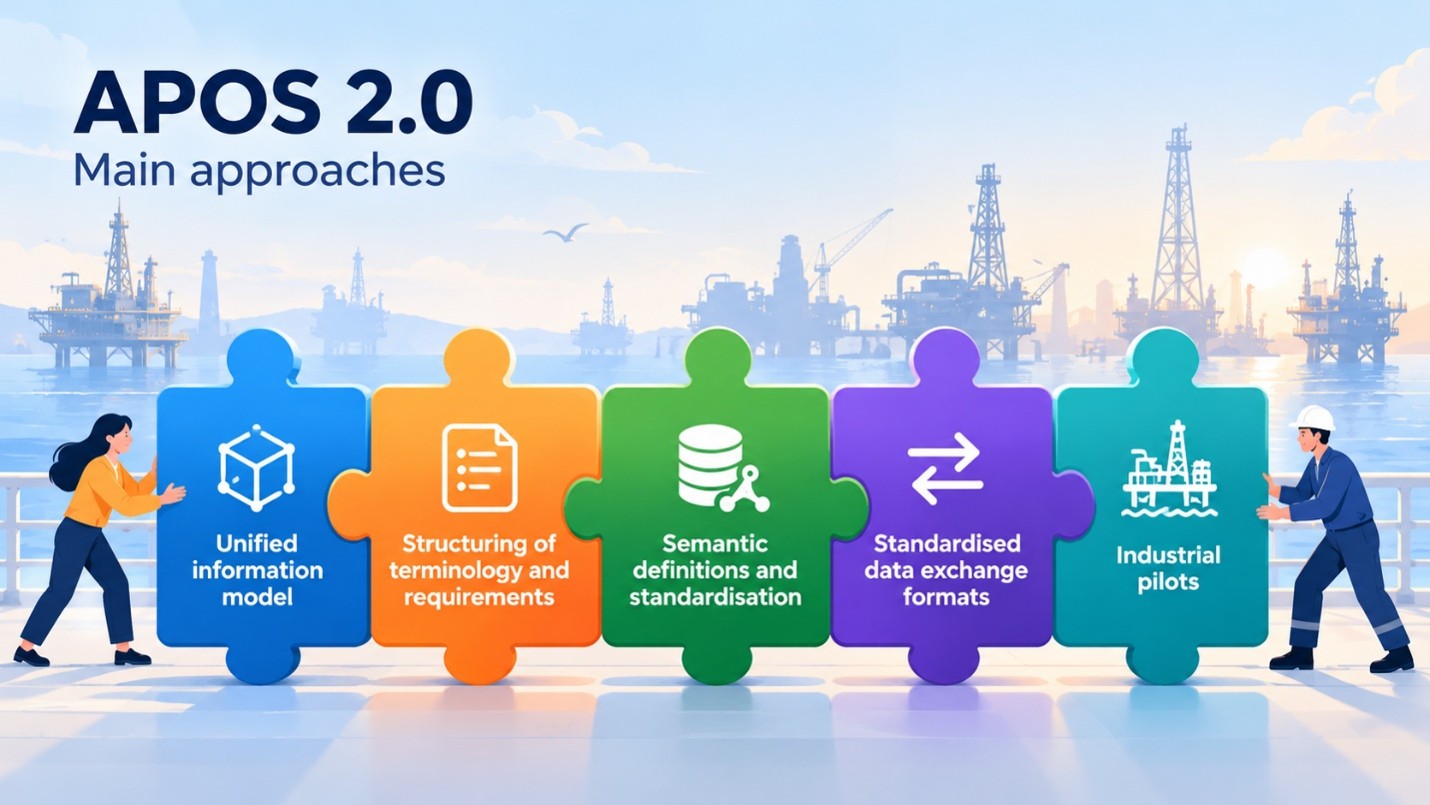

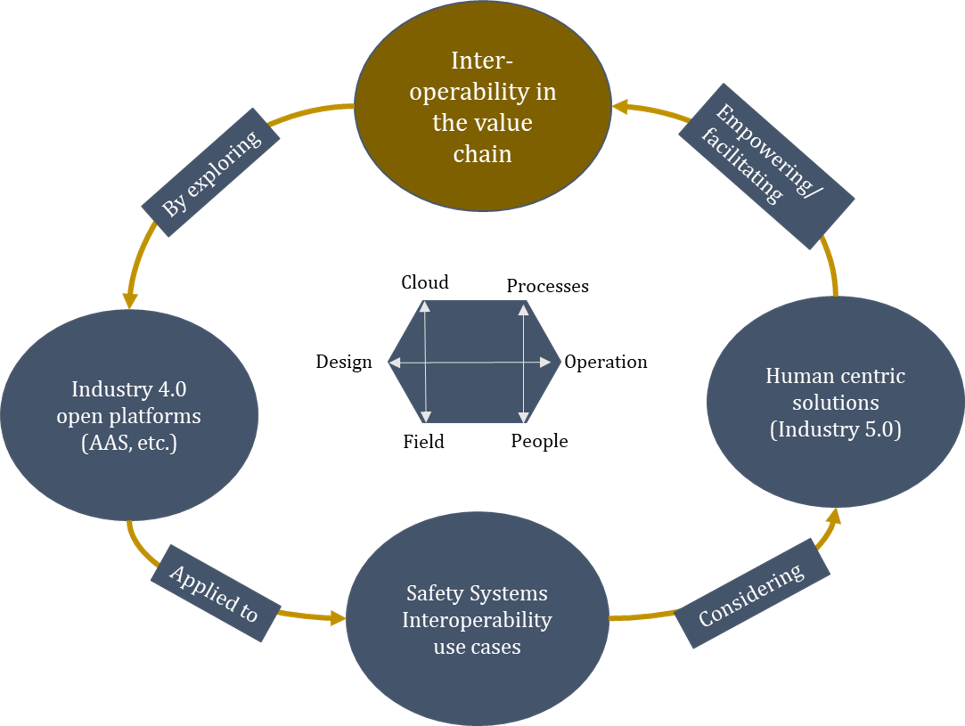
Safety Instrumented Systems (SIS) are critical safeguards in high-hazard process industries. SIS information is created, maintained, and used by different stakeholders across various systems and digital environments. One of the key lessons from the APOS 2.0 project is that interoperability cannot be achieved through a single technology, exchange format, or software tool. Rather, it requires a combination of shared information models, common terminology, standardised exchange templates, and practical implementation across industrial systems.
Managing safety-related information across different systems and lifecycle phases involves challenges related to information consistency, exchange, and interoperability. These aspects are increasingly relevant in the context of digitalisation and lifecycle information management. In APOS 2.0, we explored how SIS information can be represented and managed to support a consistent understanding across systems and lifecycle phases.
The APOS 2.0 project explored how Industry 4.0 technologies and interoperability frameworks can support the digital lifecycle management of safety systems in the process industry. We have collaborated with stakeholders from industry, academia, and standardisation bodies, including collaboration related to IEC 61511, the IEC Common Data Dictionary (IEC CDD), and the Industrial Digital Twin Association (IDTA).
From Information Models to Interoperability Solutions
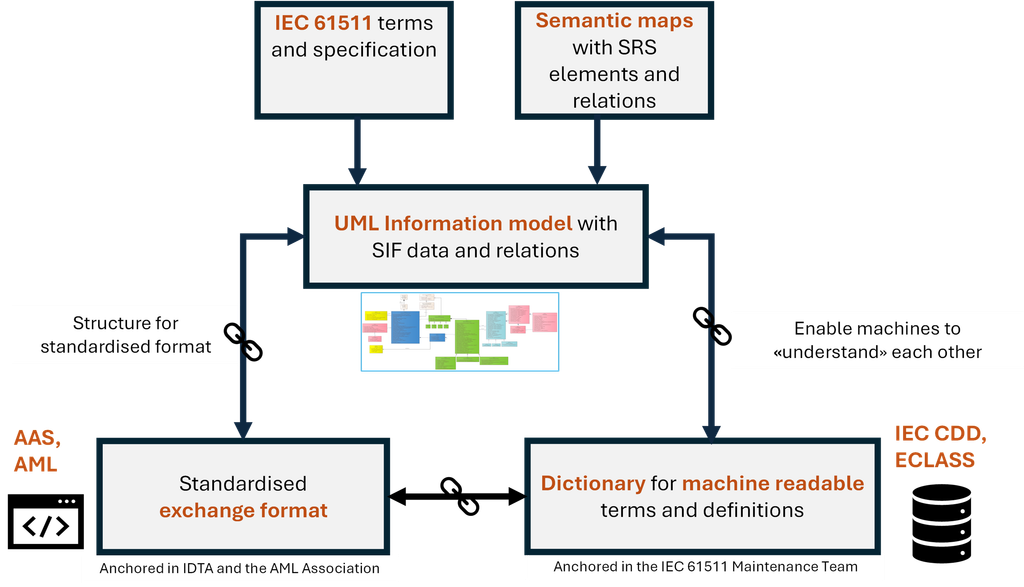
In practice, information about safety systems is often managed in different tools and formats, making it challenging to maintain consistency throughout the lifecycle. To address this challenge, we used the international standard IEC 61511 as a foundation. The standard defines requirements for SIS, and it is written as text, for people to read. We structured requirements and terminology from the standard into a digital information model, with particular focus on the Safety Requirements Specification (SRS). Building on this foundation, we developed:
- AutomationML (AML) templates for exchanging engineering information.
- Asset Administration Shell (AAS) submodel templates for representing asset-related and operational information.
- Semantic definitions intended for long-term management through the IEC Common Data Dictionary (IEC CDD).
Pilot studies
The solutions were tested in three pilots with industry partners, covering exchange of safety requirements and cause-and-effect information, safety functions related to carbon capture and storage, and exchange of equipment and failure data from operations.
The industrial pilots demonstrated that information could be exchanged across different systems using the common information model, AML templates and AAS submodels.
Establishing Common Terminology
Existing semantic repositories provide limited coverage of common terminology relevant to functional safety. To address this gap, we prepared approximately 500 classes and properties together with around 500 value terms for inclusion in the IEC Common Data Dictionary (CDD). The work provides a common semantic reference for functional safety terminology for the process industry and supports more consistent interpretation of information across tools and organisations.
Organisational considerations
In interviews with representatives from operators, vendors and engineering companies, it was found that the successful adoption of new digital solutions depends on the people and organizations using them being on board. User trust, training for users, agreed responsibility for maintaining data quality, and incentives for sharing information across company boundaries were identified as important conditions for successful adoption.
Learn More
Drawing on technical developments and industrial pilots, the white paper documents the APOS 2.0 project’s approach to interoperability, its main results, and key lessons learned.










Comments
No comments yet. Be the first to comment!