By combining advanced geometry with virtual testing, the deep-tech project STACK, aims to develop new tools for designing and constructing freeform architecture.
Designing and constructing freeform architecture is about creating exciting and environmentally friendly buildings, that can inspire people, bring communities together, and improve quality of life. The challenge, however, is often production of unique and tailored shapes.
The SINTEF-led project STACK aims to develop new tools for designing and constructing freeform architecture.
What makes STACK unique is its approach to curved architectural surfaces, treating them as stackable layers. This opens up new and more efficient design possibilities and is expected to have a positive impact on the entire construction process—from design and manufacturing to transportation and assembly.
The architecture, engineering, and construction (AEC) sector faces the challenge of delivering better and more environmentally friendly buildings while preserving creative design ambitions.
STACK addresses this challenge by combining advanced mathematics with modern design and construction methods, enabling sustainable building practices without limiting creativity.
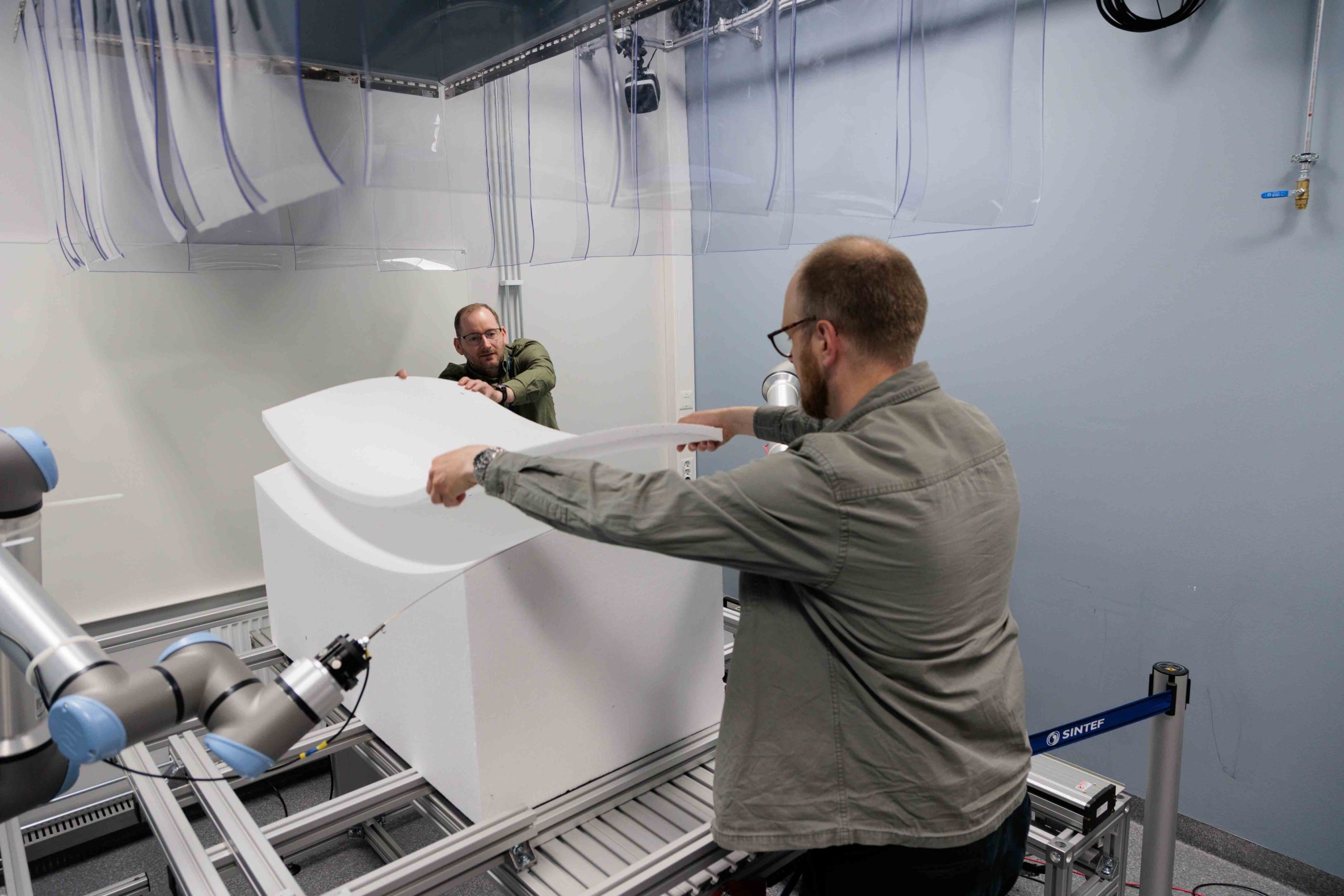
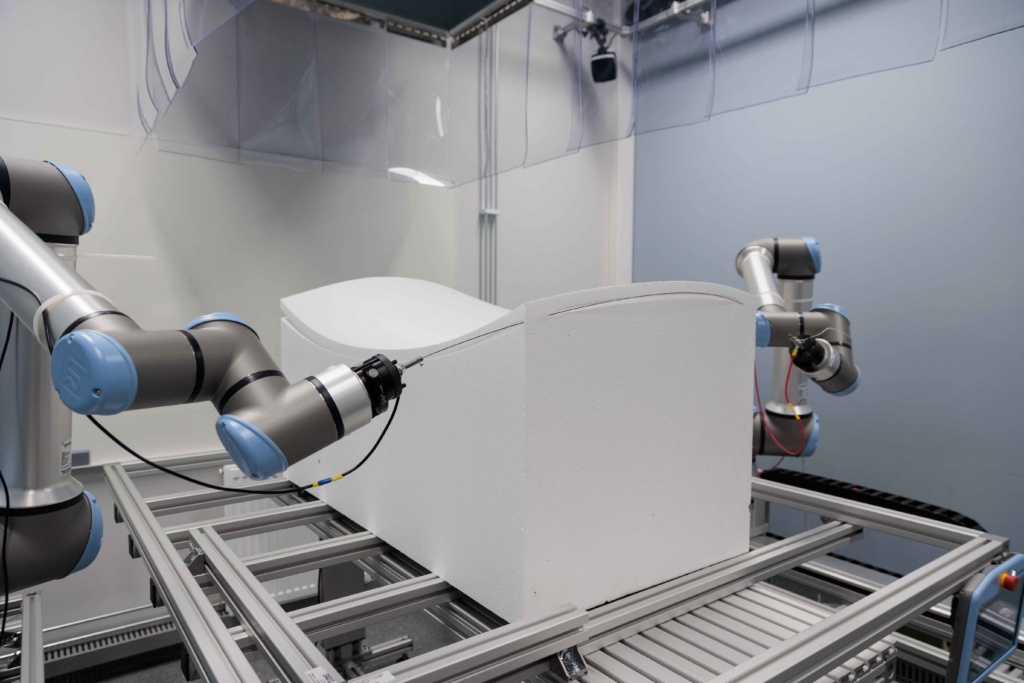
Researchers at SINTEF have set up a system of two robotic arms equipped with a steel wire, with the goal of producing various shapes from expanded polystyrene (EPS) foam.
These shapes can be used in various ways, for example directly as panels, or as molds for concrete casting and conformal 3D printing. These forms enable architects who wish to incorporate alternative ambitious geometries into their designs.
The experimental setup consists of two robotic arms positioned on opposite sides of a large EPS foam block.
They are holding a steel wire that is heated.
The heat can reach up to 300 degrees Celsius.
To achieve this, the researchers employ advanced geometry with the aim of developing computational geometric design tools and digital fabrication workflows.
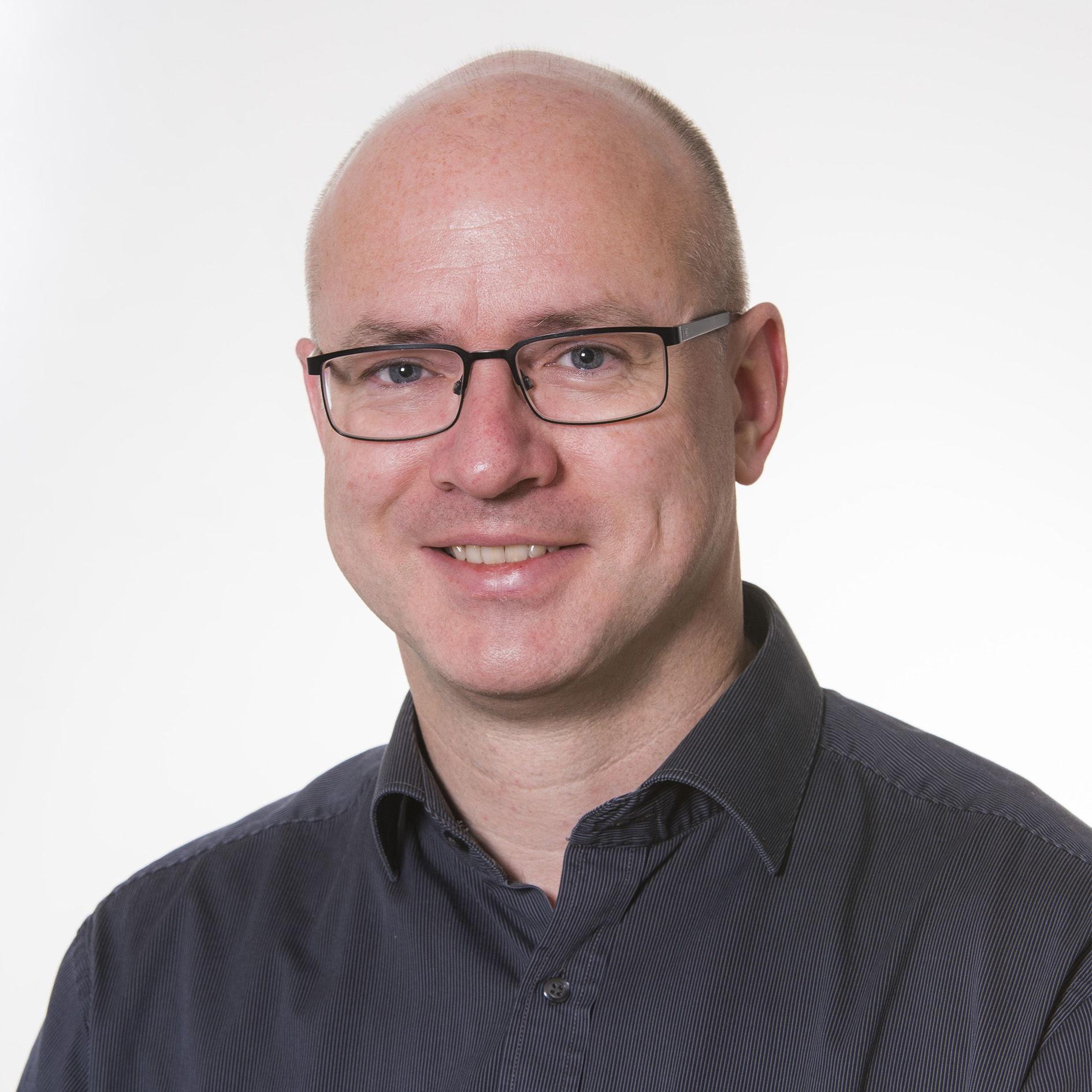
Fredrik Bakkevig Haugli, researcher in SINTEF, is part of the team in STACK.
This will streamline the entire value chain, from design to construction.
STACK is funded through the EIC Pathfinder programme, which supports deep-tech projects with high scientific and technological ambition and risk.
All photos: Mari Aftret Mørtvedt / SINTEF
Mathematics and Cybernetics in SINTEF Digital
Geometry
We focus on algorithms and workflows for creating shape descriptions for efficient design, simulation, analysis and visualization.

Comments
No comments yet. Be the first to comment!