
Co-author: Jana Poplsteinova Jakobsen
The Czech Technical University cooperates with SINTEF Energy Research to promote implementation of Carbon, Capture and Storage (CCS) in the Czech Republic.
Under the European Economic Area (EEA) Agreement, the EEA Grants and Norway Grants represent the contribution of Iceland, Liechtenstein and Norway to reduce economic and social disparities and to strengthen bilateral relations with 16 EU countries in Central and Southern Europe.
CCS is promising
Electricity generation from coal represents respectively 41 and 30% of the world and European electricity generation. In the Czech Republic this fraction is even higher, 51%. In this perspective, CCS is considered to be a promising way to handle CO2 emissions from electricity production and so possibly decrease the national climate impact.
The project PilotCCS will investigate coal fired power generation with pre-combustion CO2 capture.
Supported by Norway through the Norway grants, four projects to promote CCS technology, knowledge development and knowledge transfer have been awarded 5 million euros. The program aims at evaluating technical and economic feasibility of implementing CCS in the Czech Republic. The project Study of CCS Pilot Technologies for Coal Fired Power Plants in the Czech Republic (PilotCCS) will investigate coal fired power generation with pre-combustion CO2 capture.
Investigating technical and economic feasibility
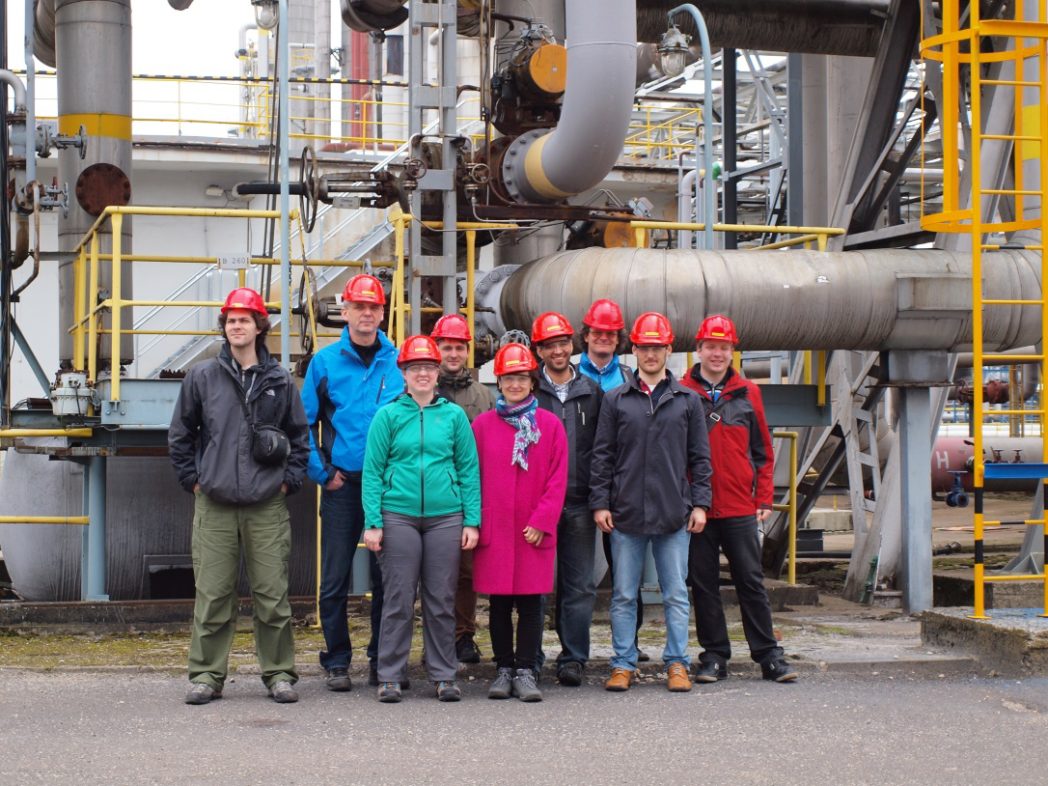
The PilotCCS project is led by the Czech Technical University in partnership with SINTEF Energy Research and UJV Rez and will investigate the technical and economic feasibility of applying CCS in Czech Republic specifically to the Vresova power plant. A limited number of integrated gasification combined cycle (IGCC) power plants are built around the world. The 400 MW IGCC power plant in Vresova in the Czech Republic has been in operation since 1996. This is setting the Czech Republic in a rather strong position to be able to cost effectively implement CCS demonstration on this plant.
The project will evaluate in detail different CO2 capture technologies such as solvent based capture, membrane based capture, sorbent based capture, liquefaction based capture, and calcium looping. In addition, this project in connection with the other projects financed by the Norway grants will provide recommendation on where it could be possible to transport and store the CO2 captured from the Vresova power plant. Furthermore, the project will strengthen the collaboration between Norway and the Czech Republic, and promote CCS related knowledge sharing.
For more information about the project please contact Monika Vitvarova (Researcher at Czech Technical University), Jana Jakobsen (Senior Researcher at SINTEF Energy Research) or have a look at the project website.









Comments
No comments yet. Be the first to comment!