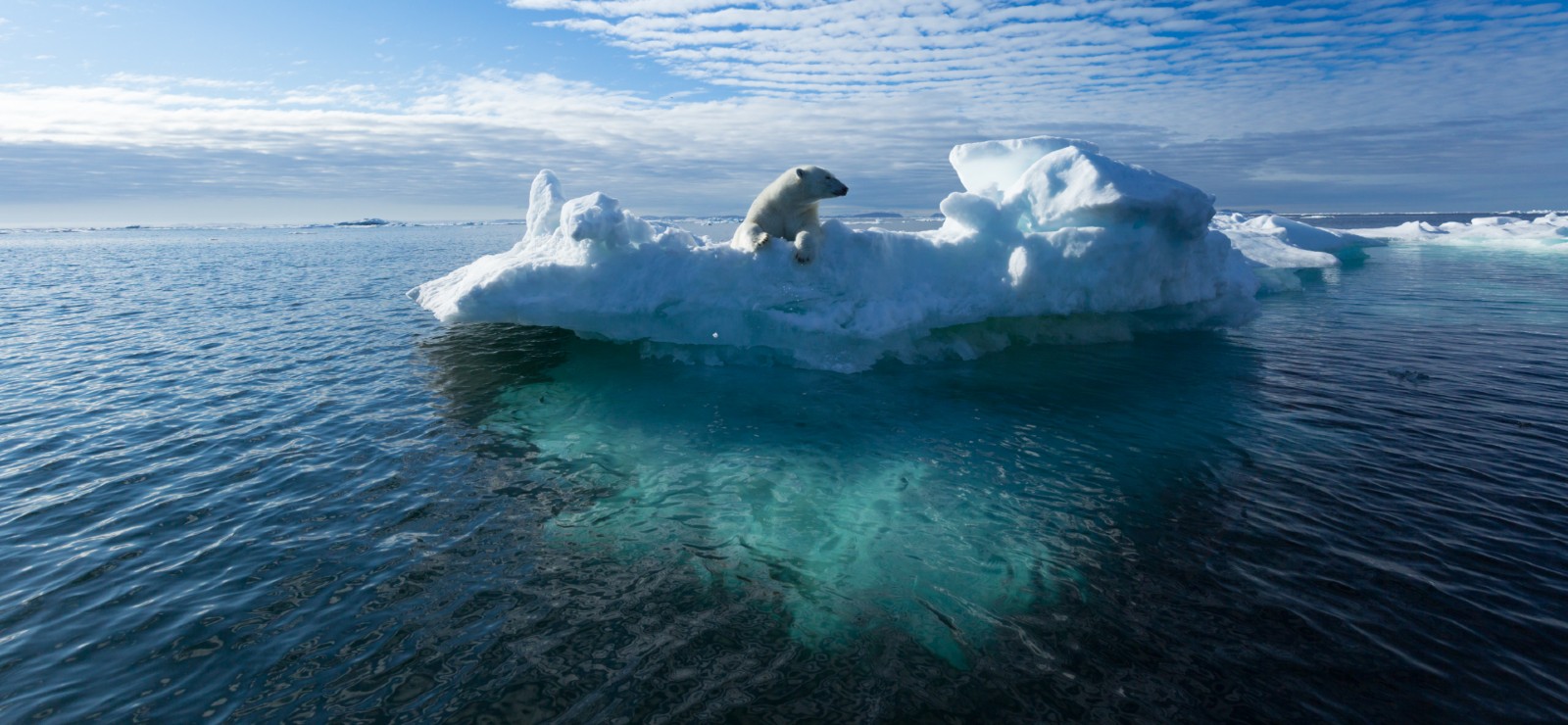

We need to build a country and a business community that is equipped for the reality of a different climate in the future. For although the coronavirus crisis has dominated the year so far, the climate crisis remains very real – and more urgent than ever.
But Norwegian business must not only be restarted, it needs to be restructured.
As a long-term orienteering runner, I know the importance of choosing the right direction. If you choose the wrong direction at the beginning, you will miss the next checkpoint. We do not have time to miss now. From the point we are now at, it is crucial that we make a change of direction that takes us directly to where we need to go – as fast as possible.
Full speed ahead
In Norway’s state budget for next year, the government will decide whether Norway will start the full-scale CO2 management (CCS) climate and industrial project. Norwegian research communities, together with industry, have been researching CCS technologies for several decades. The technology exists. We can accelerate in the post-coronavirus period towards a low-emission society.
CO2 emissions from waste incineration and cement production will be captured and transported by tanker to Kollsnes, and from there by pipeline for final storage 2,500 meters below the seabed of the North Sea.
The plans are clear, with an infrastructure that can be expanded enough to take away a significant proportion of Norway’s annual greenhouse gas emissions. It can then be expanded to receive CO2 from the rest of Europe.
We have to keep up
Through its Green Deal, the EU wants to make Europe the world’s first climate-neutral continent by 2050. Ambitions for cuts in CO2 emissions have increased, so that emissions figures from 1990 will be more than halved by 2030. A new tax system will ensure that jobs and industrial companies will be in Europe: a CO2 limit tax to prevent CO2 leakage.
We need a process industry with products that can compete in the European market with stricter requirements for CO2 footprints. We have to keep up. Unless we change direction, Norway will not meet the requirements of the EU Green Deal.
We now have two choices: We can go for CO2 leakage and move Norwegian factories – and jobs – out of the regulated area in Europe. Or we can keep the jobs and manage CO2 emissions. We do this by developing and realizing more renewable energy and implementing all the energy efficiency measures that we can – and CCS.
Fire the starting shot
The emissions we are left with, such as waste incineration, cement and metal production, will need CCS. When the industry players and the state agree on prioritization, risk and cost sharing of the necessary investment of up to NOK 25 billion, we fire the starting shot for a new industry in Norway.
In NHO’s roadmap for the business community of the future, SINTEF researchers state that future value creation in energy and industry can make a significant contribution to maintaining Norway as a sustainable welfare nation, while at the same time fulfilling our obligations in international climate agreements.
In the Norwegian CCS Research Centre (NCCS), researchers from the university and research institute sectors, and experts from suppliers and large companies work together on such future value creation. We are excited about this autumn’s state budget. NCCS research contributes to lower risk and lower costs for the solutions that are the basis for the full-scale project.
Learn more about CCS
Join our newsletter to stay updated with all the latest research results and news from NCCS: The Norwegian CCS Research Centre.
A low-emission society
If the state invests in the full-scale project now, we will have learning that reduces costs further in later projects. In the previous crisis, with oil prices falling, we built roads. This time, we should invest in transformative infrastructure that takes us into the necessary low-emission society.
This is a future-oriented counter-cyclical policy for the Norwegian supplier industry, and will kick-start industry’s use of CO2 capture technology, as well as facilitate hydrogen production from natural gas with CCS.
This is an edited translation of an opinion piece first published in Aftenposten.





Comments
No comments yet. Be the first to comment!