

Reaching the ambitious target of decarbonizing the maritime sector, improved operational efficiency stands out as one key issue to address.
European maritime transport policy is clear on one thing: a well-functioning waterborne transport system is essential for sustainable economic growth in Europe. Shipping is, and will continue to be, the backbone of European and global trade. But if the sector is to align with the ambition of net zero emissions by 2050, it must undergo a fundamental transition.
A major part of this transition is the shift to low- and zero-carbon fuels. Yet fuel choices alone will not get us there. Equally important are short-term measures targeting more energy-efficient ship and port operations.
The problem: Sail fast, then wait
To understand why operational change is so critical, we need to look at how ships and ports operate today. Especially since much of the industry still suffers from what is commonly known as the “hurry up and wait” syndrome.
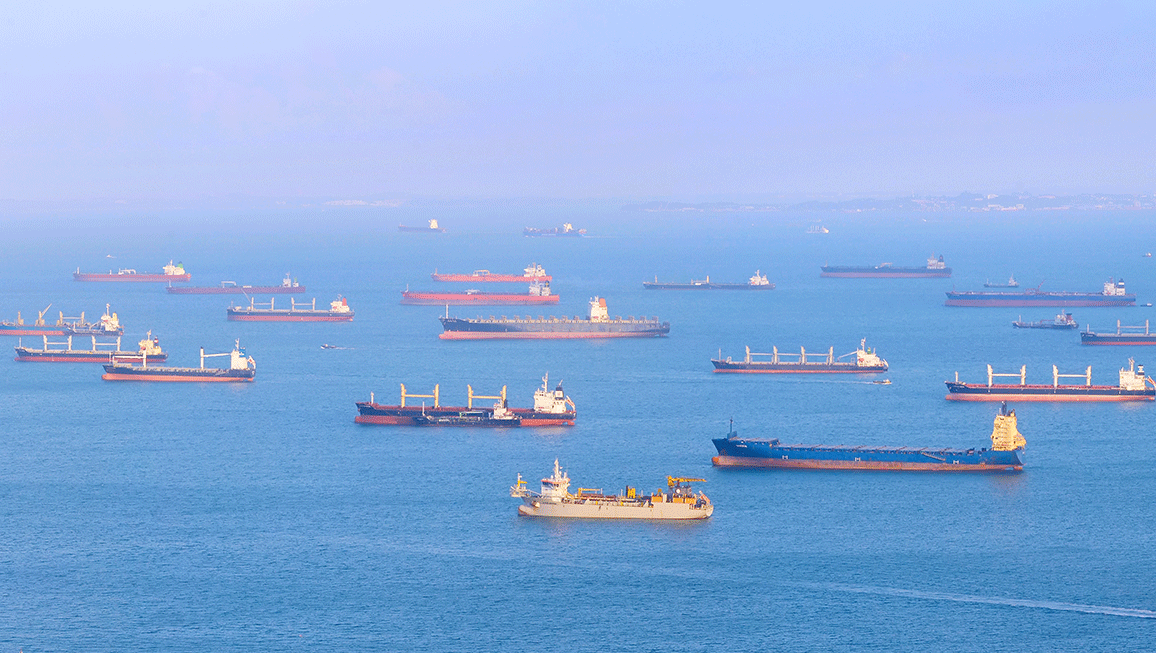
Ships frequently sail much faster than necessary between ports to secure terminal and berth availability. Ironically, this often leads to the opposite outcome. Instead of proceeding directly to the quay, vessels end up waiting at anchorage outside ports sometimes for days, and in extreme cases, weeks.
These congested anchorages raise two serious concerns. First, they negatively affect navigational safety in already busy waters. Second, from an energy perspective, they represent one of the most inefficient ways to operate a ship. Fuel is burned to arrive early, only for engines to idle while the vessel waits. A key driver behind this inefficiency is that many ports still operate on a first-come, first-served basis. This incentivizes speed rather than smart planning and operational efficiency.
The emissions opportunity hidden in port operations
The environmental impact of this is far from negligible. Merchant ships spend on average 5% of their operational time waiting at anchorage. There is an untapped potential to reduce emissions at sea from converting this waiting time into slower sailing time.
Estimates range between 10 and 20 percent by transferring waiting time into more accurate planning of just-in-time arrival. In other words, simply changing how ships operate, without introducing new fuels or radical technologies, could deliver meaningful emission reductions.
Just-in-time arrivals as a viable way forward
Responding directly to this challenge, the EU-funded DYNAPORT project develops methods and tools for decision support as important enablers for just-in-time arrivals.
The core idea is simple but powerful. Instead of racing to port for waiting at anchorage, ships adjust their speed so that they arrive precisely when a berth with the required services is available. Although this requires close coordination between ships, ports, and terminals the pay-off is significant. This, in terms of energy efficiency, lower emissions, reduced congestion, and thereby also improved navigational safety.
But in order to get there – Just-in-time arrivals rely on several key building blocks:
- Seamless digital coordination between ships and ports.
- Advanced optimisation tools that support safe voyage planning and energy-optimal sailing based on weather conditions and ship performance data.
- Agreed and reliable berth arrival times, confirmed by all shore-based actors, including ports, terminals, and ship representatives.
Central to this approach is a rethinking of port call processes. Especially by standardising communication and early exchange of high-quality data between ship and shore. Thereby enabling smoother coordination and better decision-making for every stakeholder involved.
From concept to impact
By aligning voyage planning with real-time port availability, just-in-time arrivals eliminate unnecessary waiting, reduce fuel consumption, and improve safety in congested waters. More importantly, they demonstrate that significant emission reductions are achievable through smarter operations alone.
As the maritime sector works toward decarbonization, operational efficiency should not be seen as a secondary measure—but as a powerful and immediately actionable part of the solution.
Curious to know more about project results, do visit the project website – www.dynaport.eu.





Comments
No comments yet. Be the first to comment!