

Using electrowinning to produce manganese and silicon will allow energy-intensive metal industries to cut large amounts of CO2 emissions.
Production of manganese, silicon, and alloys where these metals are produced together with iron, also known as the ferroalloy industry, is characterized by being very energy intensive. Today these metals are made in a process that requires carbon and results in large CO2 emissions. Since the carbon used for this process traditionally is fossil carbon, the process has been a significant environmental offender.
Manganese and silicon are important alloying elements in steel and aluminium, with most of it going to the massive steel industry. Since the metals will be alloyed with iron anyway, there is no problem producing manganese and silicon at the same time as iron, in ferroalloys. Furthermore, manganese metal is also used for batteries, fertilizers and water purification, and silicon metal is used for electronics and solar cells. Worldwide, more than 50 million tons of ferroalloys are produced each year. Norway produces mostly ferrosilicon and ferromanganese and is one of the most important producers of these metal alloys in Europe. Emissions from the industry are currently 1.3-5 kg CO2/kg metal, depending on the metal/alloy in question.
To reduce their emissions, ferroalloy producers are looking for new technologies that make it possible to produce the relevant metals in a more environmentally friendly way. Biocarbon has been seen as a highly relevant replacement for fossil carbon in today’s production process, but to eliminate CO2 emissions completely, a more drastic technology shift is needed.
Electrolysis could be the answer to the problem. This all-electric process may eliminate all CO2 emissions from the process, both directly from the current process as no carbon is involved, and indirectly from fossil energy sources using renewable energy. Norway produces large amounts of renewable energy, which is important when replacing carbon with electricity.
Electrolysis as an alternative – two different approaches
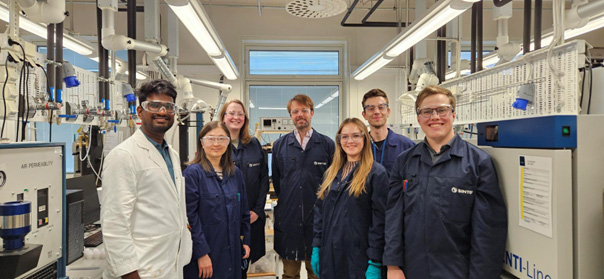
We at the Department of Metal Production and Processing at SINTEF are seeking, through a joint project with NTNU, to solve the challenge by using electrolysis to produce ferroalloys, specifically silicon, manganese and ferromanganese.
In the earth’s crust we can find metals bound to oxygen, most often called minerals. To separate silicon and manganese from the oxygen it is naturally bound to, we currently use carbon. Carbon has a lot of energy that is used in the process and helps bind the oxygen and form CO2 at the same time as the metals are produced.
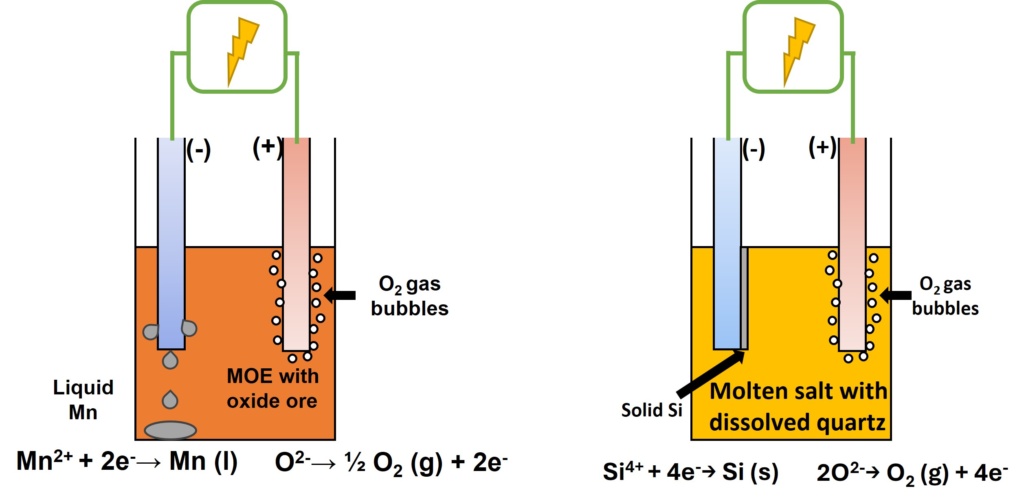
In our research, we simply exchange carbon for electrons in an electrolysis process and produce oxygen gas instead of CO2! We are working with two different technological approaches, one to produce manganese and ferromanganese, and one for silicon. In both approaches, we use metal oxides as raw materials, renewable electricity, and an electrolysis process at high temperature.
In an electrolysis process, electricity is used to drive reactions at two electrodes resulting in non-spontaneous reactions to occur. An electrolysis process has two electrodes, and reactions will always occur on both. These electrodes are placed in an electrolyte. An electrolyte has two main functions in an electrolysis process: it must dissolve the raw material, and it must have ionic conductivity and rapid mass transport so that ions can move between the electrodes where each individual reaction will occur. In addition, the electrolyte must be chemically and thermally stable during the process.
In both approaches we investigate electrochemical reactions that can occur in the electrolysis processes. This way we can gain an understanding of how to run a continuous electrolysis process as efficiently as possible.
In the first approach, we have chosen a melt of oxides as the electrolyte to produce liquid manganese and ferromanganese, while in the second approach we are using a molten salt electrolyte to make silicon in solid form.
Oxides in focus for new, electrical metal production
Today, Norway produces zinc, copper and nickel by electrowinning in electrolytes based on water and relatively low temperatures of 30-70 °C, while aluminum is produced in an electrolyte based on molten fluoride salts at approximately 950-960 °C. Both the industry and the research communities at SINTEF and NTNU have a great deal of knowledge about electrolysis that can be transferred to new processes, new electrolytes, and metals that have not previously been produced with electrolysis on a large scale.
Oxides are usually not a good choice as an electrolyte as they have relatively poor conductivity, and metal oxides are usually just the metal source for the electrolytic processes. At the same time, there are many advantages to being able to produce metal in liquid form, but the temperatures required for liquid manganese and silicon, 1250 and 1450 °C respectively, are too high for the “classical” molten salt electrolytes. However, at these high temperatures molten oxides are more stable, and in the project, we have chosen to investigate oxide both as an electrolyte and a metal source for manganese electrolysis.
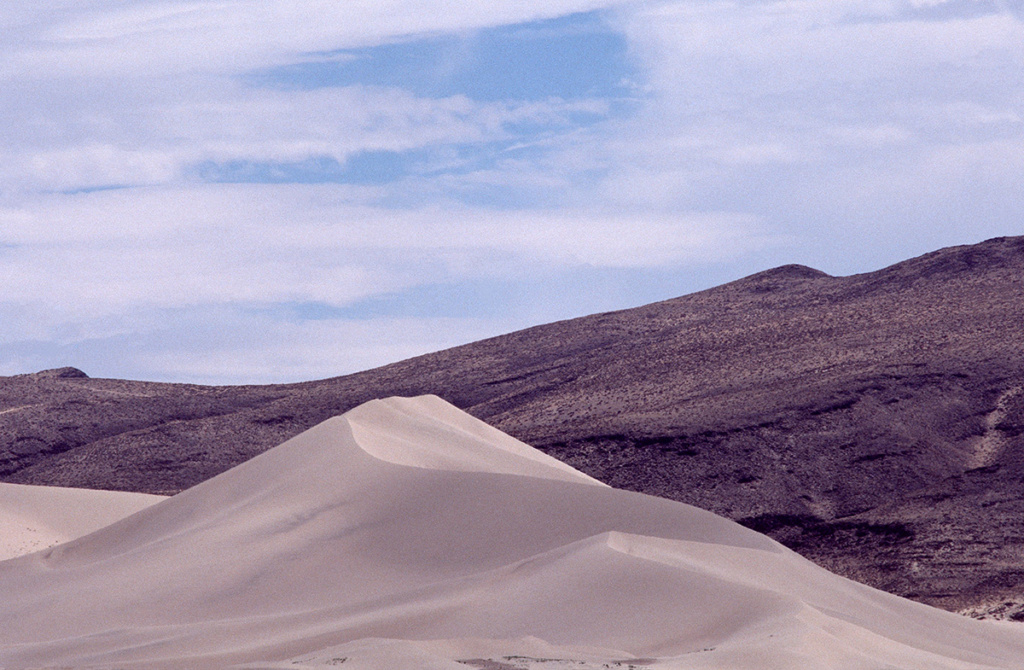
Although oxide melts could have been investigated to produce liquid silicon as well, we have instead chosen to look at the production of solid silicon as a new and unique product, namely silicon plates. With this approach we can operate at lower temperatures and use a more common type of electrolyte based on chloride and fluoride salts. Silicon oxide, or quartz as it is also called, is then used only as the source of silicon. The use of quartz in such electrolytes has not previously been researched in detail, but for new processes this is the most interesting raw material since it is already used in today’s process.
From experiment to process understanding
In the project we primarily focus on the metal product and electrochemistry in the production of manganese and silicon. Through laboratory experiments, we have searched for answers to what happens in the electrolysis process and combined this with theoretical knowledge. We vary electrolyte chemistry, temperature and production speed, and get answers regarding the stability of the materials we use, metal quality and energy efficiency of the processes. This understanding is fundamental before making further optimizations.
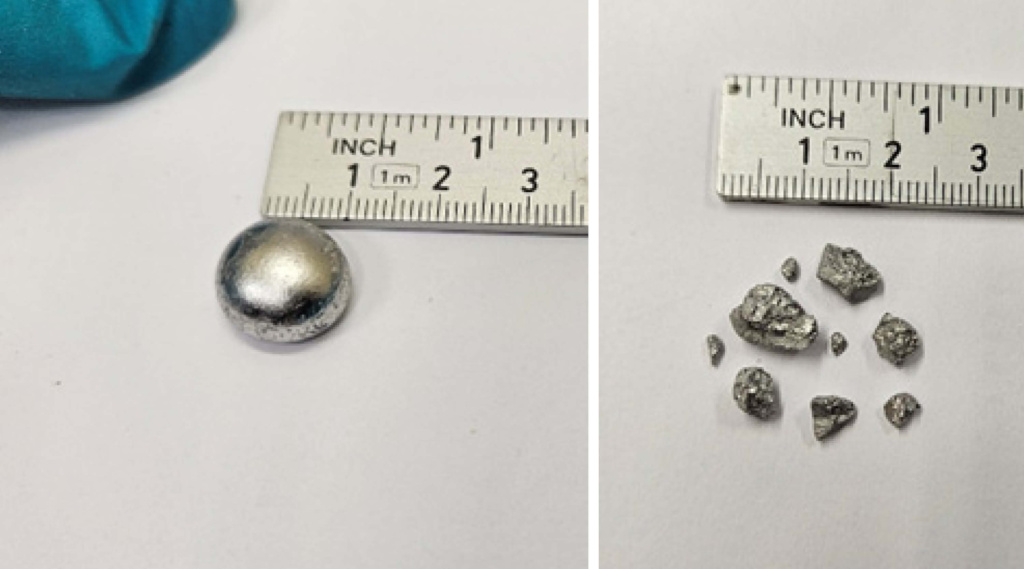
In a molten oxide process the temperature is high and the chemical environment very corrosive, which leads to a lot of wear on all materials involved in the process. Therefore, many obstacles and material engineering problems must be overcome to establish a process, even in small-scale laboratory experiments. In the experiments where we focus on manganese we have been successful in producing ferromanganese, and we are now in the process of testing a new experimental setup that will be able to produce manganese without alloying it with iron. For silicon, we are still in the start-up phase and are currently studying the electrode reaction for the formation of silicon. We are also investigating how much and how quickly quartz dissolves in current electrolytes, as this will be limiting for an industrial process.
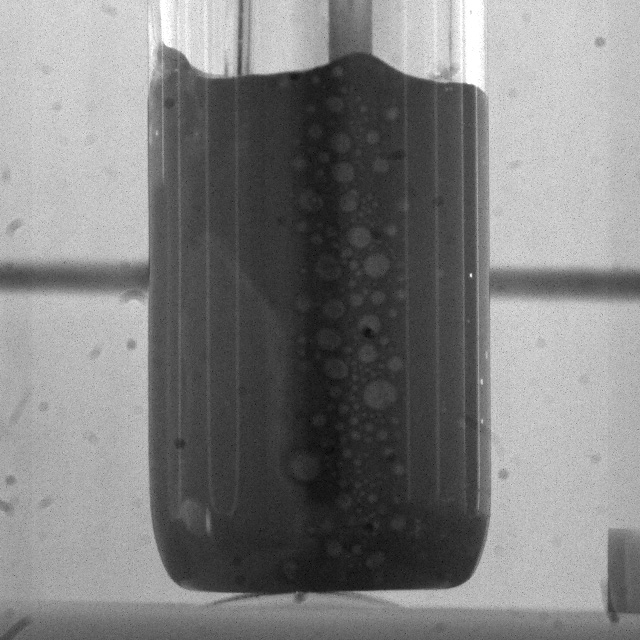
Although an important part of the process is the formation of oxygen gas, we have chosen not to focus much on the optimization of this reaction in this project. But we can confirm that it is oxygen gas that we are developing! We can even see this with the naked eye in one of our special furnaces that are transparent, as gas bubbles are formed at the same time as metal is produced. This reaction, and especially the materials of the inert electrode on which this reaction occurs, will be further researched by NTNU in a newly awarded FRIPRO project for early career researchers.
ZeSiM – Zero emission Manganese and Silicon through electrowinning, is a competence and collaboration project (KSP, Research council of Norway) with SINTEF and NTNU as research partners, which runs between 2023-2028. The project focuses on building competence around the electrolysis processes to find out what happens from reactions during the production of metal under different circumstances. We do this in collaboration with our national industrial partners who have a high interest in the results: Elkem ASA, Eramet Norway AS, Finnfjord AS, Wacker Chemicals Norway AS.




Comments
No comments yet. Be the first to comment!