


A unique set of liquid pure CO2 density measurements from the NCCS Research Centre and the research project MACON CCS (Monitoring and Control of CCS networks) have just been made publicly available on the CO2DataShare platform.

This new data helps fill an important gap: while equations of state can estimate CO2 density, it is challenging to fully capture the dynamic behaviour of CO2 industrial systems. Therefore, accurate measurement of density data is crucial for process control and reporting, including volume-to-mass conversions in fiscal metering nodes in the transport network.
The experimental testing of density meters shed light on measurement uncertainties, which could help advance technologies essential for large-scale deployment of CCS.
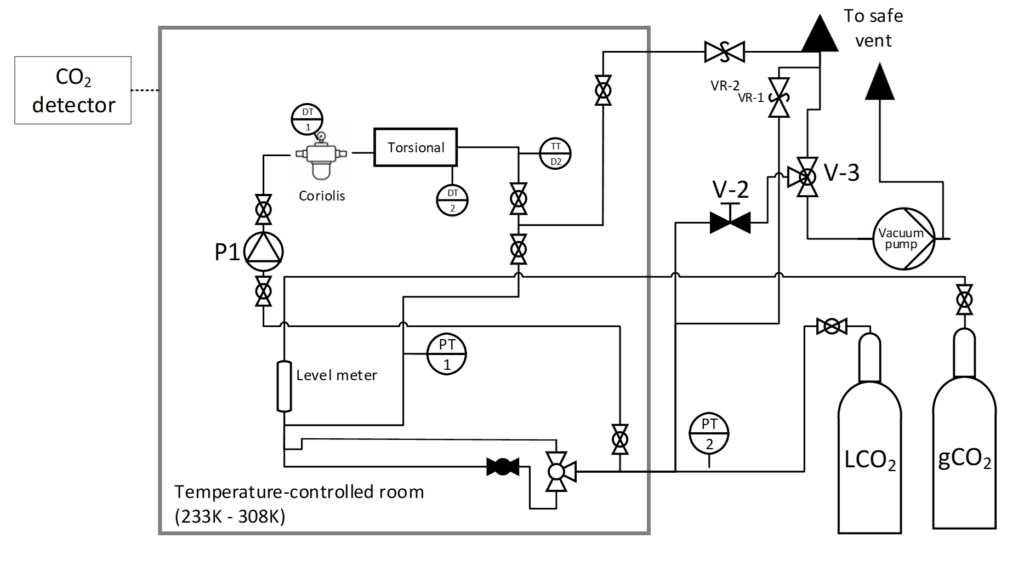
The dataset contains quality‑assured measurements collected at SINTEF and NTNU’s thermal engineering laboratories. Experiments with pure CO2 were performed under tightly controlled temperatures (stable within ±1 K) and at both static conditions and dynamic recirculation at 0.17 kg/s. Two off-the-shelf instruments were tested in series: a DN10 Coriolis meter and a torsional density meter.
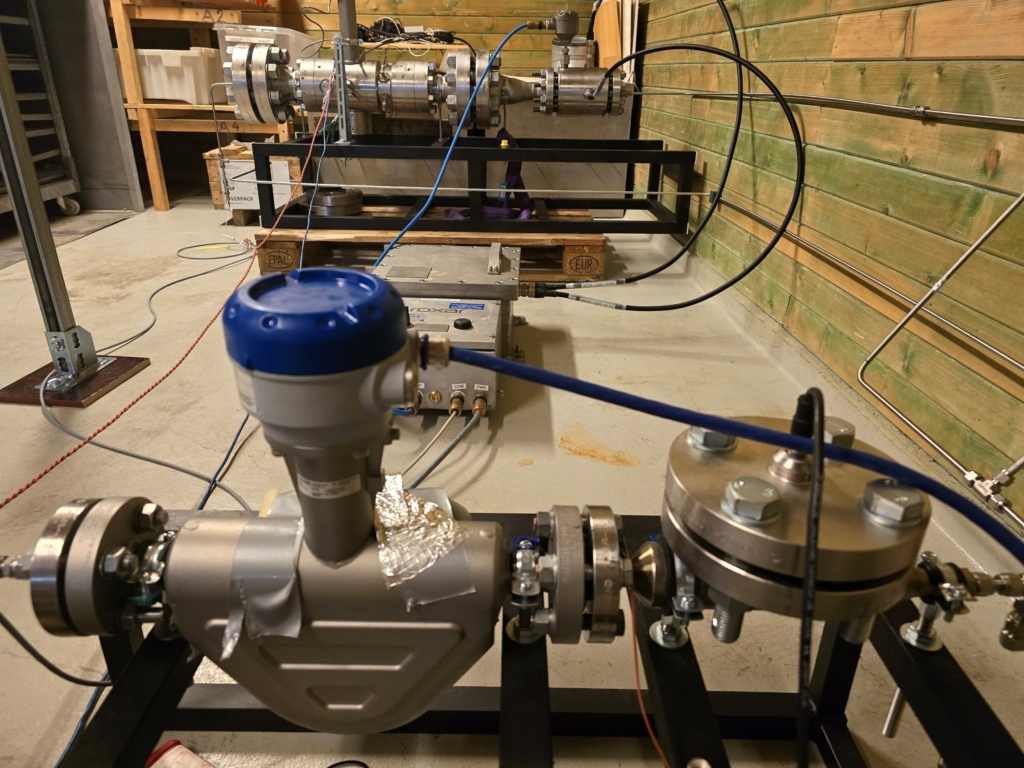
To fully characterise the CO2, the setup included high‑accuracy PT100 temperature sensors, pressure transmitters covering 10–30 MPa, and a level meter to ensure the fluid stayed in the liquid phase.
For each of the twelve test conditions, the dataset provides synchronised readings of pressures, temperatures, and meter outputs. These include density, viscosity, internal device temperatures, and flow rates for dynamic runs.
Together, these measurements offer a valuable benchmark for evaluating how well inline density meters perform in realistic CCS‑relevant conditions, and they give researchers and industry a solid foundation for improving CO2 transport monitoring and metering practices.
The analysis of this dataset is available in the work by Yessica Arellano, Edward Jukes, Stein-Arild Tjugum and Jacob Stang: Experimental evaluation of density meters using liquid CO2 and their effect on volumetric to mass flow conversion for CCS.
#OpenScience
CO2DataShare
Open access digital portal for sharing curated datasets from research, pilot and industry-scale CCS projects. The purpose is to be a valuable resource to the international research community working to accelerate CCS R&D and the worldwide deployment of CCS.
Acknowledgements: CO2DataShare 2.0 (2024-2026) is funded by the CLIMIT Demo programme managed by Gassnova (623389), U.S. Department of Energy’s Office of Fossil Energy & Carbon Management and the Norwegian CCS Research Centre (257579), and is part of the research centre gigaCCS (350370). The dataset was acquired under the auspices of the Norwegian Research Council and jointly produced under the projects Monitoring and Control of CCS networks (327056) and the Norwegian CCS Research Centre (257579/E20).









Comments
No comments yet. Be the first to comment!