
- Guest author, Martin Haaf, Institute for Energy Systems & Technology (EST) at Technische Universität Darmstadt
Conventional use of the CaL process
The calcium looping (CaL) process represents one option for post-combustion CO2 capture from conventional power or industrial plants. In this process, a limestone-based sorbent stream circulates between two interconnected circulating fluidized bed (CFB) reactors. The CO2 is separated due to cyclic carbonation and calcination of the circulating sorbent.
Learn more about CCS
Join our newsletter to stay updated with all the latest research results and news from NCCS: The Norwegian CCS Research Centre.
The process can also be applied for the Waste-to-Energy (WtE) sector. Municipal solid waste (MSW) allows for negative CO2 emissions due to its large organic waste fractions. Negative CO2 emissions are required to limit anthropogenic climate change effects. In the Norwegian CCS Research Centre (NCCS) a techno-economic assessment of the CaL process for CO2 capture from WtE plants has been performed. The project was split into three parts:
- Definition and characterization of the reference WtE plant
- Thermodynamic process modelling of the CaL process
- Subsequent calculation of key performance indicators of the whole system
The boundary conditions of the reference WtE plant were derived from the current best available techniques (BAT) reference document for waste incineration from the EU. The thermodynamic process modelling was carried out in ASPEN PLUSTM flowsheet simulation environment. Moreover, Coal, natural gas and solid recovered fuel (SRF) were considered as supplementary fuels for the CaL calciner.
CaL process, WtE plants and Municipal Solid Waste
A major outcome from the research was that the application of the CaL process in the framework of WtE plants combines an environmentally friendly treatment of municipal solid waste, the supply of clean energy and the achievement of cost-effective negative CO2 emissions. The work has been carried out in close cooperation with Rahul Anantharaman (Leader NCCS Task 6) and Simon Roussanaly (Expert in the field of techno-economic analysis).
The research results were presented at the 10th Trondheim CCS Conference (TCCS-10) in June 2019 (“CO2 Capture from Waste-to-Energy Plants: Techno-Economic Assessment of Novel Integration Concepts of Calcium Looping Technology”). Furthermore, a scientific paper will be submitted to the Resource, Conservation and Recycling Journal.
NCCS Mobility program – my experience
The research was carried out through the NCCS Mobility program. It was a great pleasure for me being part of the NCCS working team from April to June 2019. As a Research Scientist at the Institute for Energy Systems & Technology (EST) at Technische Universität Darmstadt (Germany), I`m working on fluidized bed based CCS processes, with particular interest in calcium looping technology. Thus, my background and research motivation matches the content of NCCS Task 6, which partly focuses on CO2 capture process integration into Waste-to-Energy (WtE) plants.
The three months` stay within the framework of the NCCS Mobility grant enabled me to learn about new methodologies and processes in the context of a sustainable energy supply. I was able to connect with other researchers and to accumulate valuable insights for the final stage of my Ph.D. project. I was very curious to see the 150 kWth Chemical Looping Combustion test rig at SINTEF Energy Research together with Øyvind Langørgen and to learn about the novel Gas Switching Technology from Ambrose Ugwu at NTNU.
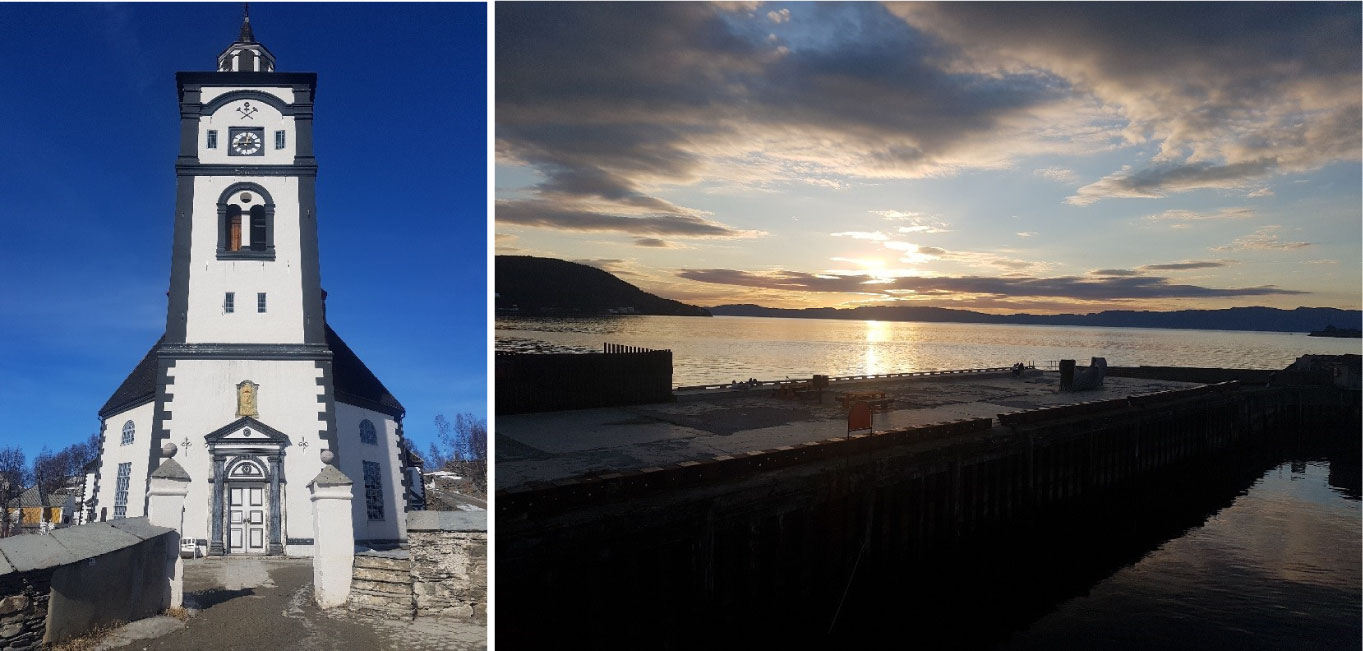
In addition to all the research related experiences, I enjoyed the beauty of the city and the nature around Trondheim. I lived in a cozy shared flat directly on the Old Town Brigde (Gamle Bybro) opposite Nidaros Cathedral in the heart of city. In addition to the nights without darkness, I will never forget the ceremony on May 17th. Starting with the traditional champagne breakfast together with my flat mates, I was impressed watching all the people participating in the parades on the streets wearing their traditional clothes and celebrating the Norwegian Constitution Day. The hiking routes in the mountains surrounding the city, allowed me get my head free after busy working days. It was more than worth spending a one-day trip to the old mining town Røros visiting the copper mine museum and the large sludge piles.
I would like to express a heartfelt thank-you to all the people from SINTEF Energy Research that supported me throughout the period. Thank you Caroline Einen, for being a very helpful, friendly and nice office mate. Special thanks go to Rahul for his guidance, support and weekly discussions. Finally, I would also say thank you to Jochen Ströhle and Bernd Epple that gave me the possibility for this valuable time in Trondheim.
Learn more about CCS
Join our newsletter to stay updated with all the latest research results and news from NCCS: The Norwegian CCS Research Centre.
Comments
Very interesting, great job