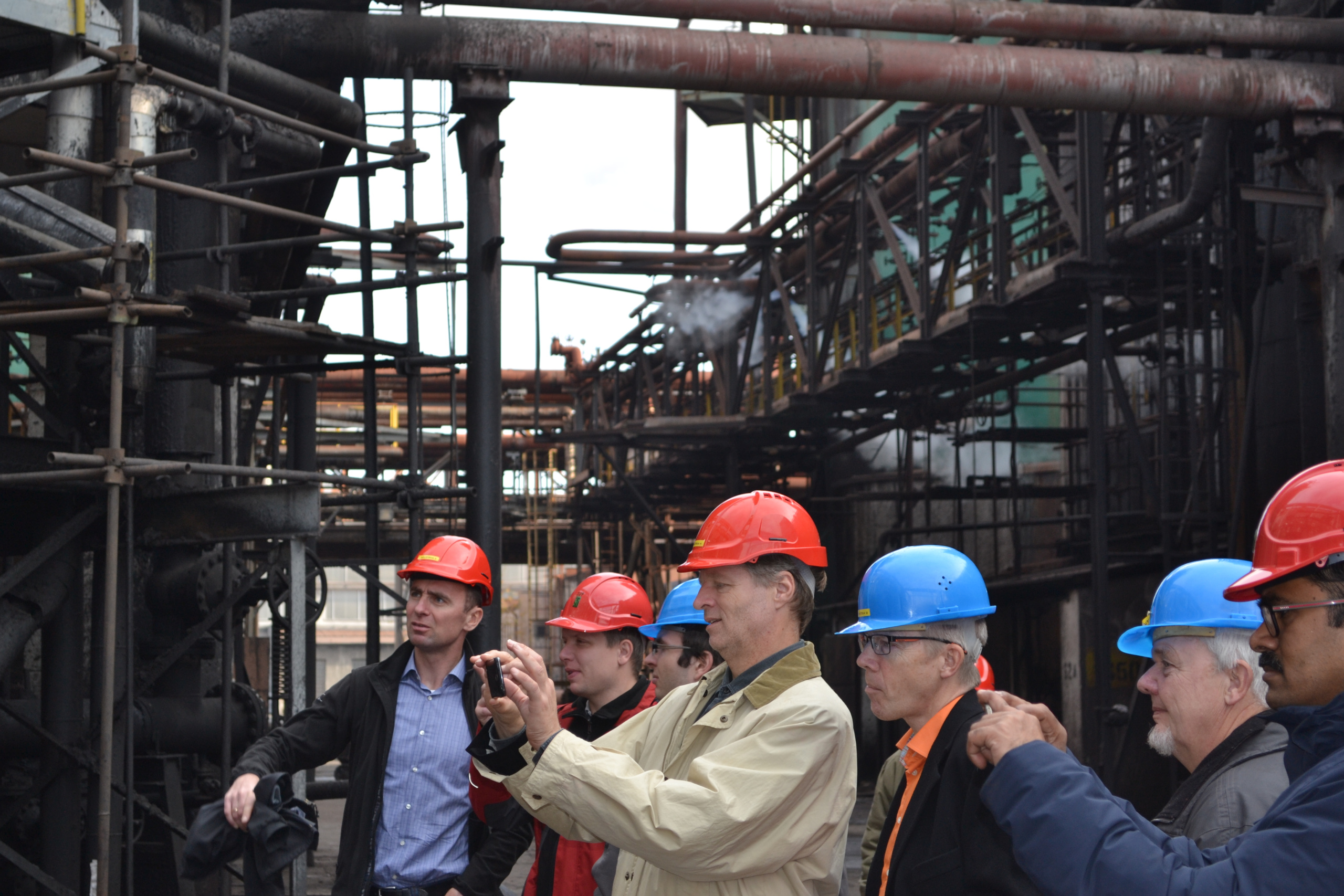

PilotCCS is one of four projects funded by the EEA Grants and Norway Grants, to promote the implementation of Carbon, Capture and Storage (CCS) in the Czech Republic. More specifically, PilotCCS investigates the technical and economic feasibility of applying CCS in the Czech Republic with a focus on the Vresova IGCC power plant. The project team consists of researchers from the Czech Technical University in Prague, SINTEF Energy Research and Nuclear Research Institute (Řež).
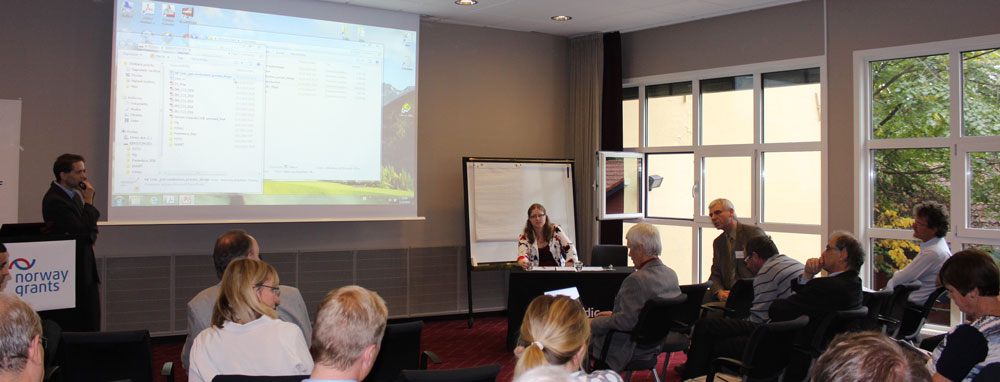
The seminar took place on Wednesday 12th October in Oslo. It was hold with the REPP-CO2 project, and was far from being a one-way communication. Participation from a broad range of interested and dedicated stakeholders from Norway and the Czech Republic allowed for real discussions about the project’s achievements and its possible implications for the future.
The importance of industrial involvement
While PilotCCS is about developing CCS for the power industry, participants also discussed CCS for other industrial processes. To fulfil the project’s objective of promoting CCS in the Czech Republic, we will be involving industry and look at ways to make further use of the project results. In this regards, researcher Monika Vitvarova from Czech Technical University in Prague believes the university’s close contact with the private sector will be an advantage.
Researcher Simon Roussanaly at SINTEF Energy Research also underlines the role of industrial involvement. One must enable knowledge transfer between international CCS actors. According to Roussanaly, in order to bring CCS closer to implementation, it is also important to further developing new CO2 capture technologies for IGCCs. Such as low-temperature and membranes, and to reduce the financial risk associated with CCS deployment.
Transferring knowledge between countries
Both researchers point to the value of cross-border cooperation. Like the other international projects, PilotCCS enables transfer of existing and newly developed knowledge between Norway and Czech Republic. Vitvarova is doing a research visit in Trondheim since September. She welcomes new cooperation projects after PilotCCS ends in December.
The seminar in Oslo was held one week after the Norwegian government launched the state budget for 2017 allocating 360 million NOK to continue the three studies of full-scale CCS, confirming Norwegian commitment to CCS. It seems that a new Czech-Norwegian cooperation for this low carbon technology may very well be a possibility.







Comments
No comments yet. Be the first to comment!