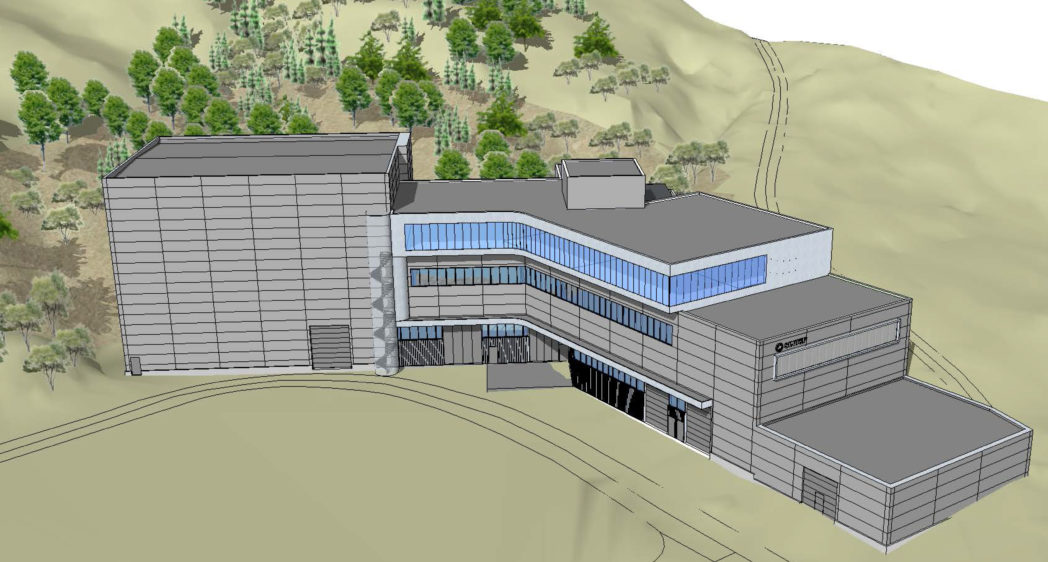

After the summer holidays, we will start moving into the new lab on Blaklia!
This development is the largest investment SINTEF Energy has ever done.
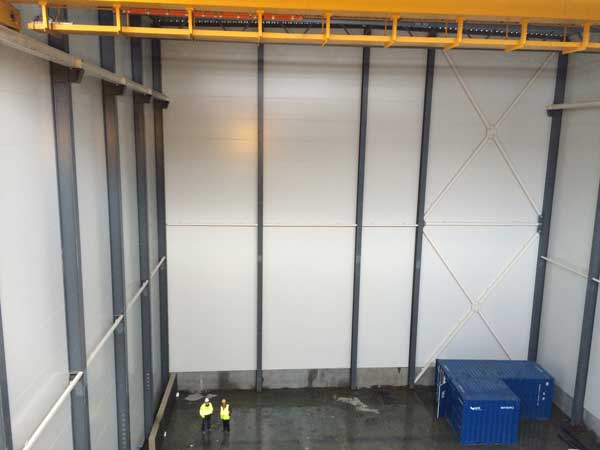
From the first sketch on the ‘back of an envelope’ of a high voltage laboratory etc. of approximately 1000 m2 , the project has grown to a total of 5400 m2 including a new high voltage laboratory 24 x 36 meters, with 20 meters net height and six other laboratories totaling approximately 4000 m2 and 800 m2 offices.
The building is designed and built according to new energy savings requirements based on the passive building standard. This implies extra insulation, the use of district heating and an air-to-water heat pump for cooling and heating and automatic control of lighting and ventilation.
This will undoubtedly be the first high voltage laboratory in the world that is built to these requirements.
Enova has so much confidence in the project that they provide partial funding of the extra costs incurred by the passive house requirements with funding associated with passive requirements.
What will we do in the new laboratory?
The high-voltage part of the laboratory is dimensioned and equipped to carry out type- and development tests of power transmission equipment for 420 kV AC and 600 kV DC. We have set aside ample space for long-term tests on both traditional electric power components and equipment for subsea power supply. The project also includes a combustion laboratory of 200 m2 with 12 meters ceilings.
In the new laboratories will we will be able to perform the following:
- Type anddevelopmenttesting ofelectric powercomponentsfordistribution andtransmission networks
- Long-term ageing tests on electricityandpower electronicscomponents
- Mechanicaltesting
- High current tests upto 10kA/ 25V ; 150kA/230Vfor 5 sec
- Testing anddevelopmentof equipment forsubsea power supply
- Pilot scale testing of new combustion concepts
- High pressure combustion tests
We have emphasized flexibility in the use of new areas and we hope that the laboratories will also be functional for new activities that we currently do not know anything about.
After the opening in September 2015, SINTEF must make the most of the new opportunities the new lab offers and thereby contribute to developing future energy solutions.


Comments
No comments yet. Be the first to comment!