
In November 2014, SINTEF Energy Research hosted visiting researchers from Doshisha University in Japan. Why? To discuss our common interest in magnetic fluids, how they may be used for efficient heat transport, and how they may be pumped around in tubes without using any moving parts.
How is this possible? Let’s start from the beginning.
Nanofluid: unfathomably tiny particles
If you add nanoparticles to a liquid, you get what is called a nanofluid. These particles usually have a size of around 10 nanometers. This is unfathomably tiny.
In a second or two, the length of the hair has grown about the size of one such particle.
To illustrate: If you put ten thousand of these on a line, you have about the width of a human hair. In a second or two, the length of the hair has grown about the size of one such particle. Due to their extremely small size, they will not fall to the bottom, but float around in the liquid indefinitely. While doing this, they happen to increase the thermal conductivity of the liquid, which may be put to good use.
Adding magnetic particles
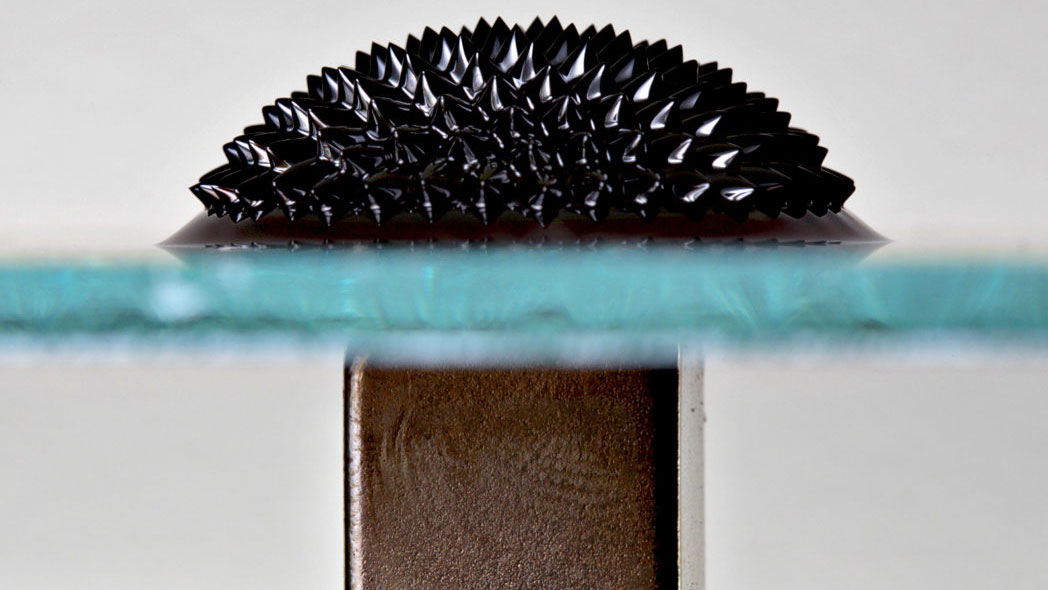
If we add magnetic particles, we get a special kind of nanofluid called ferrofluid, which may be manipulated by magnetic fields in fascinating ways (Video). In fact they were invented by NASA as a way of moving liquids in weightless environments. The ability of such fluids to be affected by magnetic fields depends on temperature, and this leads to the possibility of making something called thermomagnetic pumps. This pump can force the fluid to flow in a tube from cold to hot, without any of the moving parts of normal pumps. Think of it as natural convection, only with a magnetic field instead of a gravity field.
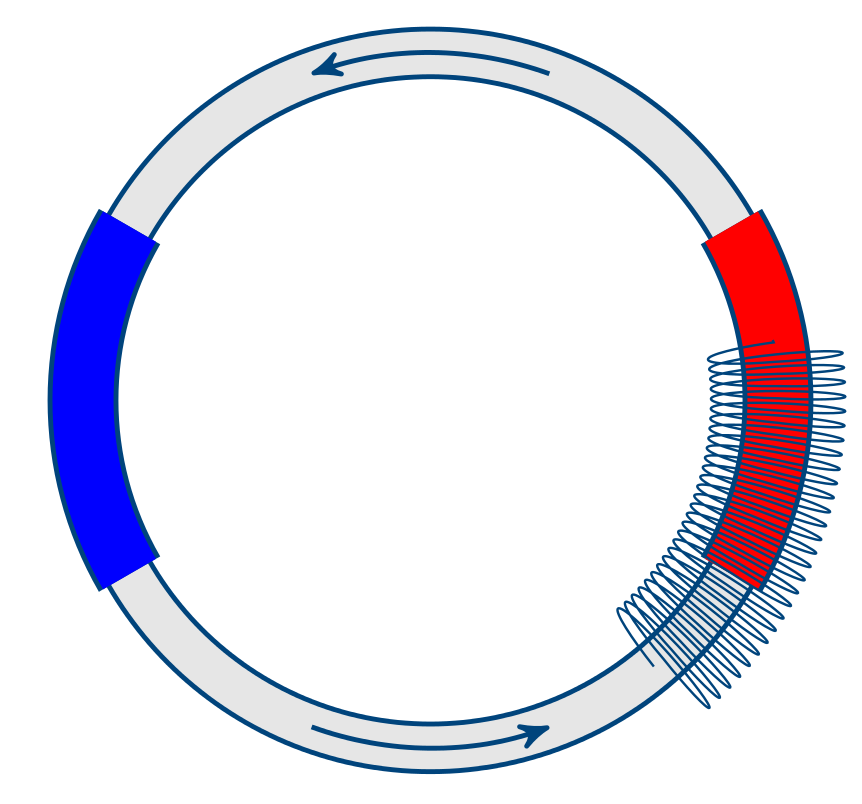
SINTEF Energy Research is interested in investigating this, as the increased ability to conduct heat, together with the thermomagnetic pumping, could be used to create reliable, compact and efficient cooling systems.
(…) could be used to create reliable, compact and efficient cooling systems.
Cooling spacecraft equipment?
These may be used in applications where maintenance is dangerous, complicated and expensive, and weight/volume is a significant concern. This may include cooling of equipment in hostile environments such as offshore/subsea. We even see potential applications in the cooling of spacecraft equipment, as the most popular low-maintenance (“passive”) cooling system, natural convection, is impossible in a weightless environment.
In the current project, researchers at SINTEF wish to gain a better understanding of the potentials and limitations of such cooling systems, through mathematical modelling.
To ensure that the models are close enough to reality, calculations should be compared with some experiments. This is where our friends from Japan come in.
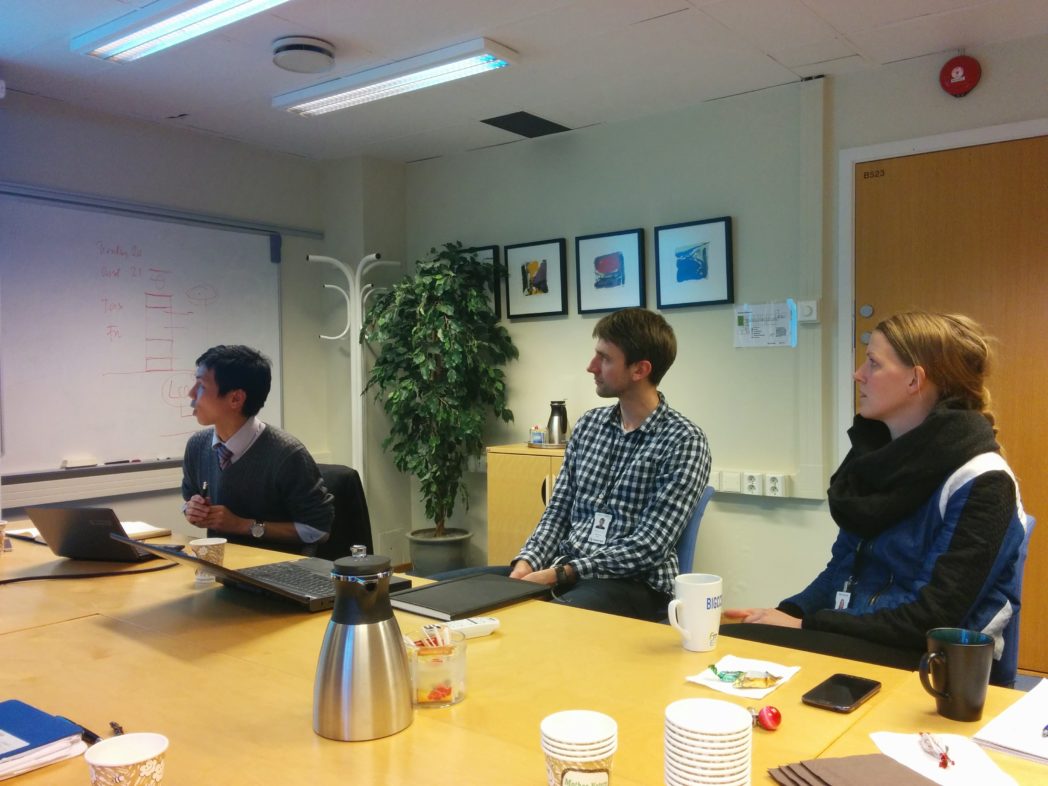
In additions to doing impressive modelling on their own, they also perform experiments which may be used to check and improve our own model. As part of a visit to SINTEF and NTNU through the KIFEE Japan/Norway collaboration project, Professor Hiroshi Yamaguchi and Assistant Professor Yuhiro Iwamoto visited our team to exchange research ideas on magnetic fluids.
The hope is to bring thermomagnetic cooling solutions from basic research to market
The hope is to bring thermomagnetic cooling solutions from basic research to market, and interested companies are welcome to come along.









Comments
No comments yet. Be the first to comment!