Skip to content

SINTEF Blog Gå til forsiden

  • Energy
  • Ocean
  • Digital
  • Health
  • Industry
  • Climate and environment
  • Building
  • Society
  • EN
  • NO
Energy Industry

ELEGANCY Consortium meeting in a historic setting

author
Hans Langva Skarsvåg
Researcher
Published: 12. Dec 2018 | Last edited: 11. Apr 2025
2 min. reading
Comments (1)

On 9 November the third ELEGANCY Consortium meeting was held in Brussels, Belgium. With ELEGANCY’s main research focus CCS and hydrogen in mind, the European Gas Research Group (GERG) was a perfect fit to host the event. GERG Brussels offices are in the UNESCO World Heritage listed building Hôtel van Eetvelde.

After being welcomed by GERG’s Secretary General Robert Judd, the consortium was briefed on the latest developments in ELEGANCY. This included presentations on

  • An improved method for low-carbon hydrogen production from natural gas with vacuum pressure swing adsorption – Anne Streb (ETHZ)
  • Long-term stability tests of catalysts for water gas shift for use with basic oxygen furnace gas from steel plants – Jean-Pierre Pieterse (ECN>TNO)
  • Experimental results on the thermodynamics of mixtures with hydrogen – Alexander Maurer (RUB)
  • Case study: decarbonization of the Rotterdam port area – Rajat Bhardwaj (TNO) and Lukas Weimann (UU)
  • Case study: UK profiles of CO2 supply for H2 and CCS, present day to 2100 – Maxine Akhurst (BGS)
  • Measurements on CO2 solubility in saline water, necessary for CO2 storage modelling – Geraldine Torín-Ollarves (ICL)
  • A demonstration of the chain tool that will be applied to ELEGANCY’s five case studies – Diana I. Ferrer and Nixon Sunny (ICL)
  • The policy issues and business risks associated with CCS and hydrogen, and the corresponding de-risking instruments and incentive mechanisms – Ward Goldthorpe (SDL)

After the talks, scientific discussion and lunch, the Consortium split into task groups for more in-depth technical discussions. This concluded the second day of the semi-annual ELEGANCY meeting.

Read more about the first day:
ELEGANCY Conference 2018
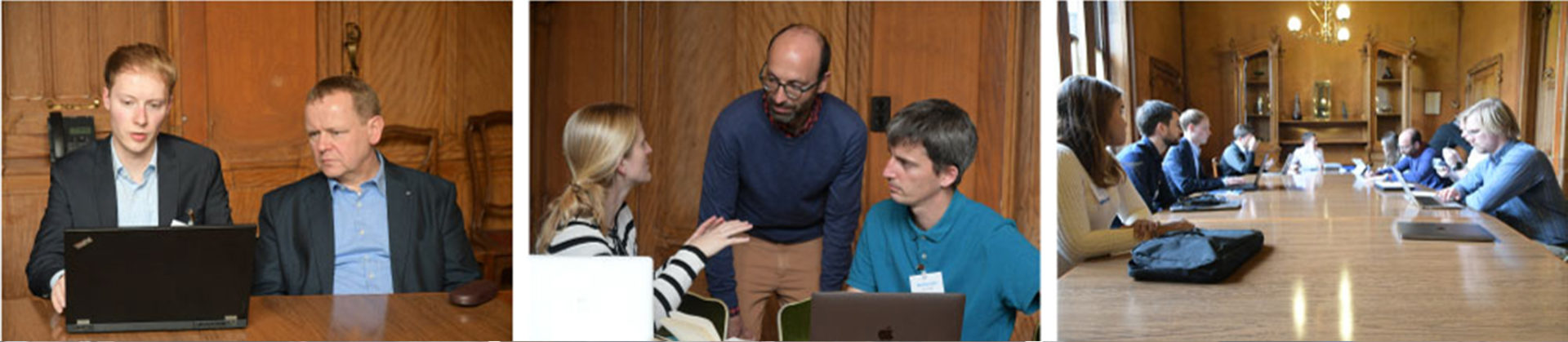
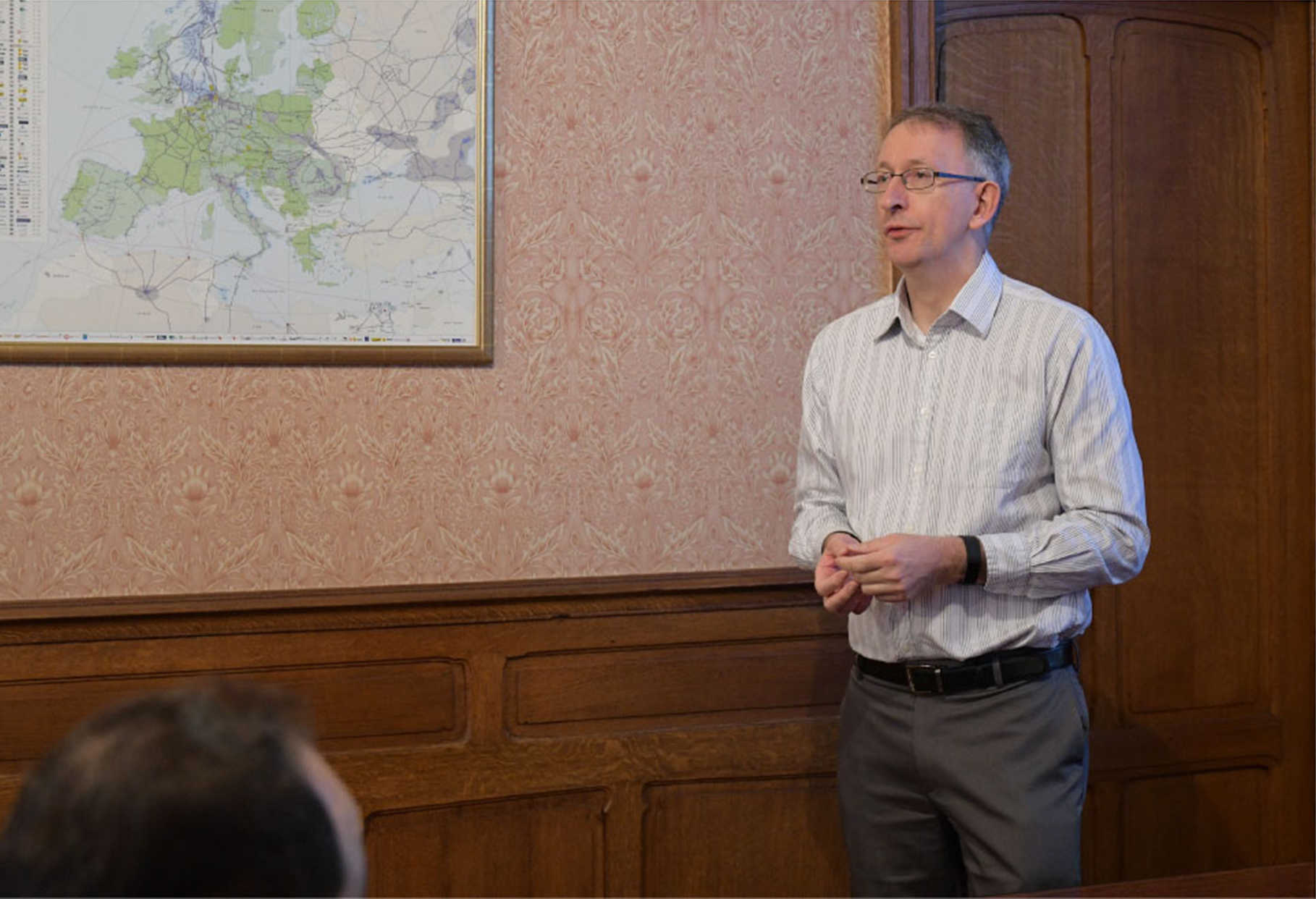
 GERG's Secretary General, Robert Judd, welcomes the Consortium to Hôtel van Eetvelde.
GERG’s Secretary General, Robert Judd, welcomes the Consortium to Hôtel van Eetvelde. Photo: Svend Tollak Munkejord
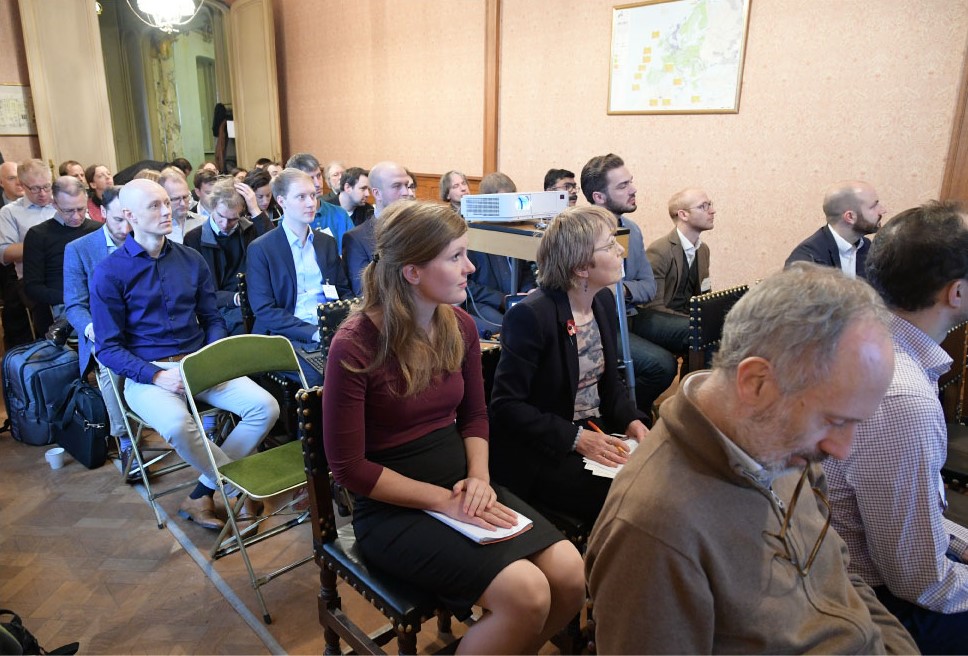
The audience listening to the latest developments in ELEGANCY.
The audience listening to the latest developments in ELEGANCY. Photo: Svend Tollak Munkejord
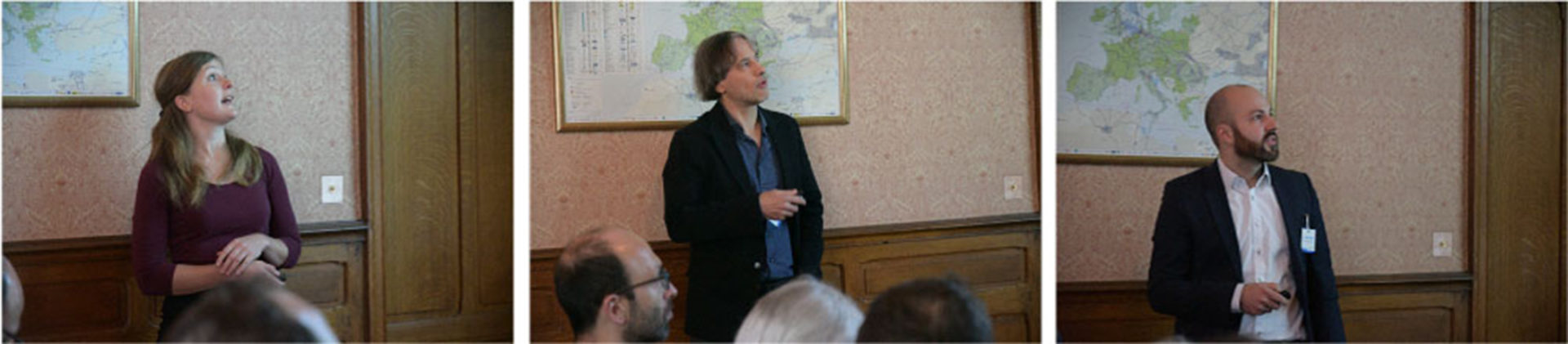
Anne Streb, Jean-Pierre Pieterse and Alexander Maurer
Anne Streb, Jean-Pierre Pieterse and Alexander Maurer. Photo: Svend Tollak Munkejord
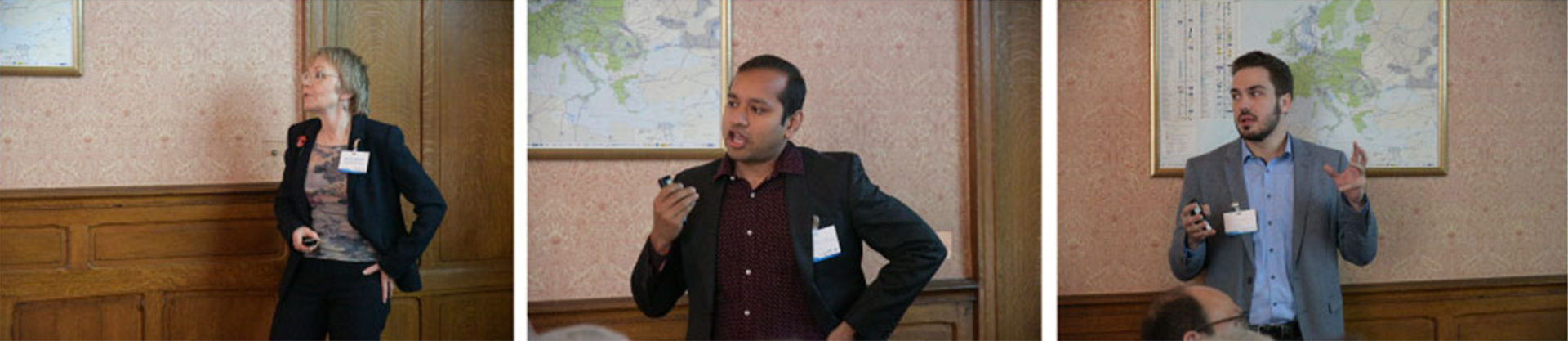
Maxine Akhurst, Rajat Bhardwaj and Lukas Weimann
Maxine Akhurst, Rajat Bhardwaj and Lukas Weimann. Photo: Svend Tollak Munkejord
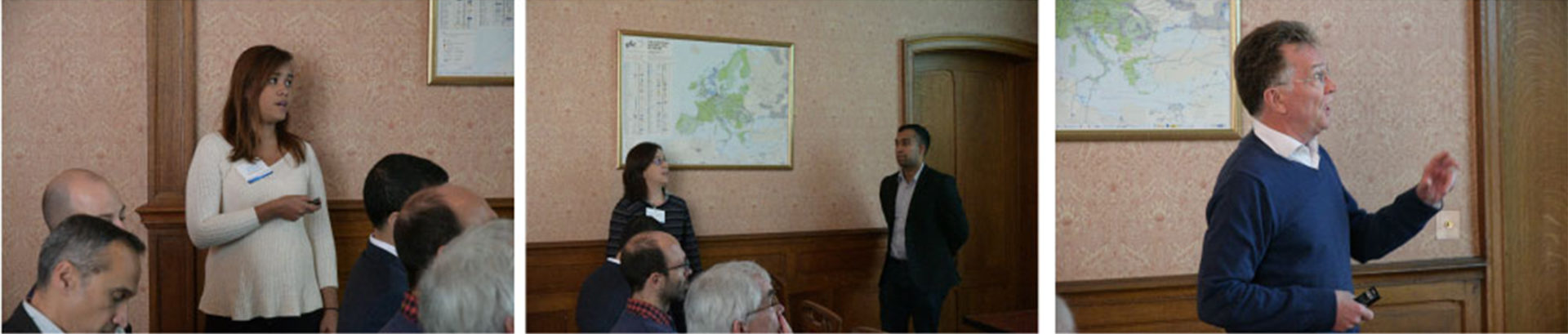
Geraldine Torín-Ollarves, Diana I. Ferrer and Nixon Sunny, and Ward Goldthorpe
Geraldine Torín-Ollarves, Diana I. Ferrer and Nixon Sunny, and Ward Goldthorpe. Photo: Svend Tollak Munkejord
(left) Benedikt Semrau and Roland Span. (right) Anna Obermann, Ronny Pini and Melchior Grab.
Benedikt Semrau and Roland Span (left). Anna Obermann, Ronny Pini and Melchior Grab (middle), Technical meeting of work package (right). Photo: Svend Tollak Munkejord


Comments

No comments yet. Be the first to comment!

Leave a comment Cancel reply

Your email address will not be published. Required fields are marked *

More about Energy

How much can energy-efficient voyage planning save? Evidence from 11 months of North Atlantic data

Author Image
Author Image
2 forfattere
Infographic showing the flow of thermal energy storage (TES) from surplus heat or cold to end users. On the left, red and blue thermometer icons represent surplus heat and cooling, accompanied by the text “Surplus heat or cold – Captured and stored for when it’s needed.” In the centre, a large panel titled “Thermal Energy Storage (TES)” presents three storage technologies. The top section, “Sensible TES,” shows a container with a thermometer and the text “Stores heat in one single phase.” The middle section, “Latent TES,” shows a water droplet and snowflake connected by circular arrows, with the text “Stores heat through phase change.” The bottom section, “Thermochemical TES,” shows two connected coloured circles that separate and reconnect, illustrating a reversible reaction, with the text “Stores heat through reversible reactions.” A large pale arrow-shaped wedge points from the TES panel toward the right side of the figure. On the right, three application areas are shown in separate boxes with icons: industrial processes, buildings, and data centres. The layout conveys that surplus heat or cold can be stored using sensible, latent, or thermochemical TES technologies and later supplied to industrial facilities, buildings, and data centres.

Thermal energy storage is already commercial  

Jorge Salgado Beceiro
Research Manager

Burning ammonia cleanly: How timing changes everything 

Author Image
Author Image
2 forfattere

Technology for a better society

  • About this blog
  • How to write a science blog
  • Sign up for our newsletter
  • News from NTNU and SINTEF
  • Facebook
Gå til SINTEF.no
SINTEF logo
© 2026 SINTEF Foundation
Privacy Editorial Press contacts Website by Headspin