

By using salt hydrates, surplus heat is absorbed when the heat pump is running and released when the house needs it. The system is charged when electricity is cheap and discharged when needed.
Co-author: Poppy O’Neill, COWA.
As Europe races to cut its dependence on fossil fuels and electrify its energy systems, one technology is rapidly making its way into homes: the heat pump. Instead of burning gas or oil, heat pumps cleverly harvest warmth from the air, the ground, or even nearby water and move it indoors. In Norway, where winters are long and chilly, this shift has been particularly striking: Today, the vast majority of Norwegian households, and even many cabins tucked away in the mountains, rely on heat pumps for comfort and efficiency.
However, while heat pumps are powerful tools for reducing emissions, there’s a challenge we don’t talk about nearly enough: how do we store heat in a way that’s both efficient and affordable? As more heat pumps are installed across Europe, the need for intelligent, flexible thermal storage becomes urgent. Without it, we risk bottlenecks in energy supply and higher costs for consumers. With it, we unlock a future where every home becomes part of a smarter, cleaner energy system.
It´s well known that electric energy can be stored in batteries, but thermal energy needs a different solution. This is where an unlikely hero comes in – salt hydrates. Yes, often food-grade salts with water molecules trapped inside could quietly transform the way we heat our homes.
A natural fit for heat pumps
Heat pumps are incredibly efficient, but they work best when run continuously at moderate power. However, household heat demand isn’t always continuous. It fluctuates with the time of day, the weather, and usage patterns. Without storage, this mismatch can strain the grid and reduce the efficiency of heat pump systems.
Salt hydrate-based thermal batteries offer a solution; they absorb surplus heat when the heat pump is running and release it later, when the house needs it most. Think of them as a thermal counterpart to a home battery – just for heat instead of electricity!
What are salt hydrates, and why should you care?
Salt hydrates are a fascinating class of chemical compounds formed by the combination of ordinary salts with molecules of water. Unlike the dry salt we sprinkle on our food, these crystalline substances lock water into their very structure, creating stable compounds that behave in unique ways when exposed to heat.
One of their most remarkable features is their ability to act as thermal sponges: when salt hydrates are heated to a certain temperature, they undergo a phase change – from solid to liquid. During this melting process, they absorb and store a surprisingly large amount of heat energy without themselves becoming hotter. Later, as the material cools down and returns to its solid state, that stored energy is released again, much like a rechargeable thermal battery.

The secret lies in salt hydrates
SINTEF researchers are pioneering the technologies needed to bring salt hydrate thermal batteries from laboratory prototypes to market-ready solutions in close collaboration with the company COWA Thermal Solutions and research partners.
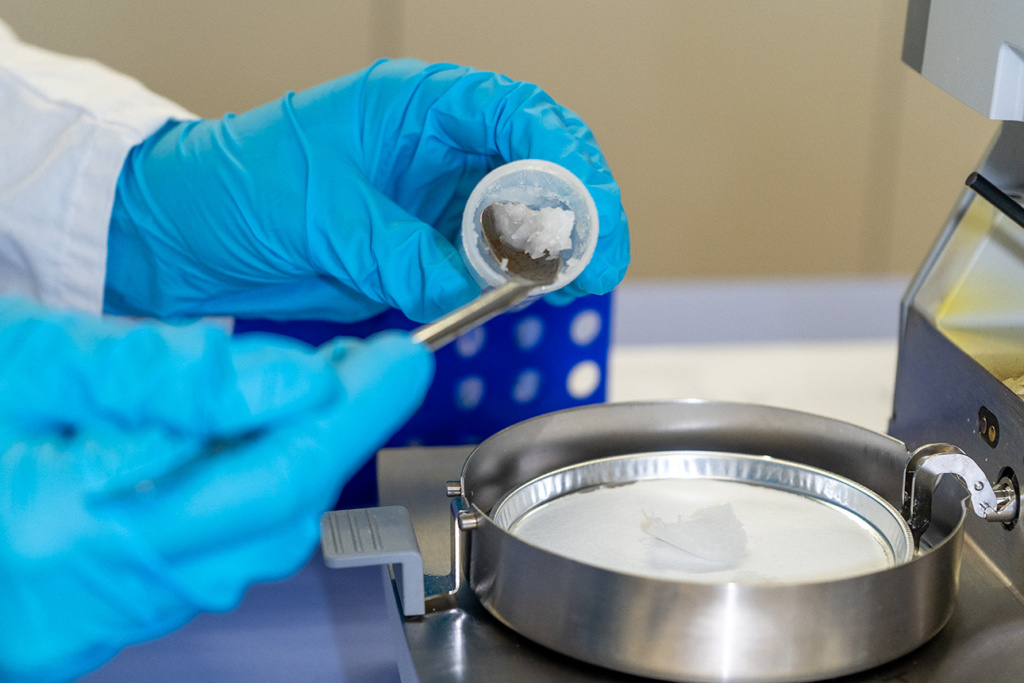
The phase change material used at the heart of both projects is one of the most famous salt hydrates, sodium acetate trihydrate (SAT). With careful engineering, SAT and other hydrates can be tuned to operate at the right temperatures for heating systems in homes and buildings. COWA Thermal Solutions is tackling material challenges by designing new additives and structural supports that ensure reliability and performance over thousands of heating and cooling cycles. At SINTEF, we complement this work by focusing on boosting the efficiency of the thermal batteries themselves.
Through the EU financed project Sure2Coat, we are testing ultra-thin metal structures that can be integrated directly into the storage containers, allowing for the fastest possible charge and discharge rates. By improving energy transfer, these advances could transform thermal storage, making it faster, more efficient, and more practical for everyday use in residential and commercial buildings.

Smaller footprint, bigger impact
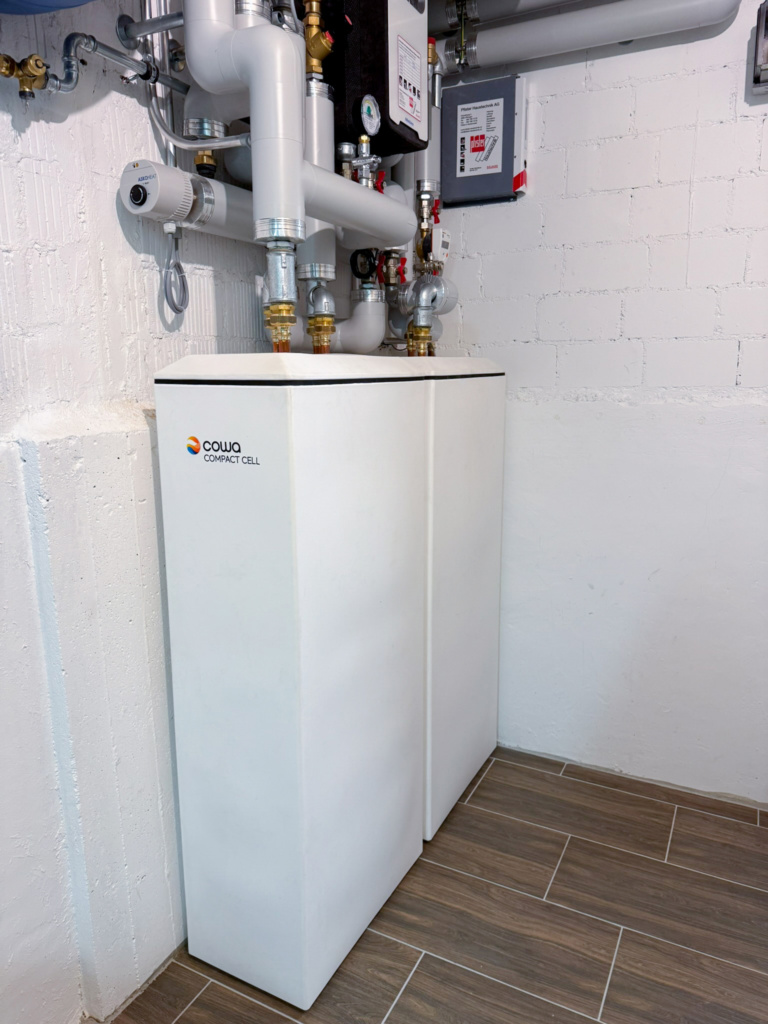
The results? A compact thermal storage unit that can sit in a cupboard of a basement, charging when electricity is cheap and discharging heat when it’s needed.
Why does this matter? For one, salt hydrate storage takes up less space than a traditional hot water tank of the same capacity (in some cases up to four times less space). That’s a game-changer for homes with limited space. It also opens the door for smart-grid-ready heating systems, where homes help balance electricity demand by shifting heating to off-peak times.
And because salt hydrates are non-flammable, non-toxic and relatively inexpensive, they’re a safe and scalable choice for widespread use in households.










Comments
No comments yet. Be the first to comment!