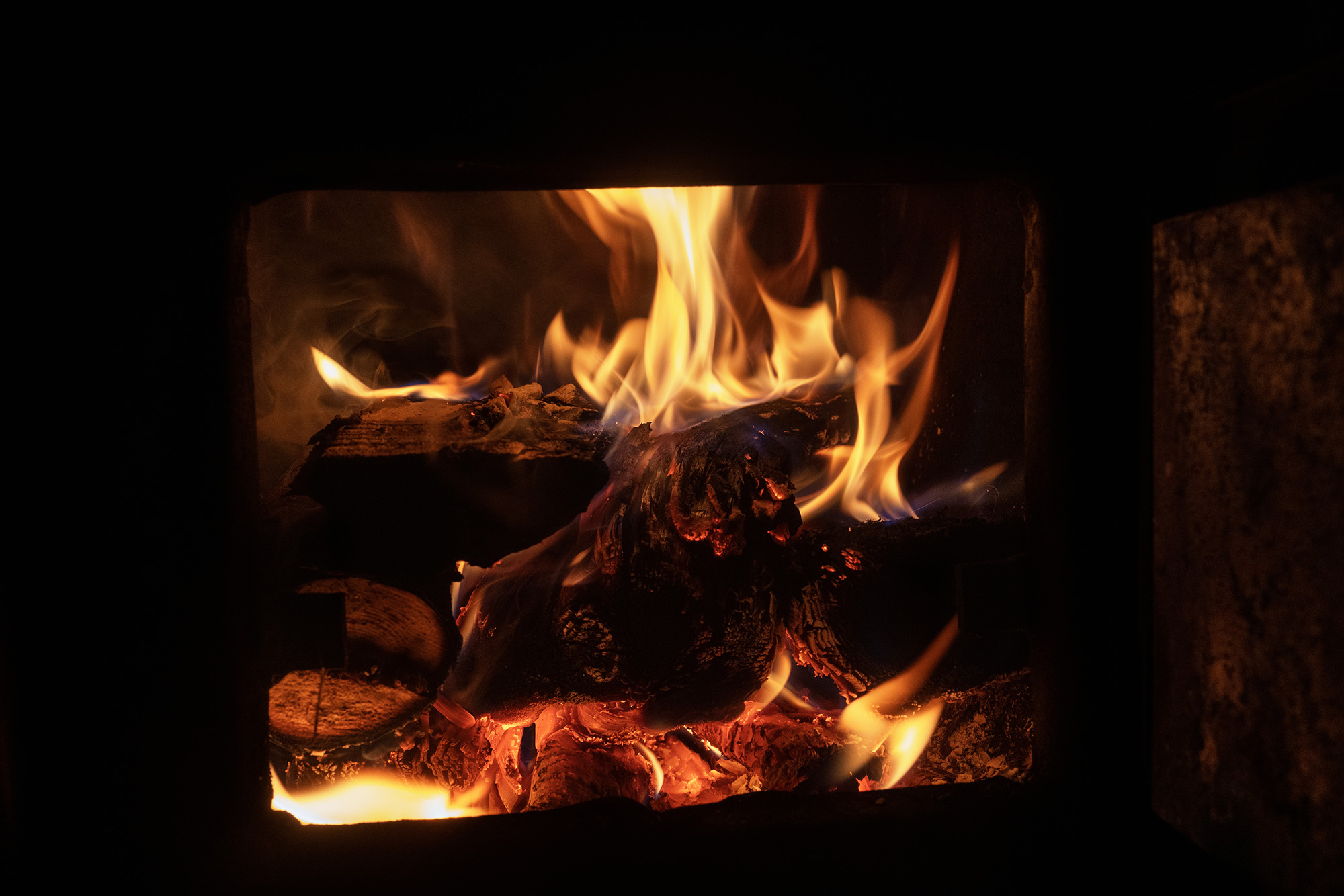

Wood-fired heating has been important in here Norway throughout history, and although electricity has more recently taken over as the main source of heating and heat pumps have become widespread, it remains the primary heating source for many and serves as a secondary source, especially on cold days, for many others.
And even though we do not like to think about it, we know that natural events such as winter storms can bring down power lines and cut off electricity. But how comfortable are we with the idea of the energy infrastructure being exposed to cyberattacks, physical sabotage, or acts of war?
War and unrest in our neighbouring regions have brought renewed attention to the importance of security of supply and preparedness, with energy supply security being one of several key areas. This means being better prepared for crises by having alternative solutions for essential needs, such as heating. In the event of a prolonged loss of electricity to a home, even the best-insulated dwellings will become cold during winter, and will require a supply of heat to maintain a liveable temperature, or at the very least to prevent water pipes from freezing.
Wood-fired heating is the most reliable form of preparedness
Heating with wood-burning stoves is the only truly secure heating backup for the vast majority of people in Norway. Almost all other traditional heating methods are dependent on the supply of energy in the form of electricity through power lines or district heating through insulated pipes, the latter of which in turn depends on electricity to produce and distribute hot water. Wood-fired heating operates without the need for electricity, and all you need is dry firewood, a fireplace or stove, and a chimney.
If you have a chimney, but no fireplace or stove, you technically have an outlet for flue gases from a temporary heating solution based on gas or combustible liquids, but such makeshift ‘clever fixes’ are illegal for safety reasons. If you are going to connect a fireplace or stove to the chimney, it must be a biomass-fired, type-approved appliance, and the installation must be approved. In Norway, it’s also not permitted to install old wood stoves; they must be of the modern, clean-burning type, manufactured from 1998 onwards. Wood-burning stoves have been significantly improved since then, so you should definitely invest in a brand-new appliance that offers low emissions and high energy efficiency.
All homes must allow for two heating methods
Today, all homes in Norway must be built with the possibility of two heating methods, where electricity is a natural choice, and the second option is either district heating or self-produced water-based heating, or point heating with biomass where this is not possible or desired. It is currently a requirement that all new small residential buildings (detached houses, semi-detached houses, terraced houses, row houses, and low-rise apartment blocks) be built with a chimney, with the exception of passive houses and houses with water-based heating systems (district heating or on-site hot water production that must at a minimum cover the heating of living rooms and common areas). This has been a requirement since 2010 (TEK10) due to preparedness considerations. For a short period, it was discussed to remove the requirement in connection with new climate-based energy requirements, but this did not happen precisely because of the preparedness function provided by wood-burning stoves.
Paradoxically, there is no requirement to install a stove together with the chimney. In practice, this means that the owner is required to bear the additional cost of integrating a chimney into the house, but may choose not to install a stove – perhaps because there seems to be no need for one in a well-insulated new home where heating is based on electricity, or simply because it is a cost that can be omitted in a new house that already represents a major investment. After all, some might be tempted to think it ‘can always be installed later’.
Many heat sources depend on electricity
But what happens if the power is lost for an extended period, something that occurs relatively often in Norway in certain remote areas when severe weather strikes and trees fall onto power lines? The more widespread and intense the weather, the more people are affected and the longer it takes to restore power to everyone. Those who experience this know how important heating preparedness is, while many others know it deep down but have not felt it themselves.
Those who in practice have only one heating method – namely electricity – because they chose not to install a fireplace in a house with a chimney, or perhaps removed an old fireplace after extensive renovation and additional insulation, suddenly become very vulnerable when the power goes out for a prolonged period. Renovation and added insulation will usually not bring these older homes up to the same level as a new home in terms of heating demand.
What happens when the power goes out and the heating fails?
All new homes are well insulated in accordance with TEK17 regulation or even stricter standards, and many renovated homes can also be well insulated. Well-insulated houses have colder exterior walls and retain heat effectively, but they will still lose heat to their surroundings and gradually become colder over time. Windows also have good insulating properties, typically triple-glazed, and on cold nights with high humidity frost can easily form on the cold outer surface of the window.
For homes that do not have a wood-burning stove installed, this means that heat preparedness consists solely of the heat stored in the building’s internal materials and furnishings. All TEK17 homes have balanced ventilation with heat recovery. This means that when the power goes out, the ventilation system stops, and it is common for air dampers to close automatically to prevent cold outdoor air from entering. As a result, these well-insulated and airtight homes are effectively sealed ‘hermetically’ to preserve heat as well as possible.
Unfortunately, this also means that fresh air does not enter the home and the indoor air is not renewed. As a result, air quality gradually deteriorates, depending on the size of the home and how many people live there. We breathe in oxygen, which is converted into CO₂ and water vapour, causing the oxygen concentration in the home to decrease while CO₂ and humidity levels increase. At that point, it is up to you to actively open doors and windows to create airflow and maintain sufficiently good indoor air quality. However, when doors and windows are opened, valuable heat is lost and the home cools down more quickly.
In general, a home with a high heat storage capacity within the insulated walls will retain heat for longer. But once that heat is gone, such homes require more heat input to warm up again. You should therefore not wait too long before supplementing with emergency heating.
Alternatives to wood-burning stoves place heavy demands on users
Even if you do not have a chimney in your home, or you have one but have not installed a stove, it is still possible to have point heating that is independent of grid electricity. This may involve portable heaters that burn gas or flammable liquids, heating elements that emit radiant heat into the room and warm the air, which is then distributed around the space. The flue gases produced are released directly into the room, meaning you are dependent on good combustion and low emissions, particularly of carbon monoxide, as well as a sufficient supply of air for combustion. This means the home can no longer be hermetically sealed.
Fresh air must be supplied continuously, and indoor air mixed with flue gases must be vented out on an ongoing basis. If too little fresh air enters, the oxygen in the room is consumed faster than it is replaced. If the indoor air mixed with flue gases is not vented at the same rate, concentrations of CO₂ and water vapour increase, along with hazardous emissions such as carbon monoxide.
The ability of indoor air to retain water vapour is limited and decreases as the temperature drops, and excessive water vapour leads to condensation on interior surfaces and moisture-related damage. This means that these portable heaters place considerable demands on the user for the solution to function satisfactorily.
By comparison, a modern wood-fired appliance can function far more effectively as a heating solution. The flue gases are vented into the chimney rather than released into the room, and the appliance provides strong radiant heat in addition to convective heat. If combustion air is supplied directly to the stove through a duct in the wall, or drawn down between an outer and inner flue liner in the chimney, there is also no need to keep a window open to ensure air supply, and valuable heat is not lost from the room. Such air-supply solutions are entirely standard when installing fireplaces or stoves in new, airtight homes.
Portable heaters fuelled by propane and paraffin
Portable heaters are typically designed to burn propane or paraffin. Propane burns more cleanly, as it is a gas, and many people today use propane-based gas cookers. Combustion takes place in a flame that is premixed with air and therefore blue; it emits little radiant heat but efficiently heats what is placed above it. A kitchen extractor fan ensures that the flue gases from a gas cooker are vented outdoors. In a heater that burns propane, the flame heats ceramic elements to a high temperature so that they emit most of the heat as radiant heat and a smaller share as convective heat.
Paraffin is a combustible liquid that does not burn as cleanly as propane. In fact, it does not burn directly at all; it must first be vaporised, and it is this vapour that burns. The result is less effective premixing, producing a more yellowish flame that radiates directly and heats a material which then releases heat mainly through convection. This leads to higher emissions of unburned components than with propane. Some portable paraffin heaters have a fan to distribute convective heat more effectively, but these require electricity and cannot be considered an emergency solution. Paraffin intended for use in portable heaters should be refined, meaning that heavier components and sulphur are removed, allowing it to burn more cleanly and with lower pollutant emissions.
If propane and paraffin are to constitute a genuine emergency heating alternative, owners must have sufficient fuel stored up. Propane is stored in pressurised cylinders containing between 5 and 11 kilograms of propane. At present, you are not allowed to store more than two 11-kilogram cylinders indoors (55 litres, 22 kg), corresponding to a total of about 284 kWh. These may not be stored in a basement, as propane is heavier than air and will remain there in the event of a leak. Additional propane cylinders (up to a maximum of 90 litres, 36 kg) must be stored safely outside the dwelling. Different rules apply to the storage of paraffin (a maximum of 10 litres indoors and 50 litres outdoors), as it is a flammable liquid.
It can be argued that paraffin is a safer option for storing larger quantities of fuel, since it is not stored under pressure and the risk of leakage is lower. On the other hand, if it actually has to be used, propane may be preferable as there is no liquid spillage and combustion is cleaner. However, propane contains more hydrogen relative to carbon than paraffin, and the flue gas therefore contains more water vapour (about 9% more in g/kWh) than the flue gas from paraffin combustion. Both types of portable heaters require a small amount of electricity for ignition and built-in safety systems, but this is usually supplied by standard replaceable batteries.
Diesel heaters and emergency power and heat storage solutions
Some may now be thinking that so-called ‘construction heaters’ are a good solution. These typically have a high output and are primarily intended for heating or drying buildings under construction. They are usually fuelled by diesel, and the heat is distributed using a fan. Such construction heaters require electricity to operate the fan, among other things, and are not intended as an emergency heating solution, but rather as a heating solution in locations with naturally good ventilation and where people are not present all the time.
It is of course also possible to produce electricity yourself, either using a power generator typically fuelled by diesel, or from a battery bank with large storage capacity. Battery banks make it possible to connect various electrical devices via a standard socket, making it possible even to connect an electric heater. However, at present these battery solutions are relatively limited in capacity – about the same kWh storage capacity as one kilogram of dry firewood, i.e. approximately 5 kWh – and they are expensive, costing roughly the same as a very good wood-burning stove. That said, they can run a fan or a pellet stove for a period of time. A diesel generator placed outdoors, with only a power cable led into the house, is a cheaper and more capable solution, albeit with a clearly noticeable noise level and the need for an opening into the house to lead the power cable inside.
It is also important to note that all of these solutions are based on fossil fuels. That means they are no better in terms of global warming than the oil-fired heaters that were banned in residential buildings in Norway in 2020. However, propane results in slightly lower CO₂ emissions (around 12% less in g/kWh) than paraffin.
There are also heat storage solutions available that are based on so-called phase-change materials. These solutions store large amounts of heat at a constant temperature while heat is supplied, as the material changes phase from solid to liquid. This heat can then be released when the heat supply stops and the liquid solidifies back into its solid form. However, these are relatively new solutions that are likely to become more important in the future and are not yet commercially available for the consumer market.
Which solution provides the best preparedness for heating our homes?
Modern wood-burning stoves are clean-burning and capable of covering your heating preparedness needs. They are easy to operate and provide both radiant and convective heat. All you need is renewable, dry firewood and a chimney in the home. When combustion air is supplied directly to the stove through a wall or the chimney, the impact on the indoor climate is minimal beyond the heat it supplies.
Portable heaters based on fossil gas or flammable liquids are an alternative for those who do not have a chimney, or who have a chimney but have not yet invested in a stove. These heaters typically have lower output, but provide both radiant and convective heat like a stove, although the flame effect and sense of comfort are considerably reduced. Without a chimney, care must be taken to ensure sufficient supply of fresh air and adequate ventilation of indoor air mixed with flue gases, in order to prevent poor indoor air quality and condensation of water vapour indoors.
For homes with district heating or other hydronic heating systems, the hot water will contribute to heating as long as it remains warmer than the surroundings. However, without electricity to power the home’s internal water circulation system, the water becomes stagnant, cools relatively quickly, and thereafter merely acts as a heat sink when heat must be supplied to the home by other means. Those with district heating are also dependent on electricity for the home’s internal circulation system, even if the district heating network itself has backup power for circulating water in the network. In a situation where this backup power is activated, only those with their own emergency generator or other on-site power production can benefit from it, for example critical infrastructure such as hospitals.
In summary, there is no heat preparedness solution for homes that, during prolonged outages of electricity and district heating, works as well and as efficiently as wood-fired stoves. They provide renewable heat with high output, both radiant and convective heat, and emissions from today’s modern wood stoves are low while energy efficiency is high. Wood stoves with an optional cooking plate are also available, further enhancing preparedness.
Finally, preparedness is about more than just heating, for example: water, food, lighting, medicines, and first-aid equipment. The Norwegian Directorate for Civil Protection (DSB) provides good advice on what you should have in reserve to be able to manage for at least one week. This also includes a power bank for charging mobile phones and similar devices, to ensure access to news and communication.
For your own sake and that of those closest to you, as well as pets, review your own preparedness situation and make sure that you and yours can meet your own needs. The ways you have traditionally covered these needs in peace time may not be available for extended periods in times of unrest. In that case, it is better to be on the safe side – while hoping the need never arises.






Comments
Stoves that provide both radiant and convective heat with combustion air always supplied directly to the stove through a wall or the chimney, aside from cooking, can also provide heating to ventilation systems through heat exchange mechanisms surrounding the flue, whereas running the heat exchanger and fans are low energy consumers so can be serviced through applicable battery back-ups.