


A lack of capacity in the electricity grid is one of the biggest barriers in the transition to a net‑zero society.
Large parts of the industrial and transport sectors depend on electrification to phase out fossil fuels, while new power‑intensive industries are queuing up for access to electricity. At the same time, a significant share of Norway’s electricity is used to heat buildings. This leads to high demand peaks during winter, when the need is highest.
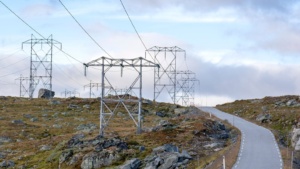
Up to two‑thirds of the grid’s capacity is effectively «reserved» for heating buildings on the coldest days. Combined with growing industrial demands, this triggers the need for grid expansions. But building new power lines is expensive, time-consuming, and requires large land areas.
To free up capacity in the existing power grid, it’s time to rethink how we heat our buildings.
Norway is unusual in its heavy reliance on electricity for heating. In Denmark, Sweden, and Finland, more than half of the heating demand is covered by district heating. In Norway, the share is only 10–15 %.
In existing commercial buildings and apartment buildings that rely on direct electric heating, we should explore the possibilities, costs, and technical challenges of converting to hydronic (waterborne) systems. In areas with district heating networks, buildings can be connected, while detached houses and remote areas can instead be supplied by heat pumps.
What does conversion actually mean – and why is it so difficult?
In a building with hydronic heating, hot water circulates through radiators, fan coils, or underfloor heating. For buildings that previously relied on electric heating, this means installing water pipes to every room, in addition to the heat emitters themselves. Converting from electricity to hydronic heating often requires major and costly interventions. Today, the building owner typically pays the full cost, even though conversion largely benefits society as a whole – through reduced strain on the electricity grid. In many cases, conversion is most cost‑effective when combined with major renovations or replacement of the building’s piping system.
In commercial buildings, heating is often provided partly or entirely through the ventilation system. This can make conversion easier, since it is mainly the central ventilation system that must become hydronic. A good example is Eidsiva Bioenergi, which has converted heating systems in a number of commercial buildings in Innlandet, with positive results for both costs and customer satisfaction.
To ensure low power demands in new buildings, hydronic systems should be the default choice. Even in detached houses and areas without district heating, hydronic heating can be advantageous because it enables the use of more efficient heat pumps, such as ground‑source systems.
What’s happening now – and how is SINTEF working with district heating?
Several actors have recently increased their focus on converting from electric to hydronic heating. Lunera Energi (formerly Statkraft Varme) has launched a major conversion project in Sutterøya in Stjørdal, where 23 buildings will be converted, and most of them will be connected to the district heating network. Large‑scale funding from Enova will support this work. Larvik Boligbyggelag (LABO) has recently completed a conversion project in a large housing cooperative and is planning several more. Both areas are part of the research project REBUILT, where SINTEF is developing a guideline for converting to hydronic heating. The goal is to make it easier for others to follow in the footsteps of Lunera and LABO. We are also studying how conversion and increased use of district heating affect the energy system – through reduced peak loads in the electricity grid and cost savings at the regional level.
Summary
Converting to hydronic heating and increasing energy efficiency can free up capacity in the electricity grid and make room for new users without building more infrastructure. This can save society significant costs and reduce the need for land‑intensive grid expansions. It can also happen much faster than building new power lines – an advantage for companies currently stuck in the grid queue. Enova has recognised the value of conversion and will increase the support from 2026, both for district heating connection and for various types of heat pumps.
If we want to succeed in developing the energy system of the future, we need to think holistically: do we really need more electricity production and grid capacity, or can we meet our needs in a smarter way by using the enormous potential of district heating and hydronic systems?







Comments
The article seems rather one-sided: electric heating is bad, hydronic heating is better, because the electricity grid is so constrained. I personally think the transition away from fossils (i.e. fossil powered typically centralized thermal power plants) will force us to redesign our electricity grids to better adapted current needs. Distributed and combined power/heat generation would be another pathway than the suggested one. I would bet cheaper and cleaner (depending on energy carriers and ‘engines’ used of course.) Let’s throw in a future oriented scenario: iron as an energy carrier and 200 kWh Stirling engines as distribured combined electricity/heating providers. The latter is commercial of the shelf technology but I have to look up the numbers for their thermal output (about 45% of their electric output if I remember correctly.)
Dear Jan,
The situation is Norway is very different from the rest of the Europe. Due to previously abundant hydropower resources, and historically low power prices, direct electric heating is the dominant heat supply solution for buildings. This is fossil free, but eats up the now precious grid capacity. With the accelerating electrification of transport and industry, including new emerging industries, there is power grid capacity shortage in most parts of the country. Conversion to district heating – or other efficient hydronic solutions – is faster than building new power grid lines.
That being said, Norway is also very sparcely populated country. District heating is a viable solution only for densely populated areas. In the more rural areas, distributed solutions – heat pumps, mainly, are important. CHP could definitely be a good solution for communities – but again, this assumes heat distribution infrastructure that is mostly absent in Norway.