
In this blog post, you’ll get an overview of the current status of available SF6-free technology for the power grid, and how the EU’s F-gas Regulation may influence the phase-out of SF6 in the grid.
Why SF6 in circuit breakers?
We need circuit breakers at all voltage levels in the electrical grid. They must operate every time they are instructed to disconnect the current—whether due to sudden faults or for planned maintenance that requires rerouting of power.
A typical circuit breaker in the transmission grid (145 kV – 420 kV) has a lifespan of 40–50 years and requires little maintenance. It is filled with SF6 (sulphur hexafluoride), and the properties of this gas are a major reason why these breakers last so long. They can interrupt large currents and withstand high voltages with great reliability, while also remaining compact and reasonably priced.
What is the problem with SF6?
The problem with SF6 is that it is the most potent greenhouse gas known per kilogram emitted: It has a global warming potential (GWP) 24 300 times higher than CO2. [1]
The use of SF6 has been regulated for many years, which fortunately has led to a significant reduction in emissions since the 1990s. For example, the magnesium industry previously used SF6 to prevent oxidation of the metal, which resulted in large emissions. In 1991, Norway’s SF6 emissions were 84 000 kg. That same year, SF6 emissions accounted for 6.3% of Norway’s greenhouse gas emissions. Today, this figure is much lower—well below 0.5%. This is thanks to the phase-out of SF6 use in nearly all other sectors except the power industry, and the strict regulations have also helped minimise emissions from this sector.
Nevertheless, SF6 emissions from switchgear still represent a significant share of electricity companies’ direct greenhouse gas emissions. For example, Statnett, the transmission system operator in Norway reported that 72% of their direct emissions (scope 1) in 2024 came from SF6.
To meet society’s growing need for more electricity, the transmission grid must be significantly expanded in the coming years. We therefore need to address SF6 breakers now to ensure that the amount of installed SF6 —and the associated leakage—does not increase in the years ahead.
The F-gas regulation and the phase-out of SF6 in Europe
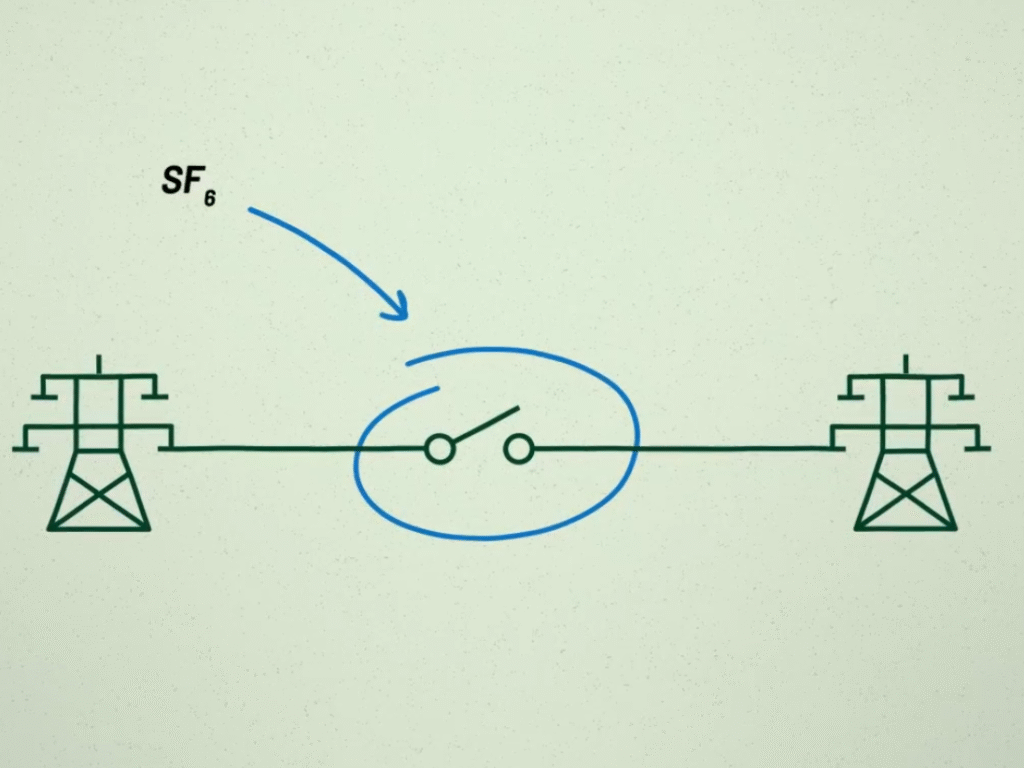
The EU is actively working to regulate greenhouse gases, and in February 2024, they updated their F-Gas Regulation. The regulation sets phase-out dates for the use of SF6 in new circuit breakers and switchgear (provided that SF6-free alternatives are available on the market). The first phase-out date is already January 2026, applying to medium-voltage installations up to and including 24 kV. From January 2032, in principle, all new circuit breakers commissioned in the grid must be SF6-free.
What alternatives are available?
The next question is whether the industry has developed more environmentally friendly and reliable alternatives to SF6 breakers—and whether grid companies are willing to adopt them. The short answer is yes. The longer answer is a bit more complex, with several caveats and uncertainties. In the following sections, I attempt to describe the situation as it appears today, but first: an overview of the alternatives currently available.
Medium voltage / distribution level
For medium voltage, the EU has introduced a requirement that no gases containing fluorine (no “fluorinated greenhouse gases”) may be used, regardless of GWP values. This means using gas mixtures such as pressurised air, or combinations involving CO2, N2, and O2. For current interruption, either the same gas mixture is used or, more commonly, vacuum technology—which has already been standard for decades in combination with SF6.
Several solutions now meet the technical requirements for breaking capacity and voltage ratings. The main challenge has been achieving compact designs comparable to current SF6-filled systems, because air and CO2 have significantly lower breaking and insulation capabilities. This requires higher filling pressures, which complicates the enclosure design.
Cost has also been an important design criteria, as medium-voltage breakers are produced and sold in large volumes. Nevertheless, most medium-voltage manufacturers now offer SF6-free products up to 24 kV and are ready for the EU’s first phase-out deadline.
High voltage / transmission level
At the transmission level, the challenge has been finding an alternative capable of breaking large fault currents at high voltages. Different manufacturers have pursued different technologies:
1) Fluoronitrile (C4F7N) mixed with CO2 and O2
In 2015, GE Vernova (previously Alstom) announced that they, together with 3M, were exploring a new gas to replace SF6 in circuit breakers, namely C4F7N, also called Novec 4710. This gas has a significantly lower GWP than SF6, and still provides such good electric insulation that, even in small concentrations combined with CO2 and O2, it allows switchgear of the same size as SF6 technology (at slightly higher gas filling pressures). By making some improvements to the breaker design, it is also possible to interrupt large fault currents. Hitachi Energy has followed in GE’s footsteps, and circuit breaker technology up to 550 kV and 63 kA is now available on the market (primarily for use in so-called gas-insulated switchgear, GIS).
In Norway, Statnett has ordered nine new 420 kV GIS installations using this gas mixture. Several TSOs in Europe are doing the same, and the first installation in Scotland is being commissioned these days. For 145 kV, there are already several installations in operation across Europe.
2) C4F7N with CO2
C4F7N is also used in combination with CO2 alone (without O2), and GIS installations from Hyundai Electric for 145 kV are available on the market. Other companies have indicated that they are also considering this gas mixture for their solutions at 145 kV and higher voltages.
3) Vacuum technology with pressurised N2 / O2
Another solution that has been pursued is to take the successful approach from the medium-voltage level and scale it up, i.e., to use vacuum circuit breakers at the transmission level as well.
The challenge has been that vacuum does not scale as easily as gas when the voltage is increased. With a gas, both insulation distances and pressure can be increased to improve insulation performance, but with vacuum, one must rely on increasing distance. Moreover, vacuum does not conduct heat as well as a gas, which can create challenges for large load currents when the breaker is in closed position.
Siemens Energy has nevertheless managed to develop vacuum breakers with a mixture of N2/O2 as insulation gas around the breaker for voltages up to at least 145 kV. In Norway and Europe, there are now hundreds of such breakers, both as GIS installations and as air-insulated outdoor breakers. The GIS installations are somewhat larger than equivalent SF6 installations, while the outdoor breakers have similar dimensions.
Unfortunately, the technology is not yet fully ready for 420 kV, but there are plans for the first pilot installations at outdoor sites with Statnett and RTE from the end of 2026 in the MISSION project.
Mitsubishi, Hyosung, Toshiba, and others have developed GIS installations for 72.5 kV (in some cases 84 kV), but it is somewhat unclear whether all of them plan or are able to scale vacuum technology up to 145 kV and higher voltages. Mitsubishi has showcased its 145 kV vacuum breaker, while Toshiba has announced that it is considering gas breakers for higher voltages. A couple of Chinese companies (Sieyuan and Pinggao) have also launched 145 kV GIS, which will eventually become available on the European market.
4) Vacuum technology with N2 only
Similar to C4F7N and CO2, vacuum technology is also available in combination with nitrogen alone. The Chinese company Pinggao has developed an outdoor 252 kV vacuum breaker with N2 insulation, which has been in operation in the Chinese transmission grid since 2024.
5) CO2 and O2
This gas mixture is used in outdoor breakers for the transmission grid by Hitachi Energy, GE Vernova, and others. These are breakers that use CO2/O2 both for current interruption and as insulation gas. The breakers are available for both 145 kV and 420 kV, and have comparable dimensions to equivalent SF6 breakers.
Many options — and a lot to learn
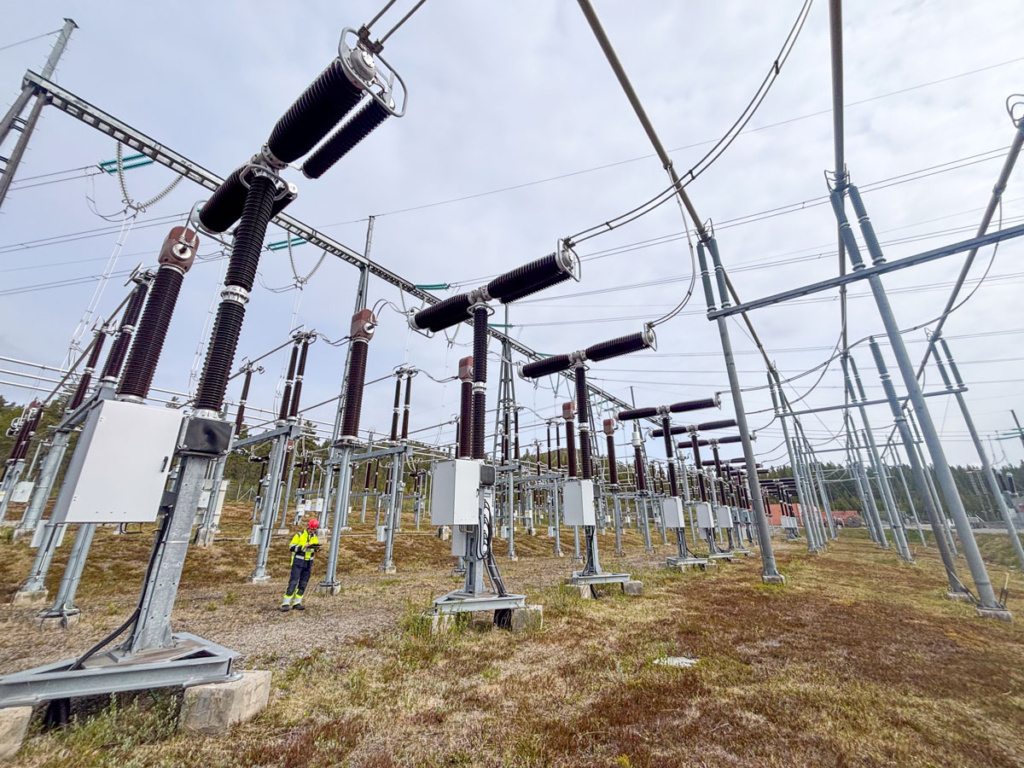
As the list above shows, there are both many alternatives and a lot to familiarise oneself with for grid companies that are now looking to purchase and get acquainted with new breaker technology. Each technological solution requires its own gas handling equipment, and different aspects must be considered when assessing the condition of the breaker. Nevertheless, several European grid companies have been proactive and willing to order and adopt new breaker technology even before the EU deadlines, driven by a genuine desire to reduce their greenhouse gas emissions.
The overview also shows that there are already several SF6-free alternatives for 145 kV, both air-insulated breakers for outdoor installations and GIS installations. GIS installations with C4F7N and air-insulated breakers with CO2/O2 at 420 kV are also available, thereby essentially covering the needs for the highest voltage levels in the European transmission grid.
Complicated regulations and uncertainties
There is, however, an uncertainty here. The EU F-Gas Regulation has somewhat more complex rules than simply setting phase-out dates for SF6 in new installations, and it prohibits the use of fluorinated gases for medium voltage. In principle, it also sets limits on GWP values for high-voltage levels. A gas mixture containing C4F7N has a total GWP of around 300–700 and is therefore subject to stricter rules than vacuum with N2/O2 or CO2/O2, which have a GWP < 1. The rules in the EU F-Gas Regulation states: [2]
- From 1 January 2028, 145 kV installations with C4F7N can only be installed if only one supplier has offered a solution with GWP < 1.
- From 1 January 2030, 145 kV installations with C4F7N can only be installed if no supplier has offered a solution with GWP < 1.
- From 1 January 2032, 420 kV installations with C4F7N can only be installed if only one supplier has offered a solution with GWP < 1.
- From 1 January 2034, 420 kV installations with C4F7N can only be installed if no supplier has offered a solution with GWP < 1.
This means that the technology that was first able to replace SF6 at all voltage levels is also the technology threatened with being banned, just a few years after the ban dates of SF6.
But we cannot conclude just yet. In the same regulation, there is potential derogation that could be a lifeline for C4F7N -based technology. This derogation refers to another directive, the Ecodesign for Sustainable Products Regulation (ESPR), which assesses certain products based on their CO2 footprint throughout the product’s life cycle.
If ESPR addresses switchgear, and it can be demonstrated that C4F7N-based breaker technology has a lower CO2 footprint than other alternatives, this would override the GWP limit rule. Breakers with C4F7N are more compact and require less material than other options, making it likely that C4F7N technology could take advantage of this derogation.
Unfortunately, for those who manufacture and use this technology, switchgear are not included in the new ESPR work plan for 2025–2030, although it is explicitly mentioned that switchgear could still be included. Therefore, we do not yet know—and perhaps will not know for several years—whether C4F7N gas has a future in the transmission grid.
This creates uncertainty for those selling these breakers, for grid companies purchasing breakers for the next 40–50 years, and for those considering whether it is economically viable to produce the gas. As long as there are no 420 kV gas-insulated breakers with GWP < 1 on the market, this could, in the worst case, result in continued use of SF6 technology a few years longer than necessary.
PFAS — yet another uncertainty
There is also a final uncertainty factor, which could undermine both C4F7N-based switchgear and all gas-insulated breakers (i.e., everything except vacuum breakers [3]).
In Europe, intensive work is now underway on a broad PFAS restriction proposal. PFAS stands for “per- and polyfluoroalkyl substances.” PFAS are all molecules that contain more than two carbon atoms bonded to fluorine atoms, which includes both C4F7N and the plastic Teflon, which is used as nozzle material in gas-insulated switchgear, among other applications.
The restriction proposal does not target a single application or a few substances; it aims to cover everything. Mapping the safety risks associated with different PFAS and the socioeconomic consequences of a potential ban is a huge task. Both the proposal and its timeline have been revised since it was first presented in early 2023. We do not know when a decision might be made (the latest estimate is 2028), but the proposal, as it stands now (updated in August 2025), suggests that both Teflon nozzles and C4F7N should be completely banned in new products 6.5 years after a potential PFAS restriction comes into effect (with an even shorter deadline for breakers up to and including 145 kV). For spare parts, a 20-year postponement of this ban has been proposed [4].
If the proposal goes through as currently formulated, it will affect existing, newly purchased, and future switchgear [5].
So, what now?
If the long answer created more confusion than clarity, here’s a short summary:
- SF6 is to be phased out in all future switchgear, in both distribution and transmission grids, which will be a positive measure for reducing direct greenhouse gas emissions from the grid and grid companies.
- Technically promising alternatives have emerged for most voltage and current levels, and technology development is on track compared with the deadlines defined by the EU.
- However, it is possible that another round of technology development will be needed, and that some of the SF6-free breakers being installed now and in the coming years may also be banned in the future—but this would apply only to new installations, not existing ones. This creates some uncertainty regarding investment strategies. This creates some uncertainty regarding investment strategies, which is unlikely to be resolved for several years.
- The need for breakers and grid components is increasing alongside the growing electrification of society, making it important that reliable breaker technology is available on the market with sufficiently large production volumes.
References
[1] From a 100-year perspective. If we calculate over the entire atmospheric lifetime, it is even higher.
[2] Note that it is even slightly more complicated than presented here, as it also depends somewhat on the order date versus the installation date.
[3] With the caveat that the Teflon used in some vacuum breakers, as sliding surfaces or in grease/lubrication, is replaced with something else.
[4] Here, the rules are quite complex, and there are additional years of postponement for certain spare parts (up to 33.5 years), and a few items may receive a lifelong exemption, possibly including the refilling of nitrogen gas in existing installations.
[5] It should also be noted that the motivation behind the PFAS restriction proposal is to remove potentially hazardous substances from nature and humans.






Comments
No comments yet. Be the first to comment!