
Security of supply means the ability of the electric power system to supply end-users with electricity of a certain quality on a continuous basis; this is a definition provided by the Norwegian Energy Regulatory Authority, inspired by the European directive 2005/89/EC.
Four main aspects have been identified as being central to the concept of security of supply: energy availability, power capacity, reliability of supply, and power (voltage) quality, including also cybersecurity and operational reliability [1]. Today, this definition needs to be further revised, as power systems find themselves in an ever-changing landscape and under new stresses.
Note: The terms security of supply and security of electricity supply are interchangeably used, abbreviated as SoS.
New and increasing stresses on the power system
A thorough rethinking of security of supply must be initiated, taking into account:
- the growing demands placed on the electricity grids because of society’s large-scale electrification needs.
Electrification results in new types and patterns of power generation, storage, and consumption. As regards consumption, there will be power intensive industrial loads, loads such as fast-charging stations, and electricity needed for hydrogen production. All these results in increased operational stress on the power system and its components.
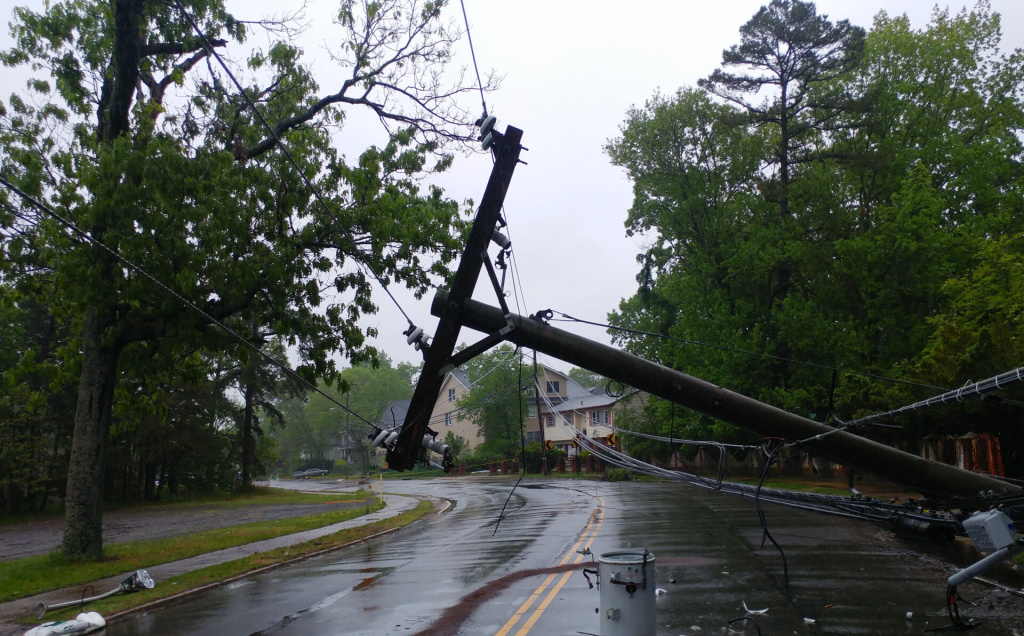
- increased weather-related stresses on the power system and its components from accelerating climate change.
- new vulnerabilities linked to digitalisation of electricity grids and the resulting interdependencies, malicious intentional attacks on the system, and rapidly shifting geo-political factors.
A secure electricity grid should be able to withstand both frequent events and extreme events (the so-called High Impact Low Probability (HILP) events) and must therefore be designed and operated with sufficiently resilient features with respect to both frequent and extreme events.
A framework for the bigger picture
SecurEL is developing a framework that looks at the bigger picture of security of electricity supply — considering threats, stresses and vulnerabilities that impact the electricity grids, and the resilience needed to withstand them. It also considers how the interplay between different grid levels, namely the transmission and distribution levels, is essential to this broader perspective.
SecurEL’s primary focus is on the distribution level – both regional and local – and on how the distribution systems interact with transmission system(s) in ensuring the security of supply. The role of multiple energy carriers, e.g., district heating and hydrogen storage, in providing resilience will also be considered. Interdependencies arising out of sector coupling will be given due attention.
By gaining a clearer understanding of what security of supply truly means and what it takes to maintain it, stakeholders can make smarter, more informed decisions.
Our approach to this topic
Work Package (WP) 1 in SecurEL will develop the necessary framework, models, methods, and tools for handling security of electricity supply in the future intelligent distribution system.
But before appropriate methods and tools could be developed, it is essential to first establish a comprehensive understanding of security of electricity supply. This conceptualisation involves taking into account the whole spectrum of risk, vulnerability, and resilience. The shared understanding that emerges from this work will provide common ground across all Work Packages in SecurEL.
- The first step in WP1 is to broaden and refine the concept of security of electricity supply, gradually incorporating vulnerability and resilience into a holistic framework
- Next, the work in WP1 will explore how this re-defined concept can be analysed and monitored, by developing indicators that improve situational awareness. Particular emphasis will be placed on risk-based approaches designed to ensure an acceptable level of security of electricity supply in future distribution systems.
- Finally, WP1 will investigate the hypothesis that security of electricity supply could be differentiated and adapted to customers’ needs by utilising digitalisation/automation and flexible resources; this work will lay the foundation for proposing new concepts and practical solutions for handling and differentiating security of electricity supply.
WP1 is structured into four different tasks as follows, meant to be realised over the duration of the eight-year period of SecurEL:
- Framework for identifying and categorising SoS, risk, vulnerability, and resilience.
- Quantifying and handling resilience.
- Monitoring and analysing SoS, risk, vulnerability, and resilience.
- New concepts for dealing with SoS.
Work done so far
So far in the first year, we have established an initial framework for security of electricity supply by collecting relevant knowledge-basis from previous projects the Centre has access to.
Implications of probabilistic and risk-based criteria for managing Security of electricity supply have been explored. A project memo titled “Basis for risk analysis and risk-based criteria for managing security of supply” has been prepared. The memo provides a broad, though not exhaustive, overview of how risk is analysed and managed with respect to reliability of supply. This memo was written in collaboration with WP2 (titled “Grid Operation and Development”). More specifically, relevant terms and concepts related to risk and risk-based criteria are mapped, opportunities for planning, operating and maintaining the distribution grid are highlighted using risk-based principles.
For a detailed scope of FME SecurEL, the reader is referred to the position paper [2] describing the research and innovation needs for developing a secure, resilient and sustainable electricity grid for the future.
Transition strategy
In FME CINELDI, the research centre that FME SecurEL builds upon, a transition strategy was developed for moving towards a flexible and intelligent distribution grid.
This strategy resulted in three principal conclusions, each supported by several recommended measures. One of these principal conclusions focuses exclusively on security of electricity supply and will be further addressed in this work package:
“Security of electricity supply may be compromised by extreme weather, cyber threats, increased operating loads and increased complexity of the power system, and must be handled differently in the future.”
Specifically, nine measures have been recommended to address this principal conclusion. Read more about this in “CINELDI strategy and roadmap for transitioning to a flexible, intelligent power grid ” [3].
References:
[1]: G. H. Kjølle, “Security of electricity supply in the future intelligent and integrated power system,” in Women in Power: Research and Development Advances in Electric Power Systems, J. S. Tietjen, M. D. Ilic, L. B. Tjernberg, and N. N. Schulz, Ed. Cham: Springer, 2023, pp. 189-207.
[3]: “CINELDI Transition Strategy and roadmap for transitioning to a flexible, intelligent power grid“





Comments
A very insightful overview of how security of electricity supply must evolve. With increasing electrification, climate pressures, and digital risks, a broader and more resilient framework is essential. It’s encouraging to see SecurEL addressing these emerging challenges with a holistic, risk-based approach.