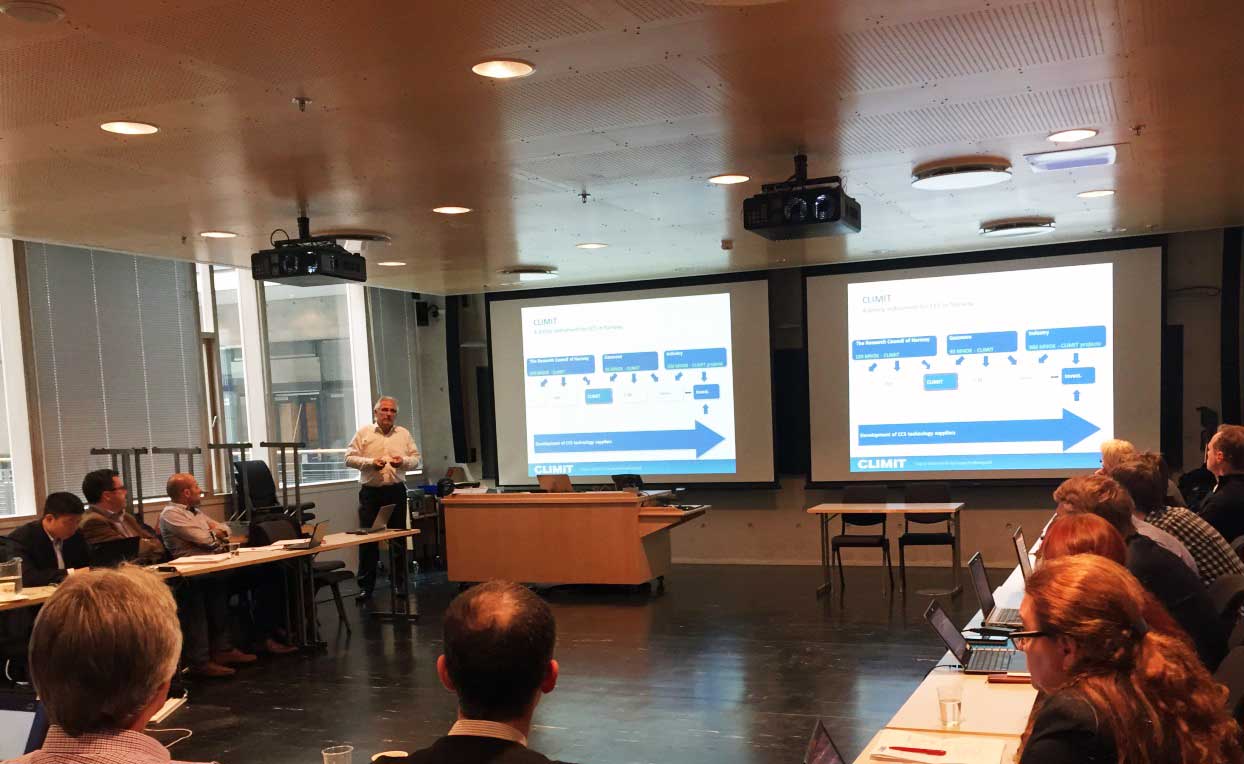

IMPACTS is a PAN European research project where researchers from academia and industry from nine different countries collaborates on investigating impact of impurities in CO2 captured from power plants and other CO2-intensive industries on CO2 transport and storage.
IMPACTS has generated a large amount of new knowledge in this area and is an example of how wide reaching research programs where different groups look into different aspects of the same topic brings the knowledge base forward while ensuring that the results are aligned.
Inventory of CO2 mixtures
One of the key goals of IMPACTS has been to determine the scientific basic for which impurities that can be acceptable for a CO2 transport system, avoiding too stringent constraints for the chains. So far IMPACTS has generated a comprehensive Inventory of CO2 mixtures where a framework for characterization of impact of impurities on CCS systems has been defined. The TREND software development is essential. It may be useful for a lot of different industries and may possibly become an ISO standard.
A Report on knowledge gaps has been produced and a better equation of state has been developed for CO2 mixed with all the potential contaminants expected in captured CO2.
An overview of knowledge regarding corrosion of pipelines in CO2 service has been established and experimental work has determined effect of CO2 supercritical mixtures on corrosion of pipeline materials.
7 representative CCS chains have been formulated. These cover the full range of compositions likely to be encountered in CCS projects over the next 10-25 years. These are ready for use in the analysis of economic, operational and risk effects of impurities. A start has been made on the construction of the economic model.
Processing, compression and transport to be viewed as one
The results illustrated how important it is that processing, compression and transport need to be viewed as one, and optimized together and that reliable numbers are arrived at for what can be acceptable in amounts of impurities. Also acknowledging that transport also requires compression and processing, and how impurities affect this. A presentation from Geir Skaugen, SINTEF and the IMPACTS project illustrated how 4% of impurities in the CO2 can increase the power consumption for transport by 50%. The effect of impurities are most severe at low pressures i.e storage pressures.
In the final six months of IMPACTS the focus will be on firming up the final experimental results, quality assurance and dissemination of the results in particular to the international standardization comittees such as the ISO committee on Transport of CO2.








Comments
No comments yet. Be the first to comment!