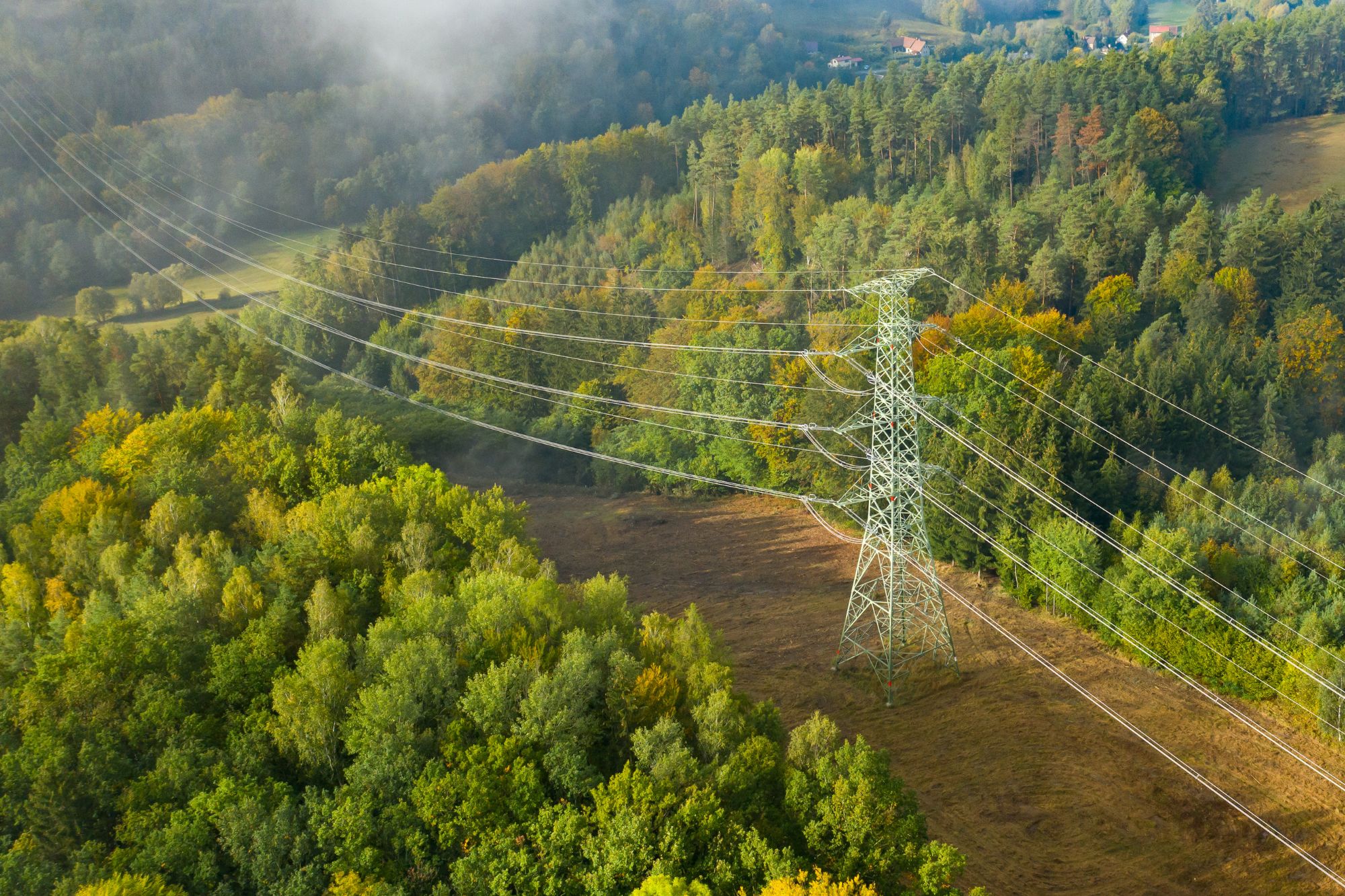

Like most countries around the world, Norway’s energy demand is increasing sharply. Further electrification of transport and industry is essential to meet national and global climate goals, and the energy needed to realise the potential of AI is also expected to be substantial.
But increased electrification requires increased power production and transmission capacity, which is extremely costly and land-intensive. This presents a major challenge, because even though our country is large, we do not have unlimited space. Therefore, it is important to minimise land use to ensure sustainability and preserve biodiversity. But how do we accomplish that?
New, ultra-thin superconducting cables have the potential to be a key part of the solution.
Why are power lines so big, anyway?
To explain what makes superconducting cables so exceptional, we first need to understand how today’s ‘conventional’ power lines and cables work – and the limitations they face. A large part of the answer lies in Ohm’s law, which most of us learned in middle school, and which forms the foundation for how power systems work:
Ohm’s Law
Ptrans(power) = U(voltage)*I(current)
Ploss(power) = R(electrical resistance)*I(current)2
Ohm’s law can be expressed in many ways, but these two formulations are key to understanding why power lines are so big.
A central goal in power-system design is to limit transmission losses – that is, the energy lost along the way from the power plant to the consumer.
The first equation shows that to achieve high power, you can use either high voltage or high current – but the second tells us that with higher current, losses increase significantly due to electrical resistance (R). Put simply: the higher the current, the greater the losses.
We therefore end up with the solution we use today: to transfer as much power as possible, we aim for the highest possible voltage and the lowest possible current.
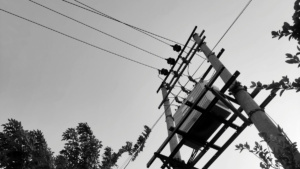
The highest voltage used in Norwegian power lines is 420,000 V, compared with 230 V in a household socket. When the voltage is that high, large physical distances are required to prevent electrical arcing – essentially a lightning-like discharge – to nearby objects. As a result, our largest power lines are at least 30 metres tall and the corridors they run through are more than 10 metres wide, which demands significant land area.
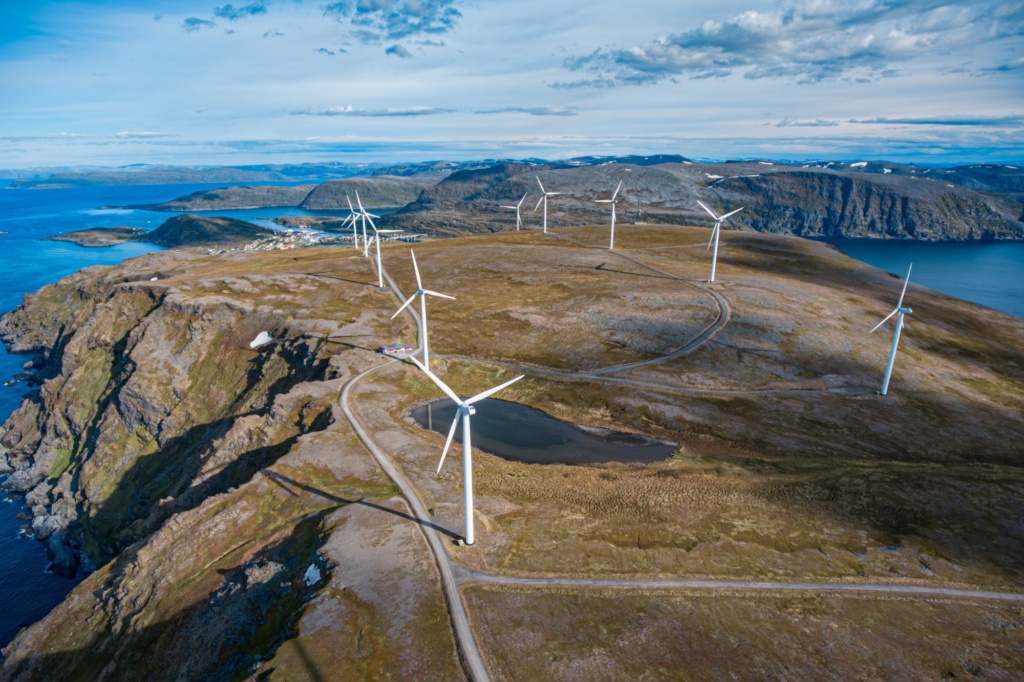
As a rule of thumb, transmission losses in the Norwegian grid are up to around 10%. Put simply, that means if you have a wind farm with ten turbines, the electricity produced by the tenth turbine never reaches consumers. In other words, there’s still significant room for improvement!
So what would the power grid look like if we could eliminate all electrical resistance – and with it, transmission losses?
How superconducting cables can be part of the solution
All materials have some degree of electrical resistance, including the materials used in today’s power cables. But there is a phenomenon called ‘superconductivity’, in which materials lose all electrical resistance at extremely low temperatures – around 4 to 70 Kelvin, or roughly minus 200 to minus 270 degrees Celsius. This phenomenon has been known for more than 100 years and earned its discoverer a Nobel Prize in Physics.
In addition to eliminating losses, superconducting cables would require far less space. This would not only support biodiversity preservation, but also help reduce land use in cities. The same power could be transmitted using high current and low voltage, allowing equipment to be dramatically smaller in size.
Superconducting cables are not just far-off sci-fi dream; we have already begun implementing them.
The French railway company SNCF has launched a project to install superconducting cables to increase power supply at Gare Montparnasse, one of the major train stations in Paris. This allows them to reuse existing conduits rather than digging up one of the busiest areas in the city to make room for larger cables.
As a Norwegian example, Statnett (the system operator of the Norwegian power system) ended up drilling a full-scale driveable tunnel from Smestad to Ulven in Oslo to install two sets of conventional cables, at a cost of between three and four billion NOK. If they could have been installed as superconducting cables in a much cable ducts along Ring 3, there would have been significant savings.
Why aren’t we doing this everywhere already?!
There are already a few pilot installations using superconducting cables, but achieving large-scale power transmission with them would represent a technological paradigm shift in several ways.
There is already a great deal of work underway in Norway and across Europe to achieve this shift. One example is SCARLET, an EU-funded research project led by SINTEF Energy Research in Trondheim. SCARLET – which has 15 partners from seven European countries (including Nexans, who produced the film above) – aims to produce the first superconducting cables with gigawatt-level transmission capacity using two different superconducting materials. One of the cables will also be designed to function as a subsea cable.
In addition to conventional cooling with liquid nitrogen, SCARLET will explore the possibility of cooling with liquid hydrogen. Hydrogen is expected to be transported by pipeline in a decarbonised future and could therefore enable more cost-effective cooling for superconducting cables.
The project is also studying how a power system based on high current, rather than high voltage, can be operated safely for both the system itself and its surroundings. A superconducting fault current limiter is therefore being developed as part of this work.
The power supply system is critical national infrastructure, and the risk of failures and outages must be kept to an absolute minimum. In addition, it must be ensured that new components do not pose risks to the environment or to maintenance personnel. This requires thorough testing and qualification of new technology. Currently, no standards exist for testing superconducting cable systems, so SINTEF Energy Research will recommend a testing regime and carry out tests on both cables.







Comments
No comments yet. Be the first to comment!